

What Would It Take For Kei Cars To Make Sense In The U.S.?
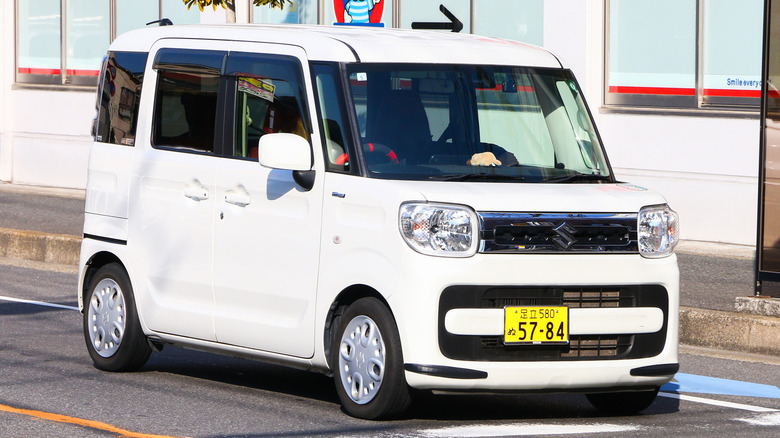
The President of the United States declared last week that he would like kei cars, the microcars common on the streets of Japan, to be built and sold in the United States to help with the affordability crisis surrounding new cars. While it's unlikely to happen for a number of practical reasons, there is a segment of people who would welcome them being available at their local dealership. It's also not like automakers wouldn't consider it at all. Ford told Jalopnik in an email, "[A]s America's largest auto producer — including F-Series, the best-selling vehicle in the U.S. for 43 years — we're always looking for ways to give U.S. customers more choice and affordability in vehicles they love."
Automakers like to make money, and if the market conditions are right to make money, it'd make sense that they'd consider making a kei car. But what would those conditions need to look like? How many would they have to sell to make in financially viable? Assuming there are no regulations in the way preventing their sale, what exactly would it take?
The history of small car purchasing
In this hypothetical game of what if, we need to have an idea of how many kei cars an automaker would need to be able to sell for it to be a profitable venture. Yes, an automaker could choose to build the cars at a loss, but no automaker would stay in business for very long not making any money (certain EV start ups aside). So, assuming automaker profitability, how many would it need to sell?
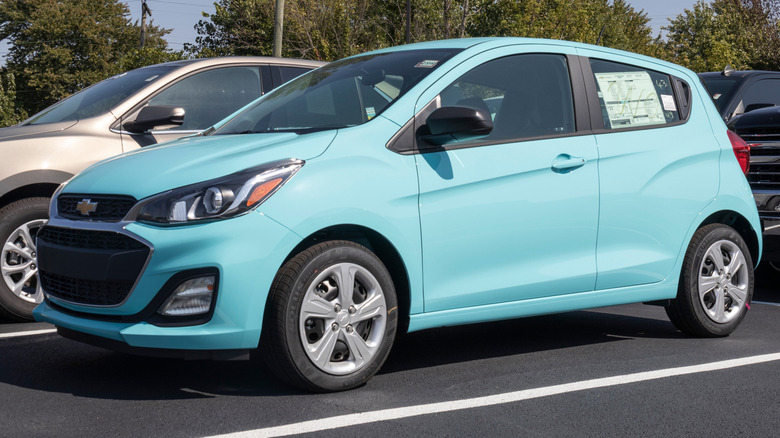
The best comparison we have is what small cars Americans have purchased in the past. We reached out to Stephanie Brinley, Associate Director, AutoIntelligence at S&P Global Mobility, for context. She told Jalopnik that the best segment to look at in the U.S. would be the microcar segment, which consisted of vehicles like the Chevy Spark, Mini Cooper, Smart ForTwo, and Fiat 500. While these cars aren't technically kei cars, they're the cars we have data on. According to Brinley, 2014 was the best year for the microcar segment, selling 114,000 units. The best seller in that segment was the Spark. Most of those vehicles aren't even available here anymore.
Brinley also mentioned that much of the talk at the time around the bankruptcy was how the Big 3 couldn't build the smaller cars that are competitive in the rest of the world. Post-bankruptcy, we got the Fiat 500 and Dodge Dart, the aforementioned Chevy Spark and Sonic, and the Ford Focus. The plants that built those cars domestically were making trucks, and if you check today, they are making trucks once again (or will be soon).
When we had a chance to buy smaller cars in the past, most of us chose not to purchase them.
So, what would it take, exactly?
Now that we know what didn't work before, what would it take for it to work this time?
"I'm guessing you probably need a minimum of 200,000 units," Sam Abuelsamid, VP Market Research at Telemetry told Jalopnik in an email. "It might be possible to get the number down if we follow some of the Slate strategy with unpainted bodies." The Slate angle is relevant here because that is a new product in a new factory, which would likely be what is necessary for any automaker to ramp up kei production in the U.S.
Even in the larger microcar segment in its best year, sales totaled only three-quarters of the amount needed for just one company.
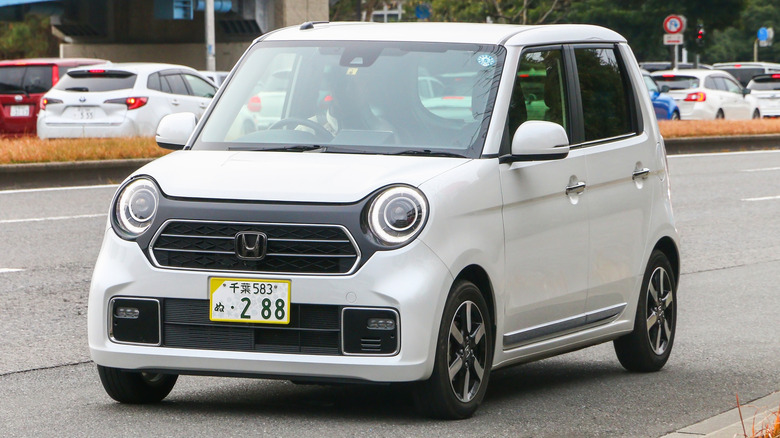
Abuelsamid said that an EV kei car would likely make the most sense for the American market, because it'll be quicker than the gas-powered cars on sale, and could be safer in a crash. "[Y]ou typically have a front engine, front drive, which will have less crush space than a small motor." He goes on to point out that the Honda n-one:e sells in Japan for around $18,000. He thinks you could get under the $20,000 threshold with 50,000 to 100,000 units a year. He does admit that pricing would be less for the gasoline-powered ones, but it still wouldn't be a direct conversion from the yen to the dollar.
If wishes were horses
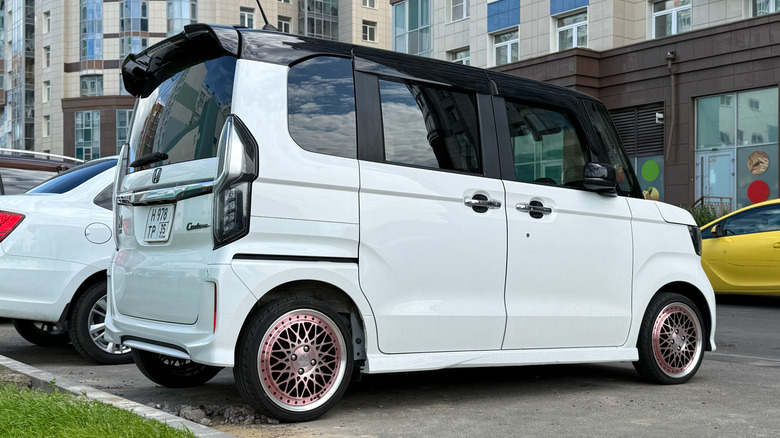
If you can arrange a 50,000-person-a-year group buy, then in two years (the amount of time it'd take to retool a factory to build the kei car), you could have one in your driveway. But you'd need repeat sales every year to convince an automaker to make that move. There is no current data to suggest that the general public would take to a kei car in the quantities needed. Brinley doesn't even believe a significant increase in energy costs (fuel or electricity) would shift the needle enough for the kei car segment.
Kei cars could offer the buying public an alternative to the increasing bloat of our current swath of automobiles, and they do have a certain appeal to them that you can't find on other cars. It's just that it's extremely unlikely that it'll happen, and that you shouldn't get your hopes up for anything more to come of this than a series of social media posts from the president.