

Horsepower Vs. Torque: Which Matters More For Towing?

When looking at the performance capabilities of any vehicle, horsepower and torque shouldn't be pitted against each other. In fact, they are simply different sides of the same coin, so to speak. An automobile is going to need both horsepower and torque — but, depending on the application, one might be favored over another.
Let's look at an example of a vehicle which excels at towing. The 2023 Ford Super Duty can tow up to 40,000 pounds, more than any truck in the history of trucks. Why can it pull so much weight? Because it features 1,200 pound-feet of torque. Torque is the force responsible for getting an object to rotate. If you've ever wrestled with opening a stubborn pickle jar, the force needed to move its lid is an example of torque. In terms of automobiles, high torque is most important for towing, because you need extra force at low rpm to get the wheels rolling from a stop.
While torque is a measure of force, an engine's strength is measured in horsepower. The difference between the two is that torque focuses on energy generation while horsepower is how quickly that energy is used. Imagine an analog gauge with torque written on the left and horsepower on the right, indicating which one was primarily being used. Starting from a stop, the needle would be on torque all the way to the left, but as you accelerated, the needle would move closer to horsepower, until it's all the way to the right at high speeds. This doesn't mean that only torque or horsepower is being used exclusively at any time. Each one is always present — just to lesser degrees at different points in time.
Torque matters for more than just towing
You might conclude that torque only matters for large pickups pulling heavy trailers since it's all about measuring force. In fact, a sports car for example, wouldn't even need much torque, right? Wrong. While ample torque is critical for towing, it's also responsible for those impressive performance car launches from the starting line.
Take the extreme example of the Bugatti Veyron 16.4 Super Sport, which set a world record back in 2010 for reaching an average speed of nearly 268 mph (431 km/h). Being among the fastest street legal cars ever built, the Veyron was able to achieve this over-the-top figure due to its 1,200 horsepower. However, the Bugatti Veyron's ability to hit 0-60 mph times of just 2.5 seconds is thanks to the brawny 1,106 pound-feet of torque. (Though, this doesn't translate into towing ability.)
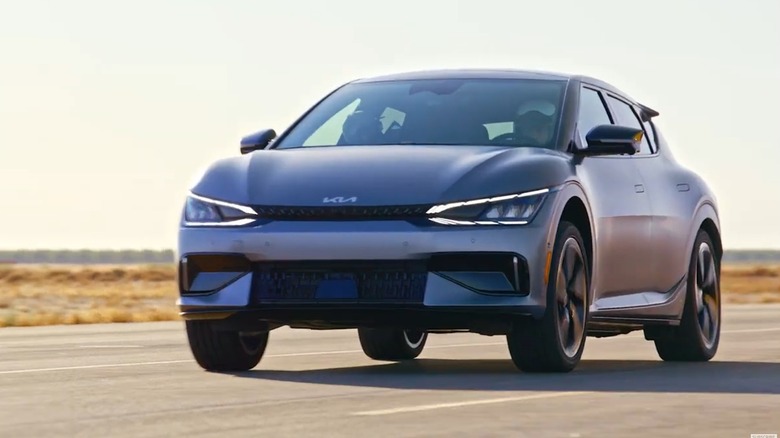
In recent years, electric vehicles have gained attention by demonstrating their ability to deliver instant torque. In an internal combustion engine, there are more steps involved before full power can be sent to the wheels. That's why torque measurements typically include their own rpm figure, indicating when peak rotational force kicks in. But an EV doesn't have to bother with things like fuel, letting it produce peak torque to the wheels immediately. Some of these models have come down significantly in price, as well. You could potentially get a used EV with supercar acceleration for less than a Camry. The 2025 Kia EV6 GT has a combined 568 pound-feet of torque, leading to a 0-60 mph time of just 3.2 seconds.