

11 Great Driver's Cars For First-Time Enthusiasts
The social media school of automotive content consumption wants you to think that by the time you're 23, you should have a G80 M3 with a downpipe and a tune, your own drop-shipping business, and two purebred Doberman pinschers in the backyard. But unless your parents have defense contracts with the U.S. Military or you recently won the Powerball, we're 99.99% sure you don't. Heck, many people will never purchase a brand-new car in their lifetime. And guess what? That's fine. What isn't fine is believing you don't deserve to drive cool cars because they're overly expensive, too involved maintenance-wise, or just intimidating to engage with.
To solve this problem, we've carefully selected 11 phenomenal entry-level driver's cars for your consideration, but first, you should understand our thought process.
Believe it or not, we try to choose our words fairly carefully here at Jalopnik. You'll notice the phrase "first-time enthusiasts" in our headline, and that's on purpose. We don't necessarily mean "first-time driver" — some of you may have had your license for years, and some may be freshly 16 with a small budget burning a hole in your pocket. Additionally, not everybody's definition of a driver's car will be a rear-wheel drive coupe, and as such, we've picked a mix of cars that have different body styles, price ranges, countries of origin, ages, and powertrain layouts. By the end, you might know exactly what your first fun car will be.
Mazda Miata (NB)
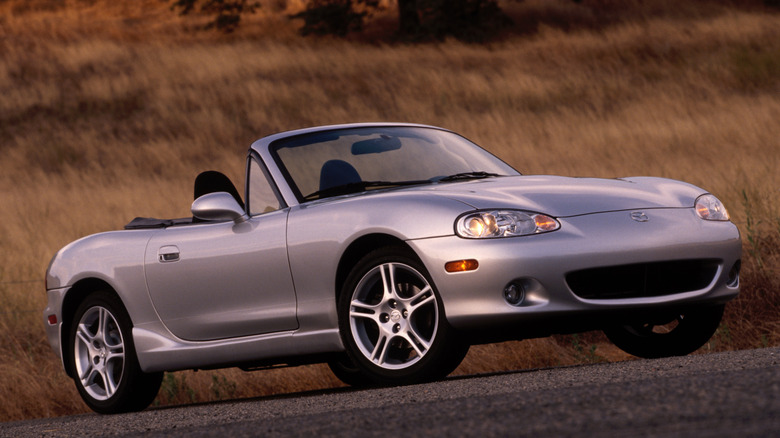
Are you okay with having only two seats? Can you live with a soft top year-round? Can you fit all your stuff in a small trunk? If you checked yes for all of those, good choice — you won't find a better enthusiast car on earth. The specific Miata we're recommending is the second-gen or "NB." Debuting for the 1999 model year, Mazda left the formula that helped it sell nearly 230,000 units in the first generation untouched, keeping the tiny inline-four, lightweight body, and manual transmission (they did axe the pop-up headlights, though).
Under its single-bubble hood was a 1.8-liter inline-four that originally produced 140 hp and 119 lb-ft of torque, though by 2001, those numbers would respectively increase to 155 and 125, thanks to the introduction of variable valve timing. Shifting gears was your choice of a four-speed automatic or five-speed manual transmission (a six-speed was available for high-trim special editions), but there's no debate — get the manual.
So, why the NB in particular? It's cheaper than an NC, and more powerful and refined than the NA. But regardless of generation, a Miata will teach you why power doesn't equal fun, and constantly challenge you to utilize its pint-sized components to their fullest potential. Average used prices, according to Classic.com's data, are around $9,500, but trust us when we say that you'll find them for cheaper in your local Facebook or Craigslist postings. Everyone should drive a Miata once in their lifetime, so you might as well get it out of the way now. Be careful, though, you'll get hooked.
Nissan 350Z
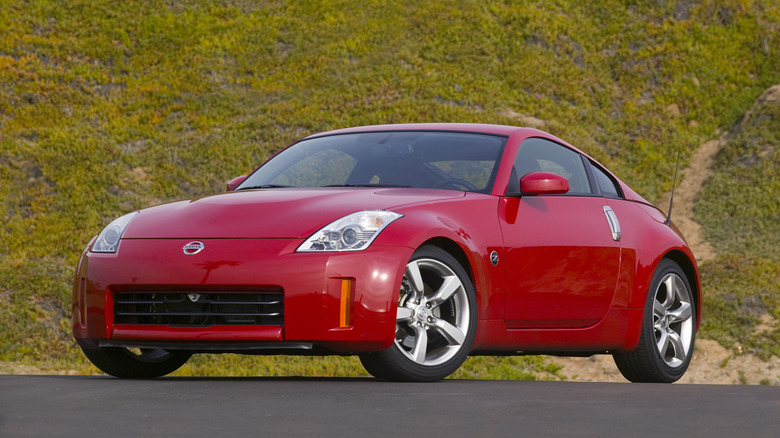
They may seem conformist in today's enthusiast culture, but make no mistake, the Z was a defining car of the 2000s. It first hit the scene in 2003, carrying the torch of a legacy that hadn't been represented since the Z32 300ZX in the 1990s. Its design was timeless, engine symphonic and reliable, and pricing intensely competitive. As a result, the Z was an immediate hit, and would go on a short, yet generationally respected production cycle of seven years before being replaced by the 370Z.
Similar to the Miata, this pick could satisfy buyers of all ages. Of course, the whole two-seater thing might turn some off, but otherwise, the 350Z is comfortable, handsomely styled, and a joy to drive. That last one is made possible in part by the Z's now-iconic 3.5-liter V6 (aka, the VQ). This motor produced between 287 and 306 hp depending on year — so it's genuinely quick (60 mph is over in just 5.4 seconds). However, with the Z, 300 hp is approachable — forgiving, even. The chassis balance and grip levels a driver receives (even in stock form) are tuned to perfection, making spirited driving easy, yet rewarding.
If you can find one in good factory condition (within your price range), do it. Used auction prices hover around the $12,500 mark, but we'd bet the true private sale average is several thousand dollars less. Happy hunting!
Dodge Neon SRT-4
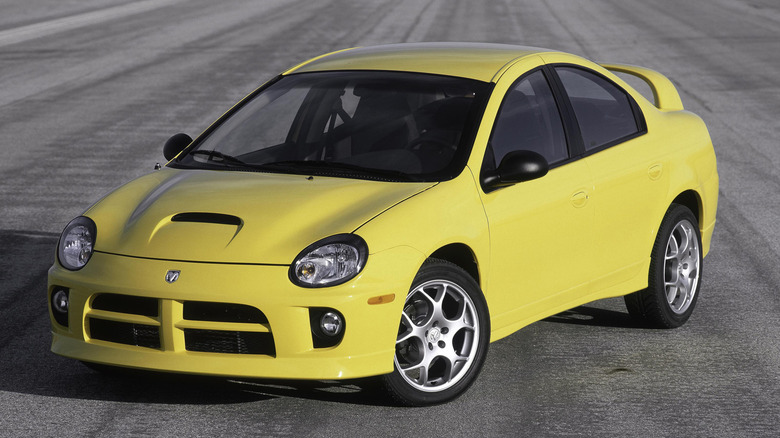
With two rear-drive coupes under our belt, it's time for something a bit funky, so what better than the Dodge Neon SRT-4? The Neon was part of a truly special group of hot compacts in the early 2000s. Think Nissan Sentra SE-R Spec V, Ford SVT Focus, and Mazdaspeed Protege. They had cool stuff like wings, turbochargers, bright colors, and a whole lot of character. Though none were quite as good as the SRT-4. In fact, in a period comparison test from Car and Driver's archives, the Neon took first place against the very three competitors we named above.
Unsurprisingly for a Dodge product, its primary advantage was power. The 2.4-liter turbocharged inline-four was rated at an impressive 215 hp and 245 lb-ft of torque when it debuted, aiding in a rapid 5.6-second 0-60 mph run — the fastest in its segment. And underneath was a chassis that begged to be thrown into corners, and brakes that bit hard.
Okay, time for a disclaimer. Average sale prices are in the $15,000 range, which likely puts this out of reach for a young enthusiast looking for their first driver's car. Additionally, these older turbocharged cars can be a handful to maintain and repair, and though the Neon itself isn't particularly unreliable, it may become an ongoing project. To sum it up, this is an exceptionally special car, but it might be best left to a new enthusiast with more resources and a few more candles on their birthday cake.
BMW 325i Sedan (E36)
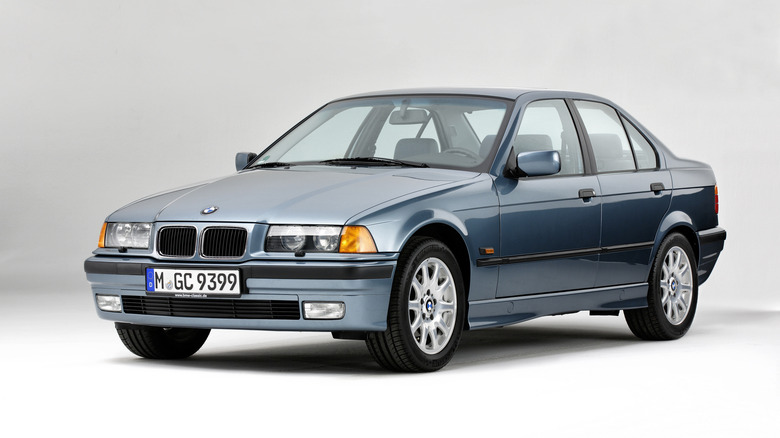
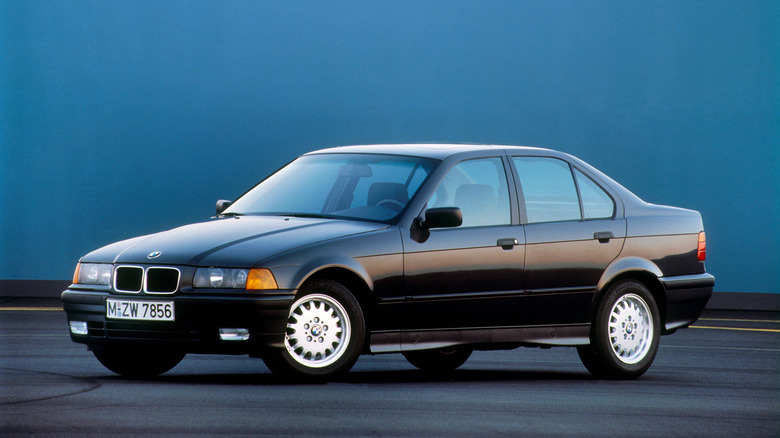
The E36 is something of an odd middle child in the BMW 3-Series storyline. It existed between the venerable E30 and the sleek, refined E46, covering the entire decade of the 1990s for BMW's compact segment. But we contend that its "oddball" status is precisely why it remains such a great deal on today's market. Our exact choice, the 325i sedan, can be had for less than $10,000, and likely far cheaper on the private seller listings in your area.
Produced from 1992 to 1995, the 325i sedan sported the 2.5-liter M50 straight-six, capable of a healthy 186 hp and 181 lb-ft of torque. Paired with the factory five-speed manual, the 325i valiantly carried on the high standard of handling and chassis dynamics that the E30 left behind. You just know what you're getting with this car — a simple and effective interior, a smooth and melodious engine, and unmatched driver engagement in the segment.
The M50 under the hood is known as one of BMW's most reliable engines to date, so if you have to have a cheap German sports sedan and don't want to deal with what typically comes from a cheap German sports sedan, the E36 325i is calling your name. Not to mention, four seats go a long way for a first enthusiast car — more room for friends, spare parts, and tools if you happen to need them. Just promise us you'll do the routine maintenance, or this sweet deal could turn sour real fast.
Ford Mustang GT (Fox-body)
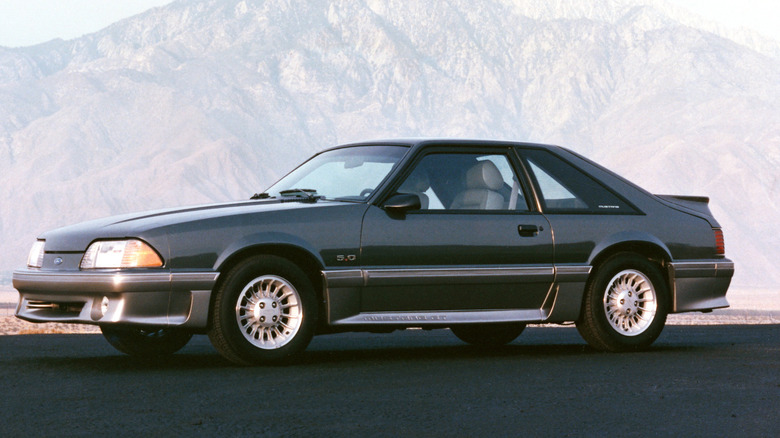
We were tempted to insert the fifth-gen (S197) here, but for the sake of money, we've opted instead for the third-generation Fox-body Mustang. Sure, it's 40 years old, but for the folks out there who live and die by American muscle, what better way to learn basic maintenance skills than on a simple classic car like a Mustang? And you better believe a Fox-body is going to need some work.
Any GT will do, but for most, the post-1987 facelift, also known as the "Aeronose," is the most desirable, as it ditched the outdated square quad-headlight design for a more slippery and cohesive body style. Even better, the entire Fox lineup had switched from carburetors to fuel injection in 1986, which will make your life much easier.
With the base 5.0-liter V8 making 225 hp (205-210 for earlier GTs) and the whole deal weighing no more than 3,200 pounds, the Fox-body is a certified joyride when paired with a five-speed manual. It may not be as refined as its newer, foreign counterparts, but classic (and capable) American muscle doesn't come much more affordable than this — these exist for under $10,000 all day. It's also worth mentioning that the Fox-body has truly come into its own in recent years, exuding that boxy Radwood aura (it even raced in DTM), and now, you could fix one up and make some decent cash as they continue to appreciate.
Porsche 944
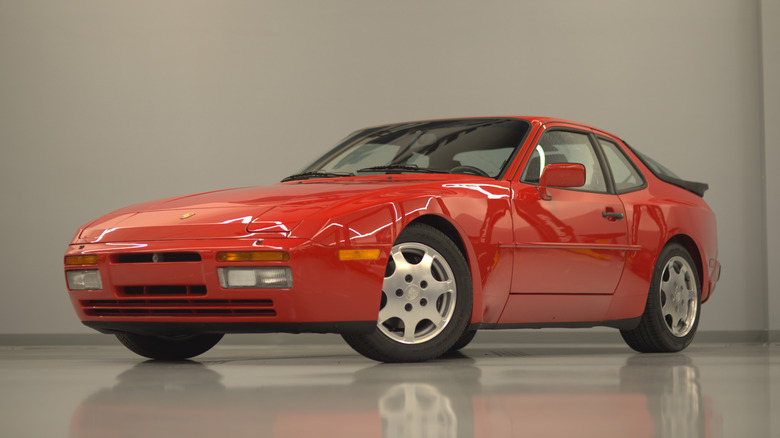
If you aren't familiar with this P-car, the 944 was essentially the sweet spot in Porsche's 20-year-long front-engined experiment. First appearing in 1982 (for Europe), it was the last of the three siblings to debut, following the entry-level 924 sports car (1976) and the grand touring 928 coupe (1978). Long story short, the 944 was an evolution of the 924, powered by a new engine derived from the 928's V8.
The result was a stunningly elegant fender-flared sports car with improved grip and additional power thanks to its 2.5-liter inline-four. It was more formidable than the fragile 924, yet far daintier and tossable than the heavy, Autobahn-tuned 928. The transaxle layout made for a perfect 50-50 front-to-rear weight distribution, and by 1984, the 944 had won Car and Driver's Best Handling Import Car. Enough said.
For the purposes of this list, we're only recommending the base 944 that used the 147 hp 2.5-liter inline-four and the standard five-speed manual. It delivers a comparable driving experience to the later Turbo and 3.0-liter variants for a heavily discounted price. Official sales data indicates that the average 944 will cost you around $14,000, but median prices are likely $10,000 or below. Beware, though. This is a 40-year-old German car, and while they are pretty reliable, parts will break, and they will cost a premium. But you know what? Life is short, and trust us, you need a 944.
Volkswagen Golf GTI (MK4)
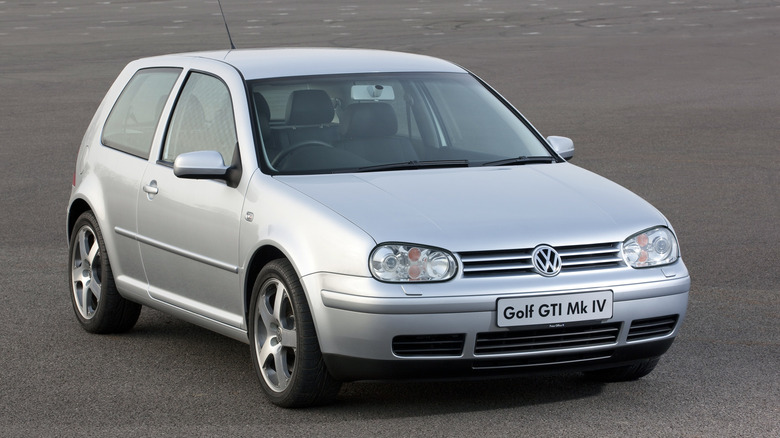
Automotive journalist (and genius) Jason Cammisa once said that the best car ever made was the Volkswagen Golf GTI, citing its ability to do more things well than any other car on the market (i.e. its mix of fun, practicality, reliability, speed, and comfort). He also said that there is no better option for an enthusiast who has to choose just one car. It's almost impossible to argue with that sentiment.
The GTI is often overlooked because of its sober design and incredibly German character, and you probably wouldn't even notice one driving past, mistaking it for yet another boring train car-esque mode of transportation. To a new enthusiast who is enticed by the flashy M3s and WRXs of the world, that underwhelming visual description might sound off-putting, but put that aside, and it becomes incredibly difficult to find something better than the GTI.
We've found that a happy medium in the GTI lineage is the MK4. It's cheap (good condition examples usually sell for around $10,000), completely inoffensive in the looks department, and wildly enjoyable in any scenario. Plus, it's got hatchback space, a reliable 1.8-liter turbocharged inline-four making 150 hp (or a 174-hp VR6), and a dedicated community like no other that'll surely know how to help if anything goes wrong. Oh, and as always, seek out a manual example if you can.
Subaru BRZ / Toyota 86 / Scion FR-S
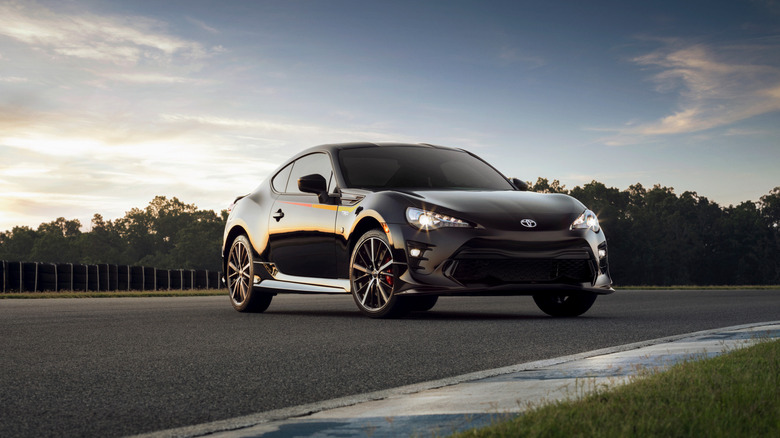
When Toyota purchased a $300 million stake in Fuji Heavy Industries (Subaru's parent company) in the 2000s, not a soul on Earth expected a sports car to come from it. Two giant Japanese automakers known for reliable family cars under the same roof? Sounds like a lot of fuel efficiency and not much else. But thanks to Toyota CEO Akio Toyoda and a few special engineers who wanted to revive the brand's once fruitful sports car segment, a pitch for a two-door enthusiast car was greenlit.
Fast forward to 2012, and we received a very important car. It had many names under three different brands, but underneath, these triplets were dripping with the same special sauce. The Subaru BRZ, Toyota 86, and Scion FR-S, as it was known in North America, shared everything from the chassis to the engine, minus some differences in styling cues. The powerplant came courtesy of Subaru — a 2.0-liter naturally aspirated flat-four initially producing 200 hp and 151 lb-ft of torque, all sent to the rear wheels via a six-speed manual or six-speed automatic transmission.
These cars were to the 2010s what the 350Z was to the 2000s. They were incredibly affordable ($25,000 base for the 2013 FR-S), had a playful yet secure chassis, and were among the best handling cars of their generation. Still, these cars are approachable even for a first-time enthusiast, and would honestly be a great vehicle with which to learn how to drive a stick. One could be yours for an average of $15,000.
Subaru Impreza WRX (GG/GD)
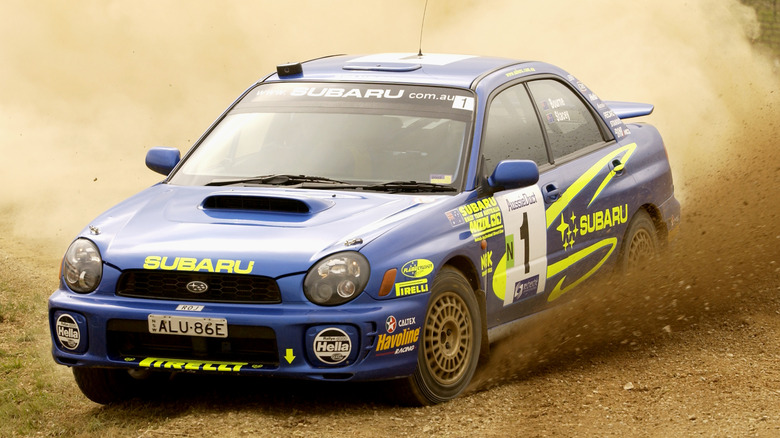
Speaking of Subaru, let's not forget what this AWD brand is known for — rally racing! The Subaru Impreza WRX is our next pick, and if you live in rainy northern states, you've seen hundreds, maybe even thousands of these little compacts running around town over the years, and for good reason. With the exception of the Mitsubishi Lancer Evolution, the WRX practically invented the all-wheel-drive sport compact segment, and by the time the GG/GD generation had come out, this car had a decade of hard-fought rally stage experience under its belt.
The second-generation Impreza WRX had two facelifts, comprising three distinct front facias which are known as the Bug-eye, Blob-eye, and Hawk-eye, with the main differences being that the 227 hp 2.0-liter turbocharged flat-four was replaced by a 230 hp unit for the 2005-2007 model years. Otherwise, you can virtually take your pick, depending on your preference for an innocent or an aggressive mug.
Aside from the inherent all-wheel-drive understeer one notices when comparing it to a rear-driven sports car, the WRX touches just about every basis a new enthusiast could want — decent reliability, plenty of stock power, a massive aftermarket scene, great early 2000s looks, and rally-bred driving dynamics. The auction stats say average sales prices are around $13,000, but do the research yourself, and we're confident you'll find functional examples for around half that.
Honda Civic Si Sedan (8th-Gen)
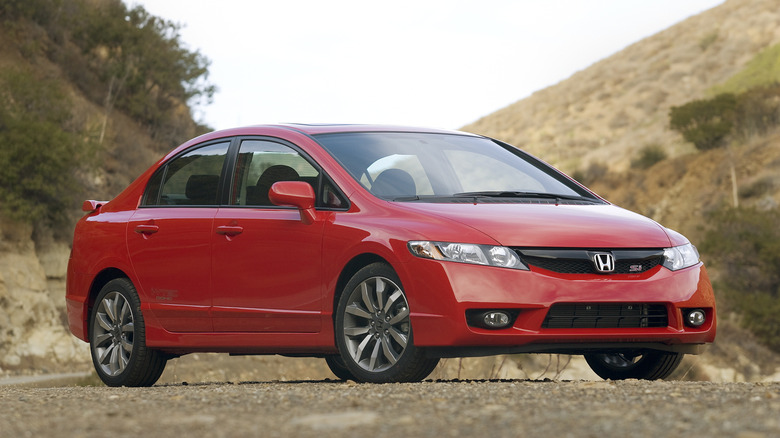
Almost every car on this list will give you some degree of trouble. The Miata? Very little. The E36? Probably more than average. But a Honda Civic? Forget about it. Truth be told, basically any manual transmission Honda Civic would be the most reliable first-time enthusiast car you could find, but to narrow it down, we've landed on the 8th-gen Civic Si. This trim isn't base, nor is it the Type-R; it's simply a composed and sporty driving experience that will elevate the daily commute.
Here's what it got: An 8,000 rpm, 197 hp 2.0-liter inline-four (with VTEC), a six-speed manual transmission, stiffer dampers, springs, and rollbars, and red-stitched sport seats, among other small details. The best way to describe the Si sedan is "nimble." Despite its extra doors and glass, this isn't a big car, and the extra tightness in the suspension setup brings the chassis properly alive. And of course, that screaming Honda four-pot is nothing short of perfection.
Pricing is typical for any enthusiast car — the fewer the miles, the more money you'll have to spend. And for the Si, a less-than-perfect example should be easily trackable for less than $10,000. Want to modify it? Have a field day. The aftermarket is bustling, and replacement parts (if you even need them) are easily sourceable and cheap.
Lexus IS300 (XE10)
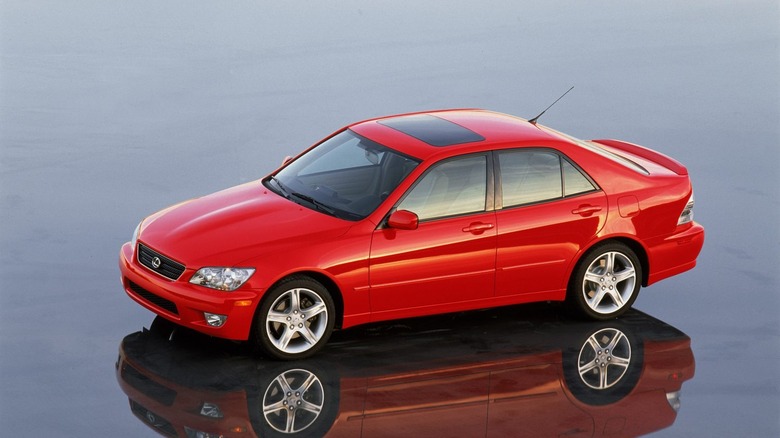
The first-gen IS300 is everything a driving enthusiast could ever want from Lexus as a brand, but funnily enough, it sort of didn't make sense at the time. Its philosophy was a far cry from the overachieving full-size sedans we had come to know Lexus for, trading a refined city luxury experience for hitting redline on a back road. But hey, we're not complaining.
The IS300 sports the legendary (non-turbo) 3.0-liter 2JZ straight-six, which promises bulletproof reliability, smooth operation, and more than enough power (factory rated at 215 hp and 218 lb-ft). The mini Lexus, while no M3-killer, was praised for its ability to do its best impression of athletic dynamics and overall grip while utilizing all of its 215 hp.
It's possible to find these for $9,000-$10,000, but for unmodified, lower-mileage examples, prices can shoot up to the $15,000 range. As always, though, you never know what's hiding on the internet, so do your due diligence. Be prepared to spend a little extra on parts compared to your Mustangs, Civics, or Miatas, as they have become exceedingly rare in recent years. However, maintenance is all you'll really have to do on a 2JZ-powered Lexus, and you best believe it'll still be kicking 20 years down the road when all of its German competitors are in a desolate scrap-metal yard.