

Hard Driving Your EV Might Be The Best Thing For Its Battery
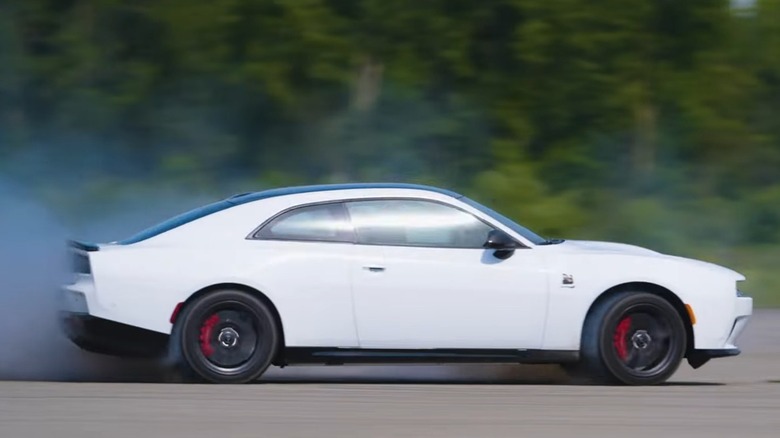
Whether you're a fan of them or not, electric vehicles do offer some advantages over traditional internal combustion engine automobiles. For instance, tests have shown that a high-mileage electric car is basically as efficient as a brand new one. However, lingering in the back of the mind of many EV owners is the ever-present concern of a failing battery. It's not hard to understand why, as a replacement could cost up to $36,000, and that doesn't include the cost of the install.
So no one batted an eye when older tests cautioned drivers to take it easy behind the wheel of an EV, as things like an aggressive lead foot could wear down the battery quicker. It wasn't just pedal-down acceleration that was vilified, either, as even sudden stops have been labeled as detrimental to the health of the battery. The problem, of course, is that any human trying to navigate modern roads day-to-day will regularly need to be aggressive or sudden. Don't you have to accelerate quickly to pass or to merge onto the highway? Haven't there been occasions (through no fault of your own) where you needed to forcefully apply the brakes?
Fortunately, some new research out of Stanford has come to a drastically different conclusion. In fact, quick acceleration, braking, and brief moments of rest could actually lengthen the life of cells inside the battery by as much as 38%. This turns conventional wisdom on its head, and it may provide many EV owners some peace of mind. But why is this new data so different from previous research findings?
The Stanford team found a potential flaw in previous tests

The previous approach to this sort of research was to apply a consistent and continual load on the battery to measure its performance and lifespan. This, unfortunately, is completely counter to the unpredictable conditions of real-world driving. Such conditions can vary greatly, especially when considering the actions of other motorists.
So, the team at Stanford decided that rather than a static load, they would instead include tests that mimic realistic loads. These tests cover what happens when continually accelerating and braking as you would when navigating through the city. By applying several different discharge profiles across 92 lithium-ion batteries, the Stanford team proceeded with these for over two years. Not only did this approach reveal some surprising results in terms of battery lifespan, but it also uncovered some problems when exposing EV batteries to constant loads.
This new research discovered that the previous tests were placing strain on the batteries. The constant load facilitated lithium plating, which describes a gathering of metallic lithium on the anode, contributing to battery wear. If that wasn't bad enough, Stanford also discovered that a buildup of high temperatures shortens battery life. This is why electric vehicles like Tesla's, Ford's and GM's use cooling tech on the batteries, to help minimize heat.
Good battery practices are still important for a greater lifespan
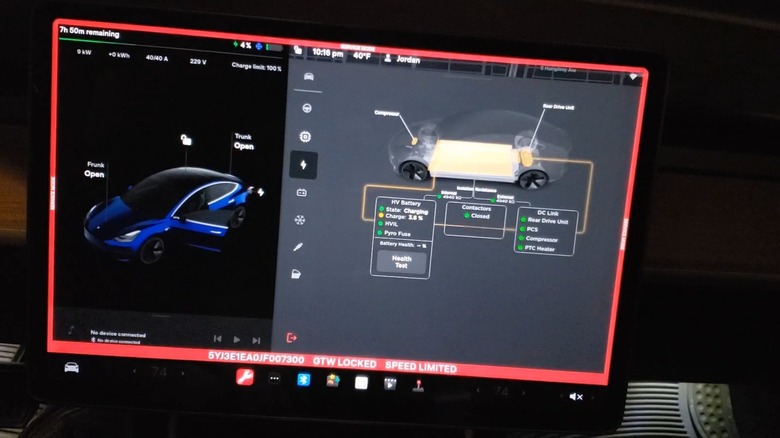
While you might not need to be as concerned behind the wheel of your EV in terms of being gentle with the pedals, there are still ways you could hurt your batteries. For example, you should avoid draining the batteries completely or charging them fully. The sweet spot for longevity has been shown to be between 20% and 80% charge.
Just like with traditional gasoline-powered cars, leaving your EV stationary for lengthy periods of time isn't healthy for it. However, there are moments when this may be unavoidable. You should consider keeping a regular eye on your charge level during those times, as it can lower over time. This can drop to levels below 20%, forcing the battery to work harder and leading to a shortened lifespan.
Be sure to stay on top of scheduled battery tests and don't put off software updates, as they could pertain to battery management. For those who want to take it a step further, there are standalone diagnostic devices that can provide more information. We tried a new tool that provides actual EV battery health data, and it worked so well that we think it could be a big game changer in terms of used EVs.