

Overfilled Your Oil? Here's How To Get Rid Of The Excess
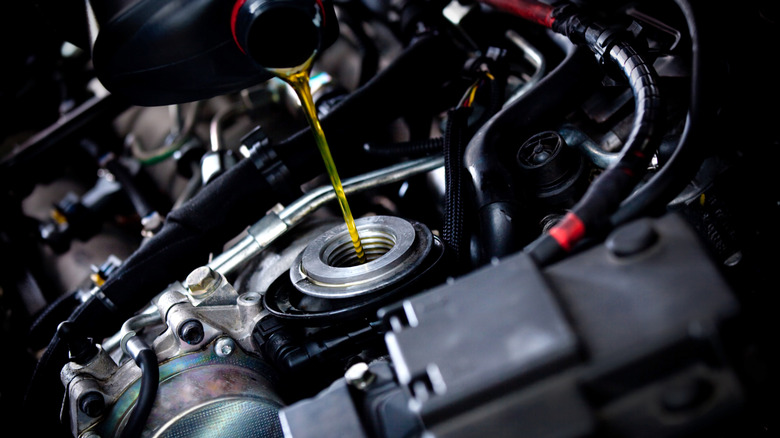
If you've handled plenty of DIY jobs on your car, changing the oil seems simple enough. Still, it's easy to overdo it and wind up with too much in the crankcase. If you change your oil while parked on uneven ground, you'll get an inaccurate dipstick reading. When on a level surface, the oil should sit between the low and full marks. But on a slanted surface oil pools at one end of the pan, which may make the level look higher or lower than it actually is. If you get a false low reading, you'd think the engine is still short on oil, add more, only to find the level sitting past the full mark once everything settles.
You might also get a false reading if you pull the dipstick right after turning off the engine. The oil's still making its way back down through the engine and hasn't fully drained into the pan. Let the oil settle for a few minutes and the engine cool down a bit to get an accurate reading.
If you need to top off your engine oil, add it gradually and check the dipstick between pours. Since most engines only need about a quarter of a quart to move from low to full, even a small overpour can push the level too high.
When there's too much oil, you can loosen the drain plug slightly to release the excess. If you'd rather avoid crawling under the car, an oil extractor through the dipstick tube offers a cleaner and more controlled fix. These methods work well, but they have to be done correctly to avoid overdraining and ending up with oil below the safe mark.
Signs of overfilled engine oil
Aside from a dipstick reading — you'll need to know how to read the oil level correctly — there are other ways to tell when you've gone over. If you pour in about a quart too much oil, the crankshaft can end up churning through it like a blender. That constant whipping action turns the oil into a frothy, bubbly mess. Once that happens, the oil can't do its job properly, so spark plugs get fouled, the engine starts idling rough, and you might even feel it misfire.
Also, when that frothy mix takes over, the oil can't flow smoothly and coat all the moving parts since it's full of tiny air bubbles. Those bubbles break up the oil film, so the metal parts start rubbing against each other and heating up. Before long, the engine's running hotter than it should, and eventually, that extra heat and friction can lead to warped components, blown seals, or even serious engine damage.
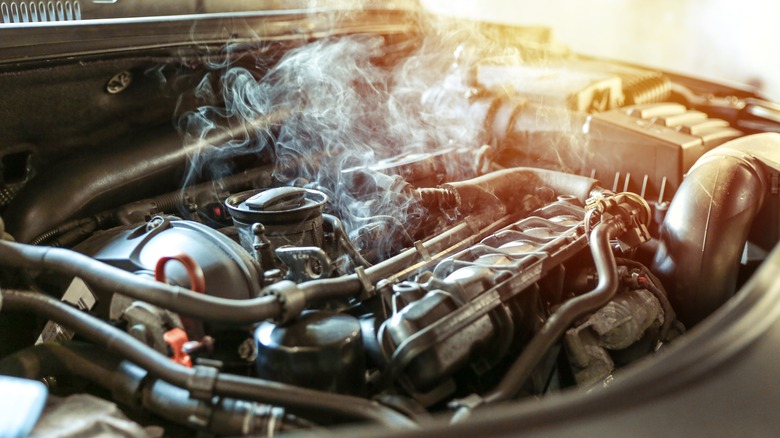
When there's too much oil in the system, it eventually looks for a way out. Extra oil can seep past seals or gaskets and end up on hot engine parts, where it starts to burn off. That's when you'll notice the sharp, unpleasant smell of burning oil, and if you pop the hood, you might spot traces of oil or smoke.
Oil overfill fixes that actually work
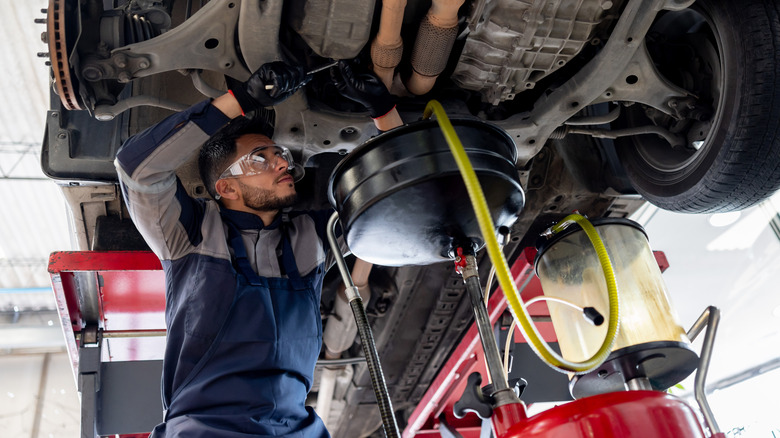
You can remove excess oil using an oil extractor, a simple hand-, electric-, or air-powered vacuum pump that pulls oil out through a thin tube inserted down the dipstick channel. When using it, slide the extractor's tube down the dipstick opening until it reaches the oil pan. Then activate the pump, and let it draw the oil slowly into the container. Stop every few ounces and recheck the dipstick to confirm the level falls back within the safe range.
Alternatively, you can drain the excess oil from underneath the car by jacking it up and setting it securely on jack stands so you have enough room to work safely. Once you're set up, slide a drain pan under the plug and crack it loose with a wrench like you would during a DIY oil change. Turn it just enough for the oil to start dripping out — you don't need to pull the plug all the way. Keep a hand on it so it doesn't fall into the pan, and let a small stream of oil run out until you've drained a few ounces. Then, tighten the plug again and recheck the dipstick.
After the level checks out, fire up the engine and look for any leaks around the drain plug or oil filter. Also, listen for odd sounds such as ticking, which can indicate low oil pressure. If any of these issues persists, you may have a deeper problem with oil pressure or circulation that needs a mechanic's attention.