

3 Of The Biggest Problems With Ford's PowerShift Transmission
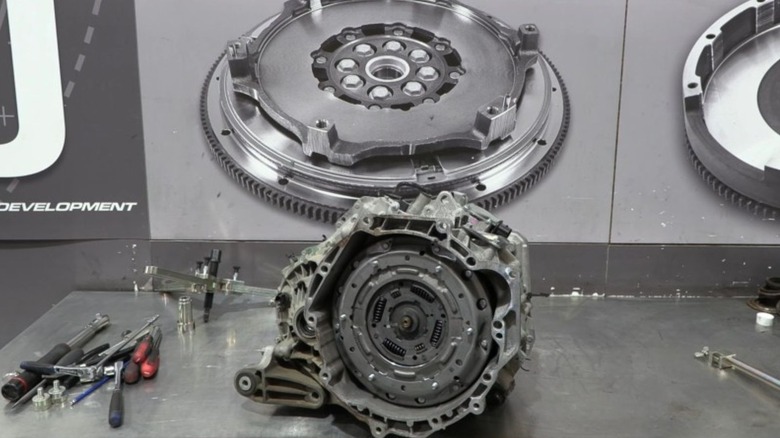
You know that gut drop when your car starts to sound or feel off. Maybe it's a strange shudder, a delayed shift, or that dreaded warning light on the dash. You take it to the shop, hoping it's just a sensor or something simple your mechanic can sort out in an afternoon. Then comes the bad news that your car's automatic transmission is failing. You start running through the costs and downtime in your head. And as you wait, it only gets worse when the mechanic can't seem to fix your transmission.
Several thousand Ford drivers ended up dealing with such a crisis after buying cars equipped with the brand's ambitious PowerShift transmission. Ford promised a smarter, more efficient take on the automatic gearbox, one could deliver the smoothness of an automatic with the control and fuel savings of a manual. But this apparent technical leap forward ended up leaving many drivers frustrated, stranded, and battling unpredictable performance issues. Digging deeper, the trouble started with the PowerShift's unique design and the way it managed gear changes.
Harsh gear engagement
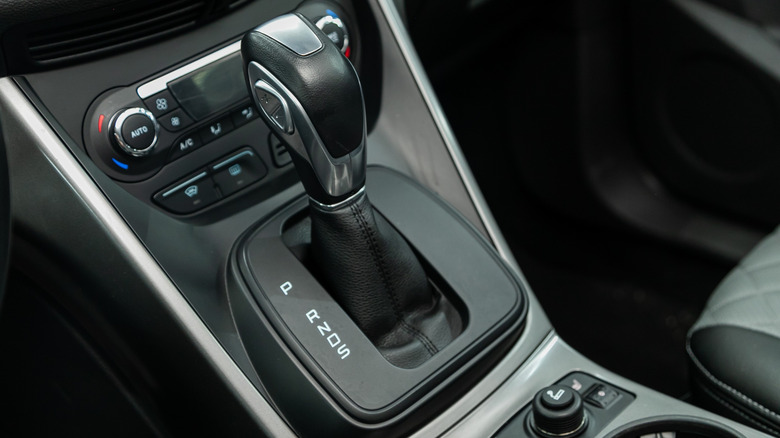
The Ford Powershift transmission functions close to a manual transmission run by a computer. Basically, this transmission uses two dry clutches where one clutch controls the odd gears while the other handles the even gears. That means when the car is operating in one gear, the computer automatically sets up the next gear on the second shaft. In turn, the shifts are faster and smoother, leading to better fuel economy compared to traditional automatics. However, in reality the system is less than perfect as drivers experience jerking between gears. Sometimes, there's delayed response when accelerating and clunky gear changes during stop-and-go traffic. This made the car feel unpredictable, especially when merging or pulling out into traffic.
It's clear that this problem traces back to the dry-clutch design and software calibration. The dry clutches lacked oil for cooling and lubrication, so they wore out faster. Inevitably, the worn-out clutches slipped before engaging and caused delayed shifts. There were also flaws within the transmission control module that caused shifting issues. This module reads signals from sensors around the engine and gearbox to decide which gear to select and how quickly to engage it. Software flaws or faults within it caused shifting issues.
Ford attempted to fix this issue through multiple software updates and technical service bulletins. They also replaced clutches and seals under warranty, although in many cases the issues later resurfaced within months. This led to class-action lawsuits in which drivers claimed Ford knowingly sold cars with defective transmissions. The legal backlash forced Ford to issue settlements and buyback programs for the faulty Focus and Fiesta models.
Transmission warning lights
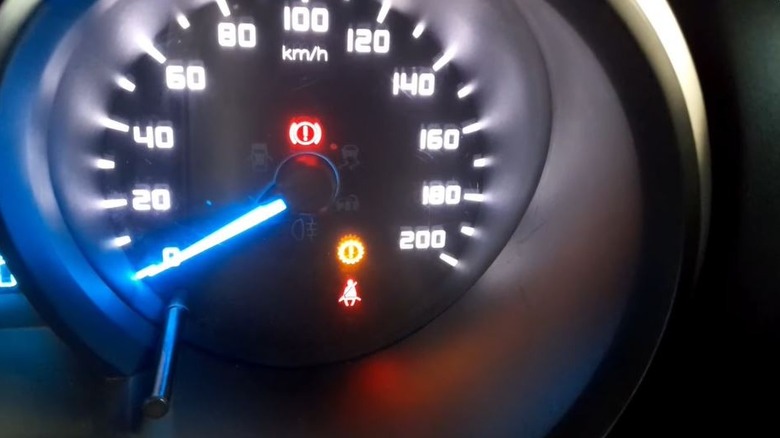
The check engine light or transmission malfunction warning on the dashboard often lit up suddenly with the Ford's Powershift transmission. This usually meant the car's transmission control unit (TCU) had detected a fault within the system. Oftentimes, it was tied to the clutch packs, sensors, or hydraulic pressure controls.
Powershift's dual-clutch design hinged on precise electronic coordination to handle gear changes. But when that synchronization faltered, whether due to worn clutch material, faulty solenoids, or software miscommunication, the system would trigger a fault code. Most drivers saw this light as the first sign of more trouble. It often preceded slipping gears, shuddering during acceleration, or the car abruptly entering limp mode, restricting power to protect the transmission from further damage.
Minor issues like outdated software were sometimes resolved through a TCU reprogramming. However, when the underlying problem was mechanical, such as worn clutch packs, leaking seals, or faulty mechatronic solenoids, the fix usually involved replacing those parts. Ford later introduced revised clutch materials, upgraded seals, and improved control modules in an attempt to reduce overheating and slippage. In some cars, entire transmission replacements were the only lasting solution.
Grinding noises
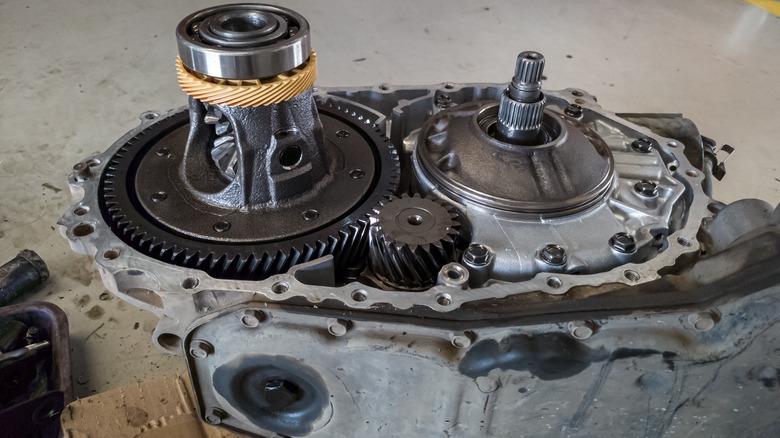
Drivers often reported harsh metallic grinding or rattling sounds when shifting from first to second gear, or during low-speed acceleration. At low speeds, the engine and transmission speeds are changing rapidly, but the torque demand is still high. The system has to disengage one clutch for the first gear and engage the other for the second gear almost simultaneously.
In a properly tuned dual-clutch system, this happens smoothly and goes unnoticed. But in the PowerShift, fluid viscosity changes made the timing even harder to control. When temperatures were high, the transmission fluid thinned out, reducing its ability to lubricate and protect components. In cold conditions, it thickened and slowed clutch response. These fluctuations affected how quickly the clutches could connect and disengage during gear shifts.
This is why the grinding was most obvious in stop-and-go traffic or driving up a gentle incline, when the transmission was constantly juggling those lower gears under light throttle. Ford issued several software updates that adjusted clutch timing and briefly reduced engine torque during shifts to smooth power delivery. The change often softened the grinding for a short time, but as clutch wear worsened, the noise inevitably returned.