

How Long Can You Park At A Rest Stop? Here's What U.S. State Laws Say
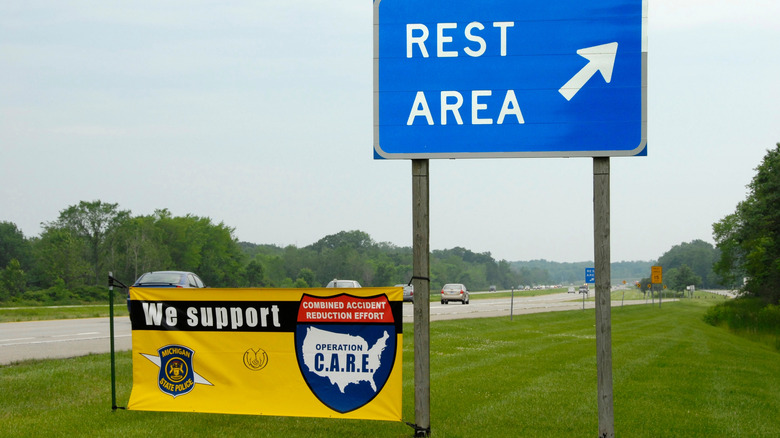
Rest areas have been a part of the American travel experience for well over a century, with some of the first being stage coach stations, where both passengers and horses could stop to take a break. With the invention of the automobile and interstate highways, rest stops became essential, as the freeway system sidestepped many small towns travelers would have utilized. Today, these rest stops are still prevalent, often with restrooms, vending machines, and parking spaces for weary drivers. We asked you where the worst places to stop on a road trip were and received some surprising answers, including Buc-ee's. Nevertheless, having an opportunity to stretch your legs or grab a few precious moments of shut-eye is crucial.
However, what you might not know is that some states have enacted specific rules around these interstate rest stops, including how long you can stay there. For example, in places like Colorado, Maryland, and Illinois, you're only permitted to stop for between three and four hours. Other states are more lenient. For example, the Michigan Department of Transportation is working on a plan that would allow for stays of up to 48 hours.
Unfortunately, there are also states that have different time limits depending on the rest area. For instance, in Delaware, you can stay as long as you want at the I-95 Welcome Center, but you can only stay for up to six hours if you pull off into the Smyrna Rest Area. However, it isn't just overstaying your welcome at a rest stop that can get you in trouble.
Many states have rules against camping at rest areas

Nearly half of U.S. states have a ban on any sort of camping at their rest stops. And no, sleeping in your car doesn't count as camping, although taking a nap in your vehicle along the highway isn't permitted at all in Hawaii. These rules apply to things like tents, folding chairs, and outdoor cooking equipment, which give the impression that your visit to the rest stop will be a lengthy affair. Those traveling in motorhomes should avoid engaging slide-outs or the awning in these state managed rest areas, even if overnight parking is permitted. Fortunately, for those towing a trailer or driving a motorhome, there are several common overnight RV parking spots that are legal in most states if you need to move on from a rest stop. Although, it's still a good practice to keep a low profile.
Law enforcement does regularly patrol these roadside parks, welcome centers, and highway rest stops, looking for suspicious behavior or activities that aren't permitted. If you're spotted setting up some lawn chairs and a portable grill, it'll be up to the discretion of the officer as to whether you might be camping or not. In the case of a proposed Michigan law, if you're caught "camping" at a rest stop, it could result in a misdemeanor. However, beyond state laws, there are other reasons you shouldn't hang around a rest stop longer than needed.
Why you shouldn't linger at rest stops
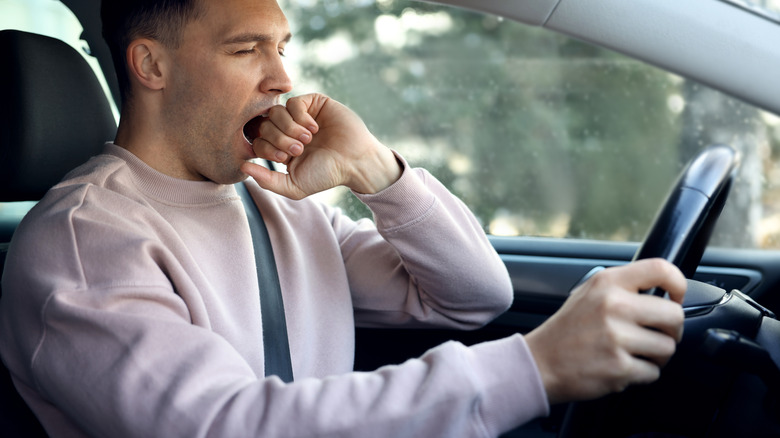
There are a few reasons you don't want to get too comfortable at an interstate rest area. These facilities are designed to keep motorists safer, by providing a respite for drowsy drivers. In a AAA study, it was found that between 2017 and 2021, fatigued drivers were responsible for an estimated 17.6% of all fatal accidents. So, it's critical for tired motorists, including truckers, to have the opportunity to get some much-needed shut eye before returning to the road. While these rest areas typically offer ample parking space, it's a good practice to move on once you've reenergized and allow others the space to do so as well.
Another reason why your rest stop should be brief is that, unfortunately, even with law enforcement patrols, some of these rest areas can be dangerous. Authorities have explained that, because of their location along the highway, these rest stops can attract crime. Assaults, robberies, murders, and a host of criminal activity has been documented at various rest areas. It's for this reason that authorities recommend locking your vehicle doors and avoiding using the restroom alone. Lt. Col. W. Gerald Massengill, of the Virginia State Police, spoke with the Baltimore Sun and explained, "I think criminals perceive rest stops as being easier targets."