

Do You Actually Need To Do Anything Special To Maintain A VTEC Engine?
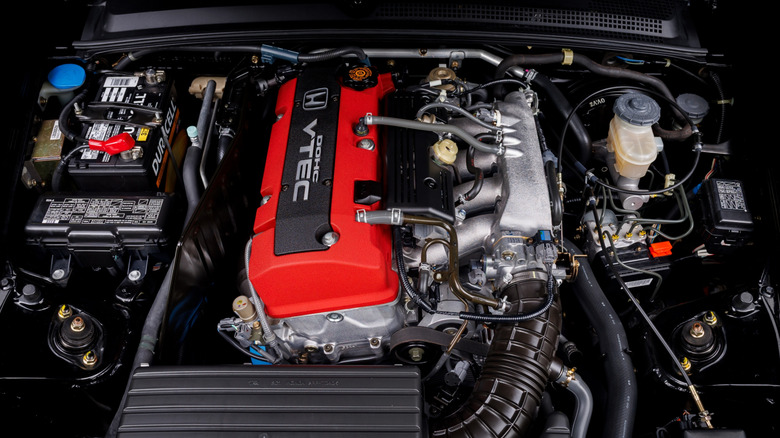
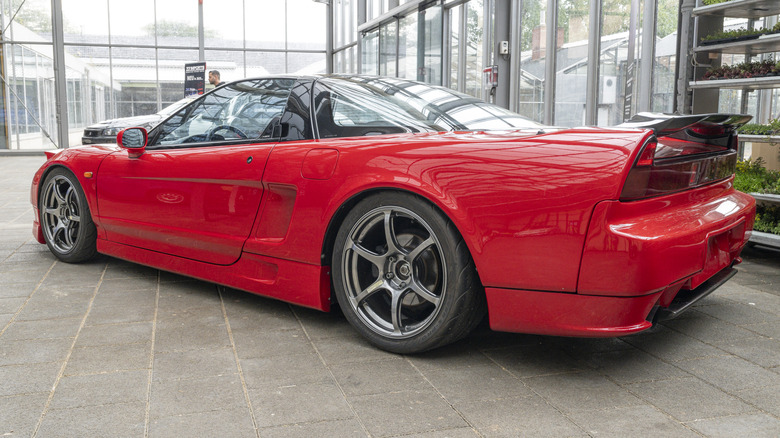
Honda ain't kidding when it says that its proprietary VTEC technology was sort of a wake-up call to a new breed of enthusiasts, proof that small engines can blow the doors off your standard V6 or V8-powered muscle car. Honda's variable valve timing and lift electronic control (VTEC) made its commercial Japanese debut in the B16A for the 1989 Honda Integra XSi and made waves in 1991 for the Acura NSX and its 270-horsepower 3.0-liter C30A VTEC V6, a car that we once said made every other sports car and supercar moot.
Then, the Prelude VTEC arrived on U.S. shores in 1993, and all hell broke loose. It brought with it the 190-horsepower H22A1 DOHC four-banger with VTEC on the intake and exhaust cams, kickstarting the "VTEC just kicked in, yo!" catchphrase. VTEC engines have undergone many iterations since then, but the technology remains legendary for its rock-solid durability and reliability. Early VTEC models, primarily the D, B, H, and F-Series, were reliable to the core if left stock and given the necessary love. Meanwhile, the K-Series (K20 and K24) remains arguably the best four-cylinder engine on the planet, and most Honda VTEC motors can last upwards of 200,000 miles with timely maintenance.
With that said, VTEC engines are no different from gas engines in a Ford, Chevy, Toyota, Mazda, or any other brand in terms of maintenance. Sure, VTEC motors can withstand abuse and incessant revving without batting an eyelash, but they don't require anything special to run forever apart from periodic oil changes, valve clearance adjustments, early leak detection, and the like.
Honda cars require Honda-specific fluids
Besides adhering to Honda's maintenance requirements, insisting on Honda-approved genuine fluids when changing the oil or replenishing other liquids will go a long way toward extending the life of your VTEC engine and the entire car in general. The motor oil quality is particularly important for VTEC engines — infrequent oil changes can mess up the VTEC solenoid in early models or destroy the all-important VTC actuator in K-series VTEC motors, resulting in awful grinding noises on cold starts and the inability to switch between cam profiles, rendering VTEC useless when you're gunning it.
What's more, using the wrong oil may lead to increased friction, early wear, and sludge formation, the latter of which can easily kill the VTEC solenoids and actuators in your Honda engine. Pay special attention to your VTEC engine's oil level — Honda says a VTEC vehicle can consume as much as a quart of oil every 1,200 to 1,600 miles, especially older VTEC engines that consistently endure high-speed, high-revving driving conditions. Oil starvation will kill any engine, VTEC or not.
For guidance, modern VTEC engines, including the i-VTEC with VTC and VTEC Turbo (L15B7 series), require 5W-40 or 0W-20 genuine semi-synthetic Honda oils. The 1.5-liter turbo VTEC in some Civics and CR-Vs, in particular, may experience engine knocks and low-speed pre-ignition if not given the proper oil and frequent oil changes.
Meanwhile, diesel Hondas need Honda Green Diesel Oil, while hybrids should be running on no less than Honda Hybrid Petrol Engine Oil. Confused? Don't be. Your Honda owner's manual has all the juicy bits on the type of oil, oil change intervals, and other maintenance items to keep your VTEC engine running like new.