

What's The Difference Between Detonation And Pre-Ignition?
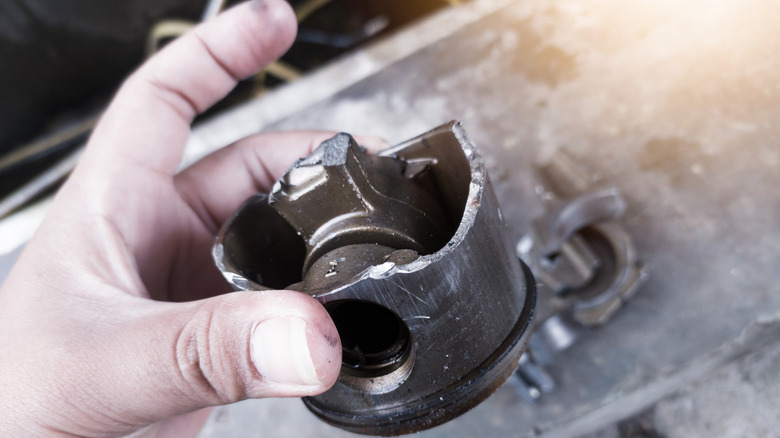
Like much in life, the difference between detonation and pre-ignition, and their effects, comes down to timing. Both refer to a situation when an engine's fuel/air mixture combusts at the wrong time, but detonation occurs after the spark plug sparks and pre-ignition — unsurprisingly — occurs beforehand.
Of course, it's good to be on the same page when discussing engine cycles, so here's a quick refresher on how a typical internal-combustion engine works: The first "stroke" of these four-stroke engines is intake, which refers to when a piston moves down in a cylinder to make room for fuel and air. The piston goes up to compress the mixture during the second stroke, and the spark goes off when the piston reaches the top, causing the third stroke, combustion. Finally, the piston moves upward again to expel leftover gases into the exhaust system.
An engine experiences pre-ignition if there's another high-enough source of heat in the cylinder to cause the fuel and air to start burning before the spark goes off. At that point, the piston is moving upward, trying to compress the fuel/air mixture against its natural resistance, and it ends up getting hit by the downward-expanding shockwaves of early combustion. Just about any irregularity in the cylinder, from carbon buildups to a bad valve, can cause the problem by heating up to extreme temperatures. Coincidentally, though, it's similar to the science behind diesel engines, which rely on glow plugs instead of spark plugs.
Defining detonation
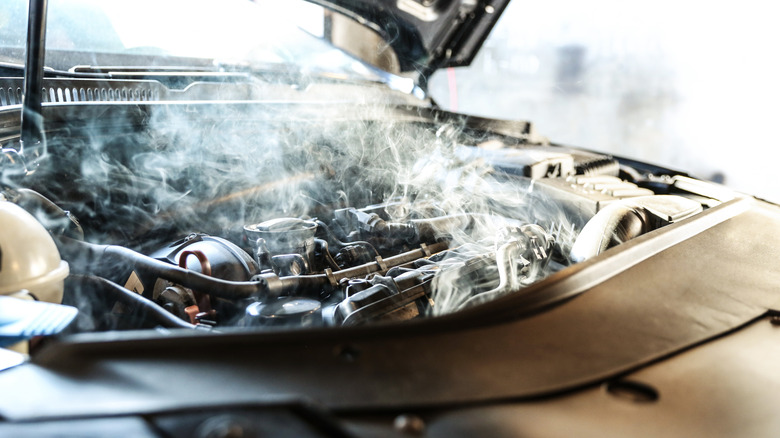
Beyond the timing part of the equation, detonation is fairly similar to pre-ignition in how it operates: Again, there are hot spots in the cylinder, and they can cause the fuel and air to combust when it shouldn't.
A key difference is that the hot spots in detonation are heated up molecules of the fuel/air mixture itself that have been left over after most of the combustion has already happened. Here, though, a chemical change from the heat leaves the remaining molecules extra-sensitive to pressure, and they ignite from the squeezing force. In addition, there isn't nearly as much material remaining to ignite at the wrong time, letting an engine withstand more in the way of detonation than pre-ignition. Backed by a full charge of fuel and air, on the other hand, pre-ignition causes so much heat and pressure that it can destroy a piston head in just a few hundredths of a second.
That's not to say you should let your engine go if you notice it knocking — a common symptom of detonation. The noise is the sound of shockwaves bouncing off the cylinder walls, and they're so strong they can destroy the usual thin barrier of lubrication between the walls and the piston heads, leading to highly destructive metal-on-metal friction. Left long enough, it can destroy the engine just as surely as pre-ignition — and don't forget that rising prices mean your next repair bill may be a lot more expensive that you thought.
Bonus question: What is low-speed pre-ignition?

It turns out that certain engines — turbocharged units with direct injection — can be especially prone to what's called low-speed pre-ignition. The results are the same, in that the fuel-air mixture combusts before the spark plug goes off, but the low-speed pre-ignition occurs during, well, low speeds, with the engine turning at a low number of rpm before a sudden demand for power — like when you're taking off from a dead stop.
Experts point to two likely culprits here: First, it could be excess carbon deposits that retain enough heat from the previous combustion stroke to ignite the fuel/air mixture before the next one is supposed to begin. Others say oil gets past the piston rings and into the combustion chamber of the cylinder, mixing with fuel to form relatively large droplets that, in turn, can spontaneously combust under pressure — before the spark plug fires. For more on how spark plugs work and why they matter, check out our guide to different spark plug types.
The good news is that, over the years, automakers have worked to help eliminate the problem through engineering changes to engines themselves, such as modifying piston heads, and fine-tuning the software that oversees spark timing. In addition, once it was discovered that certain detergents in oil could increase the chance of low-speed pre-ignition, and certain additives could reduce it, the American Petroleum Institute designated a new class of oils, SN Plus, that were specifically safe for use in turbocharged engines with direct injection.