

Do Automatic Car Washes Actually Destroy Your Car's Paint?
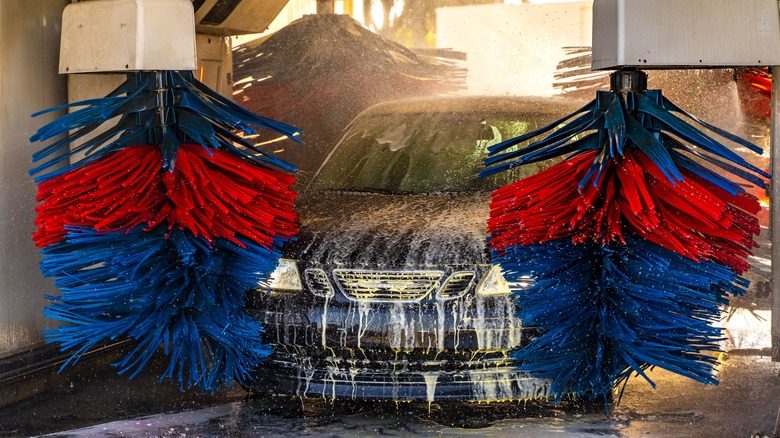
In an age where the average price of a new vehicle is reaching record highs of more than $50,000, according to Kelly Blue Book, the desire to keep your investment looking its best may be stronger than ever. One of the easiest ways to maintain a car's appearance is to wash it regularly. However, you might not want to overdo it, as you could be ruining your car by washing it too often.
Regardless, it's not always convenient to clean your automobile by hand, as it's labor intensive and requires arguably your most precious asset, time. It's for this reason that the United States' most prevalent, go-to option is an automatic in-bay car wash, with the number of U.S. locations totaling just under 29,000 in 2020, per Grand View Research.
While certainly convenient, the automatic car wash does, unfortunately, present problems that could potentially cause your car's exterior unnecessary wear. Depending on the type of automatic car wash, you could experience scratches, visible swirling patterns, and damage to the exterior coat of your vehicle. There are a couple of different types of automatic car washes, and one variety of automatic car wash system is riskier than the other, though neither is the ideal option in terms of protecting your automobile.
Types of automatic car washes and how they can damage your vehicle's exterior
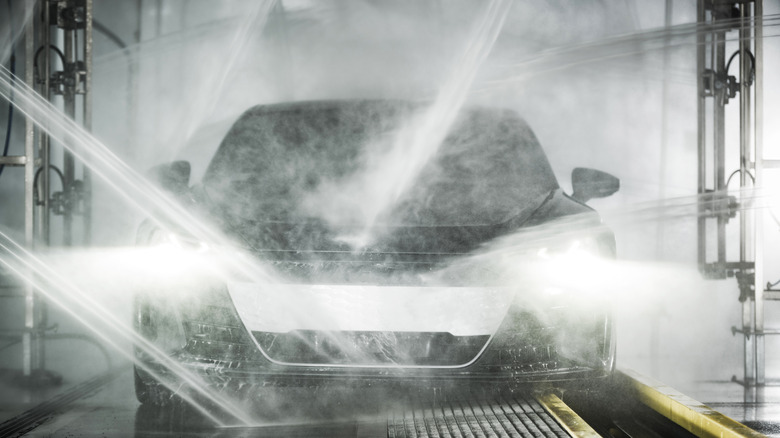
There are a couple of different variations of automatic car washes — one with rotating implements and scrubbers, and the touch-free spray variety. In terms of damage, the automatic car washes with spinning brushes can wreak more havoc on your paint job. The issue is that, even when used with filtered water and cleaned frequently, these bristles can trap dirt and debris from countless vehicles. What looks like cleaning to the uninitiated can actually translate to these brushes rubbing contaminants across the surface of your ride, which can create small scratches that sometimes look like swirls on the paint.
In comparison, touchless washes use streams of water and soap to clean the vehicle without relying on rough brushes. These carwashes are considered safer than the brush alternative, but they still present some concerns. Even though nothing physically comes into contact with the car during a touchless wash, these jets can't clean as thoroughly as other options. With this fact in mind, some facilities will add extra chemicals to help boost cleaning performance, which can cause harm to your car's finish. This is especially evident with frequent touchless washes, which can degrade the luster of your paint over time. Although, at least in one instance, it didn't matter which method was used, as a driver recounted that his Tesla Cybertruck was apparently no match for a car wash.
Yep, hand washing is still the best option, but it must be done right
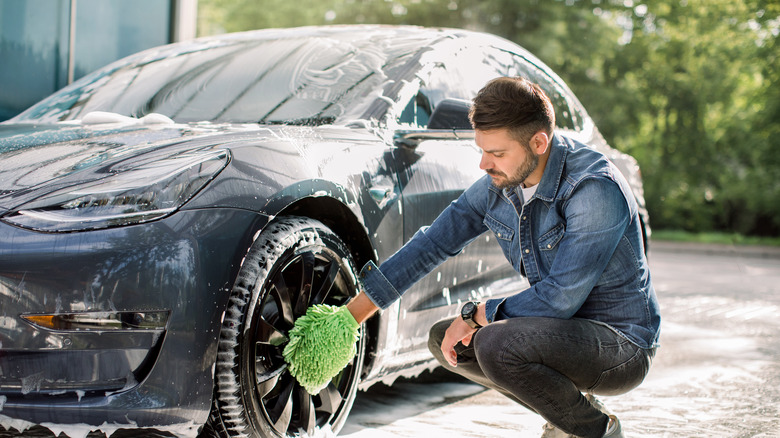
If you want to preserve your car's exterior, nothing beats a manual wash with the appropriate tools and approach. Many auto detailers utilize something called the two-bucket method, which includes one bucket for the wash (this has shampoo added) and one for the rinse (just clean water). First, you'll need to gently rinse off your car with water to dislodge and remove any grit sitting on the surface. Then, using a clean, high-quality microfiber mitt, dip it into the rinse bucket and squeeze the water out. Submerge the mitt in the shampoo wash bucket, and then move the microfiber in straight lines, distributing cleaner across a section of the car. By moving in straight lines, you reduce the chance of making those awful swirling patterns left behind by some automatic washes.
Before moving on to shampooing another portion of the exterior, dip the mitt into the rinse bucket each time, removing any debris you may have picked up. Once you've covered the entire vehicle with shampoo, gently rinse it off.
The two-bucket method is just one approach, and there are various alternative options. In fact, we gathered your car cleaning tips and tricks, some of which offer interesting advice like avoiding car washes in general. Nevertheless, for the best and safest results, a manual wash and some elbow grease is required.