

How To Remove Seized Spark Plugs
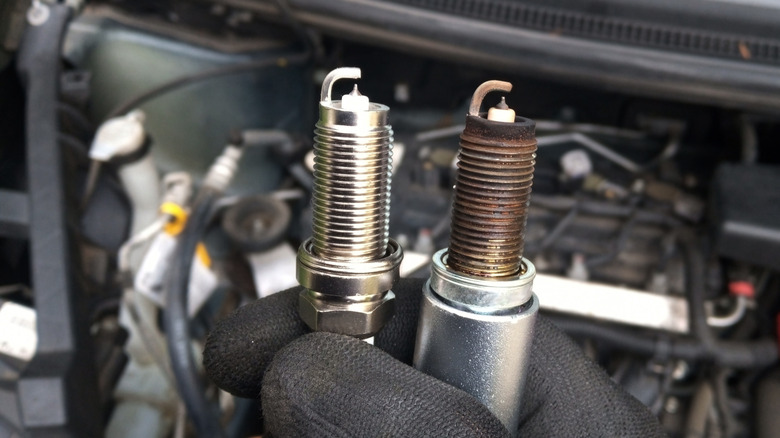
If you can't get your engine to start running, a spark plug issue could be the culprit. Faulty or malfunctioning spark plugs can prevent your engine from doing its job correctly (or at all), so keeping them in good working order is crucial. The first line of defense is to simply change your spark plugs at the proper intervals – which can also help maintain good fuel economy – but if you encounter a seized spark plug, removal and replacement can be tricky.
Don't worry, though — in many cases, you can replace your own seized spark plugs at home. The easiest method is to apply penetrating oil to the base of each spark plug. You'll likely need to remove the engine cover and then either the spark plug caps or ignition coil packs to access the plugs. Once you complete those steps, spray the penetrating oil, and let it sit for at least 30 minutes to an hour.
If there's minimal corrosion, you should be able to gently loosen and then remove the seized spark plugs using a spark plug socket and ratchet. If that doesn't work, you can try loosening the plugs with a breaker bar or applying heat for more serious seizures. However, if you suspect there's any chance your efforts may result in a snapped spark plug, it's best to ask a professional mechanic for assistance — if a spark plug breaks inside the cylinder head, it will pose additional risk to both your engine and your wallet.
Causes of spark plug seizure
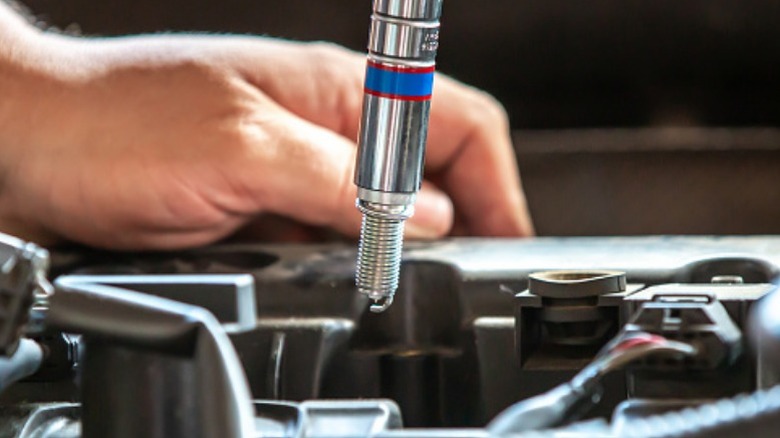
For cars with internal combustion engines, spark plugs are essential for making power. These tiny components are found in your engine's cylinder head(s) and are connected to the ignition coil(s), either directly or via a distributor cap and cables, and they do a disproportionately large amount of work to enable your engine to function. Using the voltage released by the ignition coil(s), your spark plugs ignite the air and fuel mixture in your engine's combustion chamber, which then explodes with enough force to move the pistons and, by extension, the whole car. Basically, spark plugs are small, but very mighty.
Being a primary component of the ignition process, spark plugs are exposed to extreme conditions and heat within the engine. A spark plug can seize for a couple reasons – carbon buildup and corrosion are among the chief causes. Over-tightening and poor installation can also play a role in spark plug seizure. Once a spark plug seizes, it becomes stuck in place within the engine cylinder and needs to be replaced entirely. Fortunately, with penetrating oil, patience, and some elbow grease, you can often fix minor seizures at home.