

Why Boeing's Legendary B-52 Bomber Has Those Weird Skin 'Wrinkles'
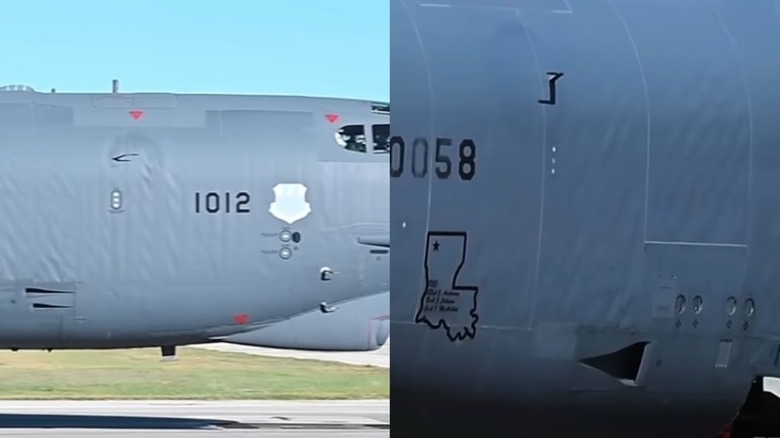
Some aircraft are remembered for their unique designs, robust capabilities, and even their influence on pop culture. The B-52 encompasses all of these and is absolutely gargantuan to boot, with a wingspan of 185 feet. Its size may or may not have had a role in the incident where the B-52 that almost hit a plane actually almost hit another plane, too. Nevertheless, when flying normally, or taxiing the runway, many onlookers have spotted strange rippling effects across the fuselage of this massive aircraft.
Fortunately, this odd wrinkling isn't a sign there is something wrong with the B-52; on the contrary, it's showcasing a masterful design. This big bomber, like all aircraft, are designed with lightweight aluminum, which includes the outer panels that comprise the exterior. These ripples can appear in flight as the force of the air flowing around the fuselage compresses certain panels, or on the ground as the airframe flexes against load.
As the outer "skin" of the B-52 is very thin, this is a common occurrence, it's just not always visible unless the sunlight hits it just right. Even though these aluminum panels are thin, each of them is made to handle load, just like every other airframe component. However, the wrinkles on the B-52 are typically seen near the front of the bomber for a specific reason.
Why is wrinkling only typically seen near the front of the B-52?
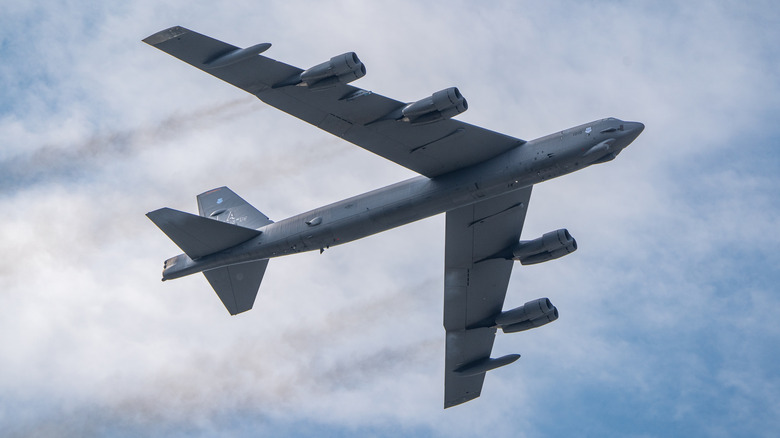
One of the reasons this rippling is often seen on a specific area on the bomber has to do with its design. The front area between the wings and the cockpit experiences load as the aircraft achieves lift. This area is under the center of lift, and therefore is flexing as a result.
It isn't just the B-52 that has wrinkles: Boeing's 757 has also been seen sporting the bizarre look, but again, it seems to be visible only on a certain section of the plane. Unlike the B-52, the 757 dons ripples along the lower rear of the fuselage. This may have to do with this area's proximity to the tail, which could be responsible for the bending behavior on the outer panels.
A fuselage is made to flex a certain degree, and you might not know, commercial airplane walls are only 4 inches thick and hollow. Fortunately, heavy and thick aren't requirements for an aircraft to be strong, as the frames, stringers, and skin all work together to provide more than enough structure to combat the stresses of flight.
Could the ripples also have to do with an aircraft's age?

An older B-52 could experience more wrinkles due to an aging airframe, as metal can fatigue over time. Again, it's nothing to worry about in terms of structural integrity. More ripples would have little bearing on whether the aircraft is suitable for flight, with the requirements being its operated within typical parameters and is still within its service life. Boeing tests aircraft structural fatigue using hydraulic equipment which simulates the various forces during flight, which is a much better indication of flight worthiness.
Considering that some of the B-52's still in operation have airframes that were originally built in the early 1960's, they appear to be holding up quite well. In fact, the Air Force has extended the B-52's time in service to beyond 2040, which would eventually result in these airframes aging into their 80s. Thankfully, these bombers will be updated in several ways with newer Rolls-Royce engines, rewiring, and cutting-edge navigation technology, to name a few.