

This Is America's Most Expensive Highway To Drive On, And It's Not Even Close
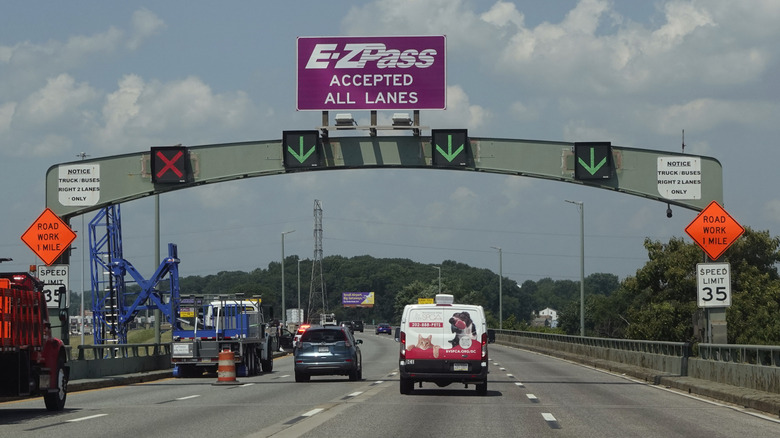
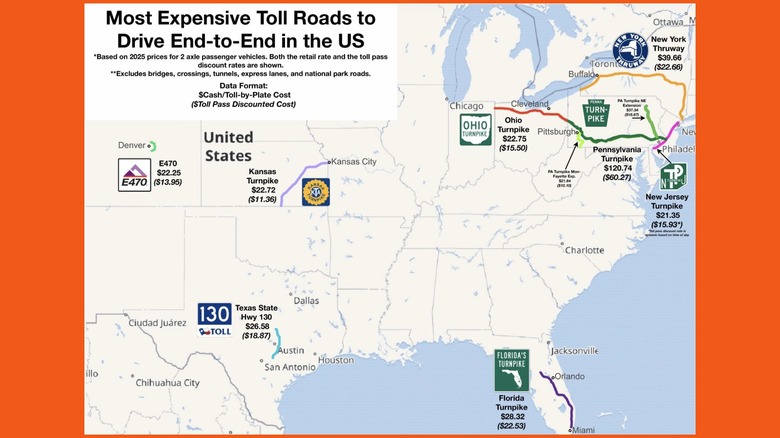
In the American tradition of paying for things you're already paying for, toll roads are a special kind of purgatory. They're the Six Flags fast-pass of open road, an evil we tolerate for the promise of smooth pavement and a (hopefully) quicker journey. But then there's the Pennsylvania Turnpike, a stretch of asphalt that has apparently mistaken itself for a luxury resort. To drive its full 360-mile length will set you back a soul-crushing $120.27 if you're paying by plate reader instead of transponder. Yes, you read that correctly. One hundred and twenty dollars. Just to end up in either Ohio or New Jersey, oh joy.
For that money you can build yourself a drive-in movie theater or get yourself a cheap welder — both of which seem more fun than driving on the Pennsylvania Turnpike. The next most expensive highway on the map, New York's Thruway, is a bargain at just $39.66. Florida's Turnpike? $28.32, which is less than some folks' Starbucks orders. The Pennsylvania Turnpike isn't just the most expensive toll road in America — it's in a completely different league. It's really less a highway and more of a hostage situation. It makes you wonder if the exit ramps lead to Pittsburgh or Babylon.
So where does all that coin go?
When you're paying triple-digit tolls, you'd hope that money's going somewhere cool — maybe funding a mag-lev superhighway or something. But the truth is far more bureaucratic. The cost of the Pennsylvania Turnpike is largely due to a 2007 state law known as Act 44. This mandated that the Pennsylvania Turnpike Commission make annual payments to the Pennsylvania Department of Transportation. These payments would be to fund public transit in cities like Philadelphia and Pittsburgh.
In the first three years those payments were astronomical — $750 million in 2008, $850 million in 2009, and $900 million in 2010 — then were reduced to $450 million. More recently that payment is $50 million, but the damage was done. The Turnpike was forced to borrow billions in bonded debt, sinking deeper than a pothole on, well, the Turnpike. That debt gets passed on to the driver by relentless year-after-year toll hikes. The most recent 2025 increase marked the seventeenth consecutive hike. And according to the Philadelphia Inquirer, they are projected to keep increasing every year through 2051. Brutal.
It really can be a master class in financial mismanagement. A shell game where highway drivers are unknowingly subsidizing bus routes hundreds of miles away. It's the kind of fiscal irresponsibility that makes taking on a thousand-dollar-a-month car payment seem responsible by comparison.
E-ZPass and the illusion of a good deal
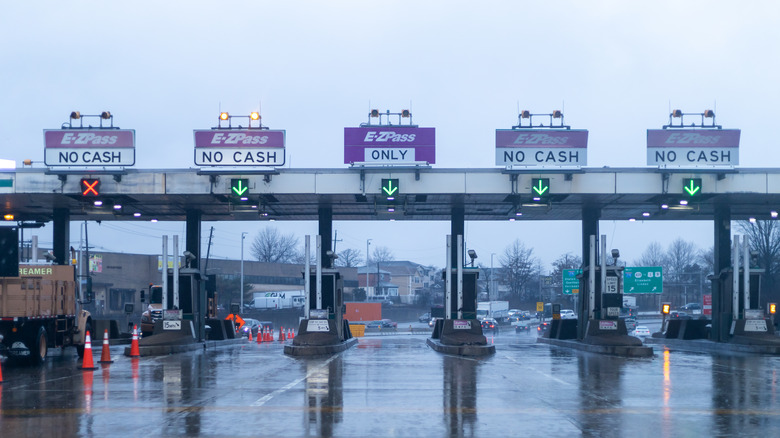
Now, folks who call it pork roll instead of Taylor Ham will quickly point out the E-ZPass "discount." Using a transponder drops the end-to-end price to $60.27. What a deal! Except that the discounted price for the Pennsylvania Turnpike is still more expensive than the full cash price of every other toll road. Sure, the Turnpike stretches farther than most — about 360 miles — but even when you dice it by the mile, it's still brutal. Drivers shell out around 33 cents a mile (non-discounted.) The New York State Thruway at 570 miles long? Around 7 cents a mile. Size doesn't always matter.
As tolls rise annually, more drivers look for ways to get off the turnpike, leading to less revenue, which in turn leads to ... you guessed it, higher tolls. It's a highway death spiral — catchy band name but a horrifying reality.
Is the nation's priciest toll road worth it? Depends who you ask. Daily commuters know those charges add up fast, and if you're road-tripping without an E-ZPass, you'll wish you'd chosen your mapping program's "avoid tolls" option. Take the scenic route and your wallet will thank you — or maybe just figure out the best way to avoid tolls altogether.