

Before Automakers Took Hydrogen Cars Seriously, GM Built The Electrovan
If you're an American, you probably don't think about hydrogen-fuel-cell cars much, or at all. If you do, you might be under the impression that those cars are mostly driven by tree-hugging, kale-eating Californians. There might be some truth to that, though we can't know for sure since automakers don't keep data on how many of their customers hug trees or eat kale. But you might be surprised to find out that General Motors has been tinkering with hydrogen vehicles since the 1960s.
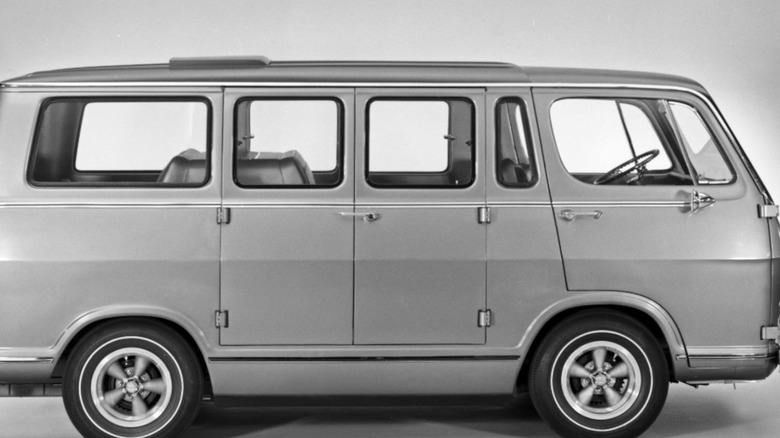
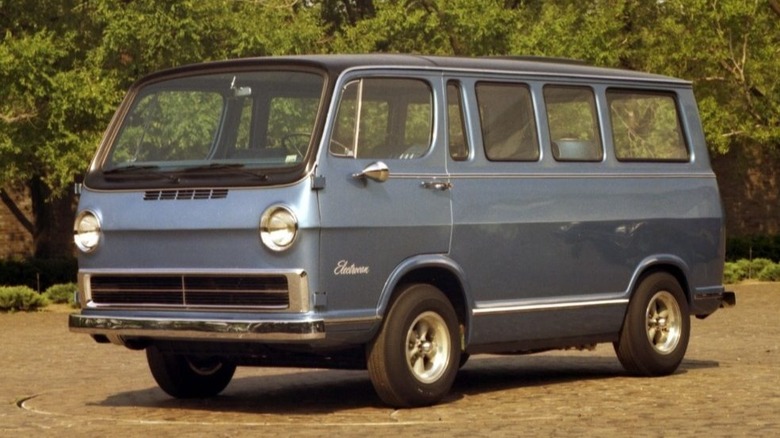
Thanks to its involvement with the U.S. space program, GM had at its disposal knowledge about hydrogen fuel cells and silver-zinc batteries, power sources it had helped NASA develop for its spacecraft and rovers. The company began toying with the idea of putting hydrogen fuel cells in a car, and in 1966, unveiled the Electrovan. This beast couldn't go very fast, and was way too heavy, but it worked. This converted GMC Handi-van would be the first vehicle ever powered by hydrogen fuel cells.
While the Electrovan never made it to market, it cemented its place in automotive history and would start GM on a long path of developing hydrogen fuel-cells for other applications. Modern hydrogen cars, with their pros and cons, owe a nod of recognition to GM's accomplishment in 1966. Today, GM is still actively building hydrogen fuel cells for vehicles, trains, and even aircraft.
It started with the space program (sort of)
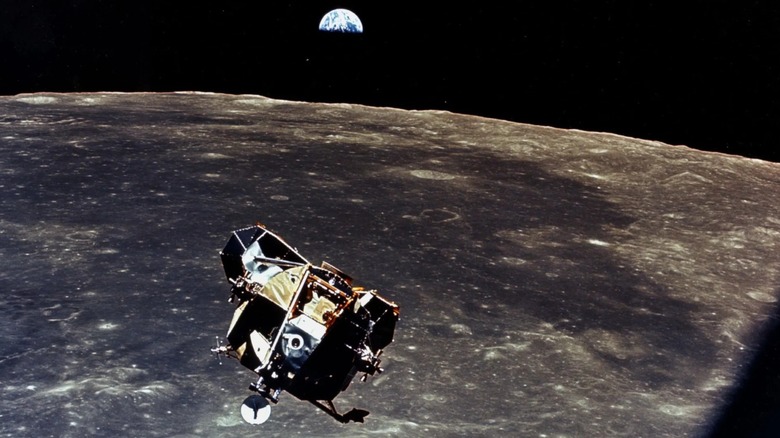
The 1960s were an exciting time in American history for a lot of reasons. One of those reasons was the space race. The U.S. had committed to landing on the moon, and succeeded in putting a man there by the end of the decade. Over five decades later, that is a feat SpaceX is still struggling to accomplish. You'll get there someday, Elon. Maybe.
One of the challenges faced by the Apollo and Gemini missions was creating the onboard power for their spacecraft, as well as providing water for the crew. Batteries at the time weren't up for the task. But GM had been closely collaborating with NASA on its space program, and its own scientists helped the space agency to develop fuel cells for its spacecrafts. Batteries at the time couldn't power electronics or the water system. Hydrogen fuel cells were well-suited for the task, and that is one of the things GM helped NASA to develop.
At one point during the '60s, GM executives came up with the notion of putting the fancy hydrogen technology it was helping the government develop into one of its own vehicles. So in 1966, three years before the first moon landing, GM unveiled the Electrovan, a vehicle that ran on hydrogen instead of gasoline. The concept was revolutionary for its time.
The Electrovan was heavy, dangerous, and not too pretty
The Electrovan, while revolutionary, probably wouldn't have turned heads were it ever driven down the road. Instead, it reminds us of something Matt Foley might live in down by the river. But regardless of its looks, it was functional. This bad boy could reach speeds of 70 mph and blaze from 0-60 in a mere 30 seconds! It also had an astounding range of 150 miles. Okay, while it didn't exactly set any speed or range records, it does hold an important place in history as the first automobile powered by hydrogen fuel cells, and that's not nothing.
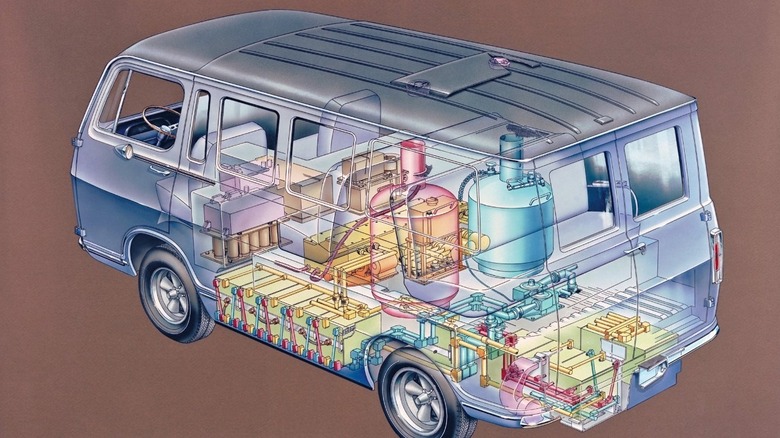
Even though this historic vehicle was actually a converted GMC Handi-van, it only had two seats. Why? Because the seats behind the front had to be taken out to make room for the huge hydrogen and oxygen tanks. The Electrovan weighed 7,100 pounds total. About 55% of that weight consisted of the motor and electric drive systems. According to GM, the amount of platinum used in the production of this beast could have bought a whole fleet of vans.
You might be thinking that driving around with enormous hydrogen and oxygen tanks in the back seat couldn't have been safe. You'd be right. The experts at GM had the same concerns, which is why they built the test track for the Electrovan far away from buildings and people. It was pretty clear why this precaution was taken when one of the hydrogen tanks exploded during a test drive. No one was injured, amazingly, but the explosion threw debris a quarter of a mile away. Explosions haven't been a danger with modern fuel-cell cars, unless you believe President Donald Trump's claims about hydrogen cars.
The Electrovan wasn't GM's only alternate-fuel vehicle at the time
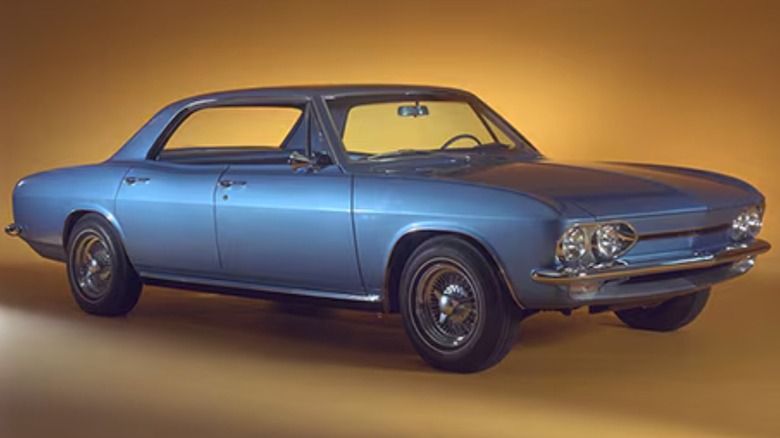
Hydrogen fuel cells weren't the only kind of non-gas vehicle General Motors was working on at the time. It was also developing purely electric vehicles. In 1964, two years before the Electrovan was released, GM slapped some silver-zinc batteries, more technology derived from the company's involvement with the space program, into a Chevy Corvair and called it the Electrovair.
The Electrovair was considerably easier on the eyes than the Electrovan, since the Corvair was a pretty car. I's performance wasn't nearly as impressive as its looks, though, thanks to its modest 90 hp electric motor and 450-volt batteries. In 1966, GM came out with a second version, the Electrovair II, fitted with a more powerful 115 hp motor and 532-volt silver-zinc batteries.
Those upgrades still didn't make the little EV ready for primetime. Its speed topped out at 80 mph and it had a range of only 40 to 80 miles. It was heavy, too, weighing 3,400 pounds, thanks to the powertrain, electronics, and cooling equipment weighing in at over 1,100 pounds. All of this made the Electrovair 800 pounds heavier than the Corvair. Even worse, the batteries could only be discharged 100 times and would need to be replaced every 8,000 miles. But like the Electrovan, the Electrovairs were really only proof-of-concept vehicles. They weren't meant for production but did prove that it was potentially viable to power cars with hydrogen fuel cells or zinc-silver batteries.
The Electrovan's legacy
You'd be forgiven if you thought GM dropped out of the hydrogen fuel cell game altogether. The Electrovan never made it to production, and you can't go to a GM or Chevy lot and order a hydrogen-fuel-cell car. Right now, the only brands with consumer hydrogen cars on the U.S. market are Toyota, Hyundai, and Honda, which made America's first plug-in hydrogen vehicle.
That doesn't mean that GM hadn't continued developing its hydrogen fuel cell technology, though. On the contrary, at one point, it announced a partnership with Wabtec to develop fuel cells for locomotive engines. The company also announced a collaboration with Autocar to produce hydrogen-driven heavy-duty vehicles. GM also was working on producing medium-duty hydrogen-fueled work trucks for Southern Company, a major utility in the U.S. The automaker was even working on fuel cells for use in aircraft.
But GM recently announced that it will stop work on next-generation fuel cells. That seems in part to do with hydrogen fueling stations being hard to find in this country. As of this writing, all but two of the 53 publicly available hydrogen fueling stations in the United States are in California, according to Driving Hydrogen. (According to GM, the U.S. Department of Energy says there are 61 refueling stations total, but GM doesn't say how many are publicly available.) Of the two that aren't in California, one is in Hawaii and the other in Texas. And the one in Texas isn't even a retail facility.
That's not to say GM is out of the hydrogen game altogether. It's still involved in a joint venture with Honda to build fuel cells for powering data centers. After all, GM has a long history with hydrogen fuel, and it all started with a homely van in 1966.