

10 Classic Dodge Models That Deserve Another Chance

The Dodge brand has a long and storied history that dates back more than 100 years. It all started in Niles, Michigan, with two brothers who, like the Wright brothers, had an interest in bicycles. Over time, the brothers transitioned to supplying engines, transmissions, and axles to major players in the auto industry at the time. Eventually, the Dodge brothers began building their own cars, and, by 1915, Dodge was among the top-selling vehicle brands in the country.
Within its first five years, Dodge was building commercial and civilian vehicles, but also supplied units to the U.S. military. The company continued to thrive even after losing both Dodge brothers in 1920. And to this day, you can still buy a new Dodge. While the brand's selection currently only includes a few models, it's made some wildly popular and iconic vehicles in the past that have left a mark on the driving world. But why would Dodge discontinue a car model people seem to love?
Automakers discontinue vehicles for many reasons, including changing consumer preferences, economic feasibility, or because it's easier than updating an old model to meet the ever-changing needs of customers. But some classic Dodge models deserve another chance. The vehicles below made this list because they were extremely popular, at least during their early days, had innovative features, or offered distinct looks that made them stand out from the pack. So Dodge, if you're listening, these are the models to bring back to your lineup.
Dodge Coronet
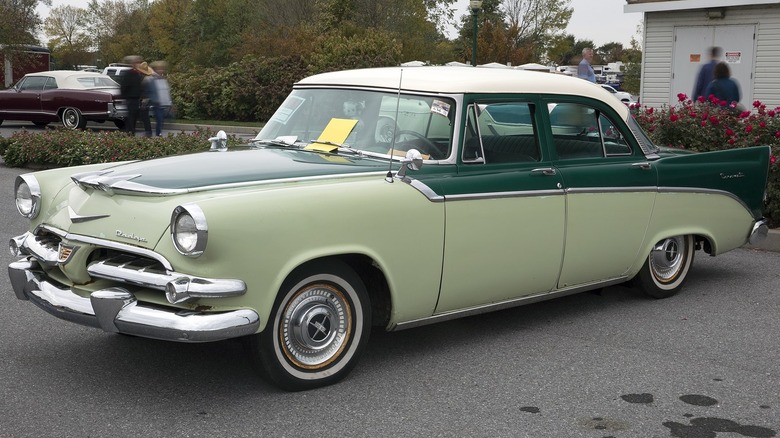
Perhaps a prelude to Dodge's iconic muscle cars, the first-gen Dodge Coronet was introduced in 1949 as a full-size car with top-of-the-line features. While the original Coronet was at the top of the Dodge lineup, subsequent models were downgraded to the lower end of the spectrum starting in 1955. Dodge decided to discontinue the Coronet at the end of 1959 but brought the car back in 1965 as a midsize model. Initially, the 1949 Coronet only had a 230 cubic-inch straight-six powertrain capable of delivering 103 horsepower and reaching a top speed of 90 mph. Later, this model would offer more engine options, including a 3.9-liter HEMI that helped the car set numerous land speed records at the Bonneville Salt Flats in Utah. The 1954 Coronet was also one of the lucky Dodge models to offer Chrysler's first two-speed automatic transmission as an option.
All in all, there were six generations of the Coronet, with the car's last model year ending in 1976. A difference in body styles for the car, from its first run in the '50s versus its second chance at life during the '60s and '70s, denotes changing consumer preferences. Today, you can imagine this car would again be much different than its predecessors. Dodge would likely need to streamline the body and equip modern tech and safety features while holding true to the car's classic style to make a new Coronet viable in today's market.
Dodge Super Bee
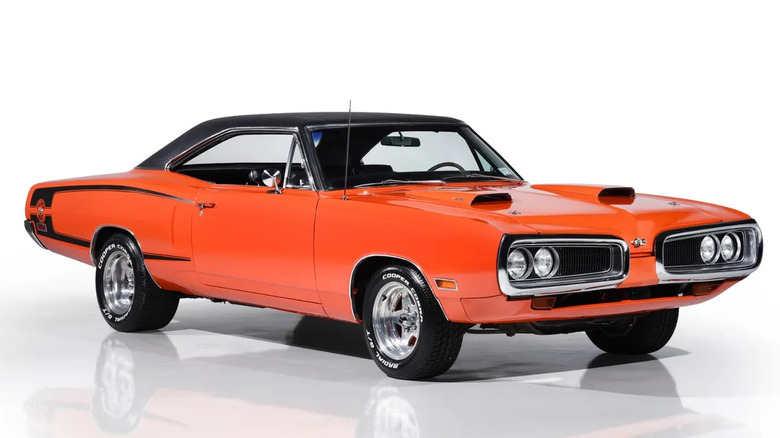
Inspired by the Dodge Coronet, the Dodge Super Bee was a short-lived model in the automaker's lineup. It began life in 1968, but by 1971, production of the model ended. The muscle car was introduced to the lineup as an inexpensive competitor of the Plymouth Road Runner, but it never quite achieved the popularity that model enjoyed. In its first year, Dodge sold nearly 8,000 Super Bees, but 1969 was probably the most successful year for the car, with sales numbers reaching 27,806. By its final year, the Super Bee was only able to make its way into a little more than 5,000 garages.
Like many Chrysler muscle cars of the time, the Super Bee was built on the B-body frame. Originally, the Super Bee sported a four-barrel V8 engine with a maximum output of 335 hp and 425 lb-ft of torque. Buyers could opt for a 426 HEMI capable of delivering 425 hp and 490 lb-ft of torque. Later iterations of the Super Bee featured an optional 440 Six Pack powerhouse with an upgraded suspension system.
Despite not really taking off during its short life, the Super Bee is well-loved by muscle car enthusiasts today. One thing that makes the car stand out is a redesign that happened in 1970, which gave the car a split grille, or "Bumble Bee Wings." Although the look didn't sit well with consumers at the time, it would be a welcome change among the sameness of cars nowadays. The model also offered a cockpit-like interior reminiscent of a race car, which is something several models have tried to replicate in recent years. With the right features, the Super Bee could easily take over for the now-discontinued Challenger.
Dodge Dart
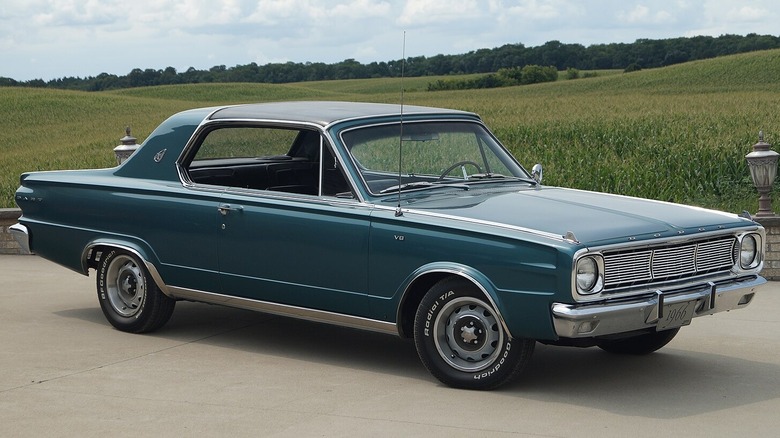
The first Dodge model to bear the Dart name was a full-size sedan that hit the market in 1960. However, by 1963, the car morphed into a compact model built on the A-body platform, replacing the Lancer. The Dart was available as a two- or four-door coupe, convertible, wagon, or even a G/T version. Under the hood, either a 170 or 225 cubic-inch slant six provided power, while the G/T option had a 273 cubic-inch V8. Engines were paired with a three-speed manual or TorqueFlite transmission, but later, a four-speed manual shifter joined the list of transmission options for the Dart.
Several design modifications and updates kept the Dart alive until Dodge replaced the A-body with the new F-body frame after 1976. Although the Dart name would experience a revival in 2013, that version had a much shorter lifespan, ending its run in 2016. The sporty sedan of the mid-2000s was modeled after Fiat's Alfa Romeo with the intention of bringing Italian design and European efficiency to the American market. But as consumer preferences drifted in the direction of SUVs, sales of the Dart dwindled, causing Dodge to discontinue the model before it really had a chance to reestablish itself.
Despite the failure during its second chance at life, it stands to reason that Dodge could bring this car back with a few tweaks. Perhaps combining some of the vehicle's muscle-car era charm with a modern hybrid or Pentastar V6 engine could be just the ticket to giving the Dodge Dart another chance.
Dodge Viper
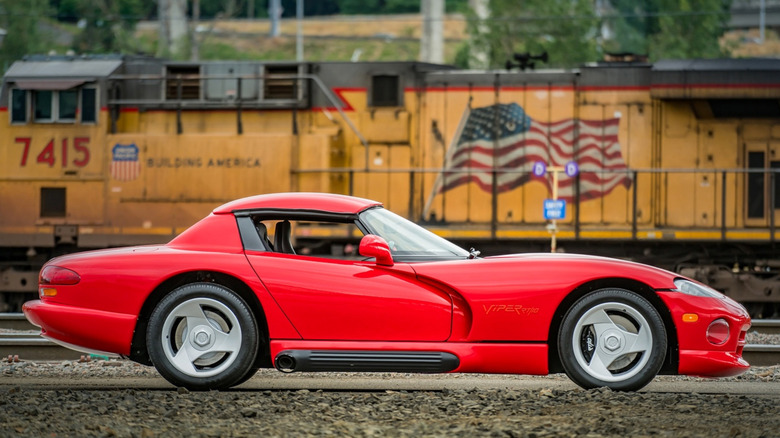
Created to compete with the Chevrolet Corvette and designed as a modern twist on the American muscle car, the Dodge Viper is a legendary sports car with incredible power and an unforgettably deep growl. It got the attention of sports car enthusiasts when it was introduced as a concept car in 1989. Full-scale production of the model began in 1991 for the 1992 model year, and the last models rolled out in 2017.
Focusing on performance, Dodge didn't add a lot of frills to the Viper at first, such as electronic driving aids like stability control. And by working in conjunction with Lamborghini on the Viper's powertrain, the sports car's naturally aspirated V10 engine block, which pumped out up to 400 hp and 450 lb-ft of torque, was surprisingly light for a block of its size. Upgrading the exhaust in later iterations gave the car a boost in horsepower, while other changes left the sports car lighter and stiffer, resulting in more speed and improved handling.
Unfortunately, like many classic Dodge models that deserve another chance, the Viper was discontinued. Dodge couldn't justify the expense of adding the necessary safety features that would allow the model to live on. Of course, this model is so well-loved that it wouldn't need many changes to make a comeback. If Dodge were to release a new Viper that could meet current safety standards, it would surely be an instant success.
Dodge Monaco
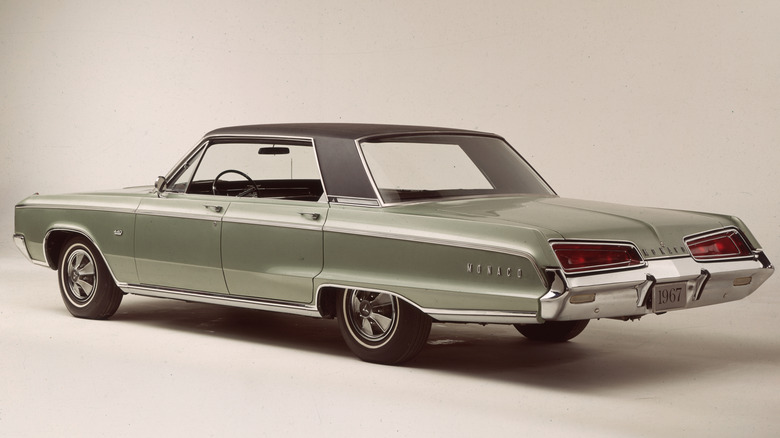
As luxurious and stylish as a Cadillac with all the power of a Dodge, the full-size Monaco made a statement wherever it went. It hit the market in 1965, sticking around until 1978, albeit with a major shift in its design in 1977. That's the year the car went from a full-size C-body to a midsize B-body platform. For a few short years in the early '90s, Dodge brought the Monaco nameplate back, but that version never quite took off.
Originally, the Monaco came standard with a 315-hp V8. Other, more powerful engines were available for the model, and some year models even offered the 440 Magnum block that produced 350 hp or the 426 HEMI, famous for delivering up to 365 ponies. Where the car really made an impression, though, was inside. It wasn't only spacious, but it also offered comfort-enhancing amenities like a full-length center console that served as a padded armrest with storage and unique rattan wicker accents.
Today's buyers may not be interested in the Dodge Monaco exactly as it was in the '60s, but Dodge could bring the car back as a luxury sedan to fill the ever-widening gap between SUVs and small economy cars. The name alone represents elegance and sophistication, giving the brand an open opportunity to market the car to just the right crowd.
Dodge Polara
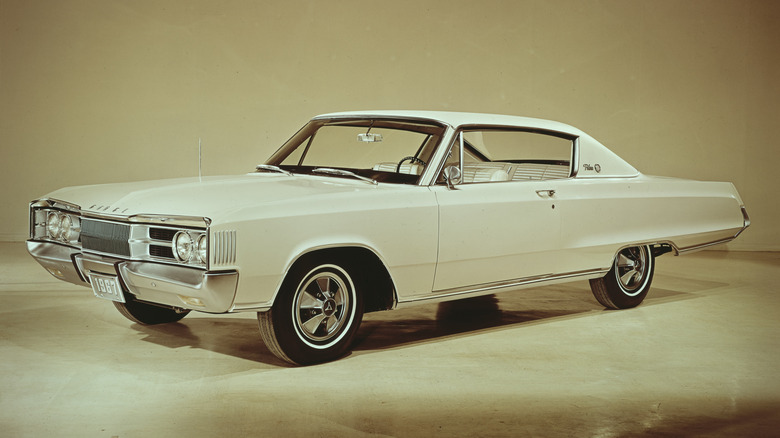
For 13 glorious years, the infamous Dodge Polara was basically the top model for the auto brand, with a few exceptions. This full-size car, in its first iteration, featured super cool tail fins reminiscent of a jet and round headlights mounted above the grille. But alas, the look of the Polara changed many times during its long production run, which lasted from 1960 to 1973. The model was the ideal mix of personal luxury and V8 power, with several engine options available throughout its lifespan.
In 1962, Dodge shifted gears with the Polara, downsizing the model to compete with similar vehicles, but it was back to a full-size model in 1963. Buyers could get the car in their choice of body styles, from sedan or convertible to the always-popular wagon. Sales of the Polara reached 11,600 units in its first year, but the model had its highest sales volume in 1969, when nearly 120,000 units were sold. Despite attempts to keep the Polara relevant, such as reviving the 500 version and adding Torsion Quiet-Ride suspension, Dodge eventually discontinued the model.
The Dodge Polara deserves another chance because it was an appealing model to a wide range of consumers, and not many models can make that claim today. Bringing back the jet-inspired tail fins from the car's early days, equipping a V8 powertrain, or at least something comparable, and outfitting the interior with similarly innovative features like those the car offered could be the key to creating a unique Dodge Polara that truly makes a statement on the road.
Dodge A100 Van
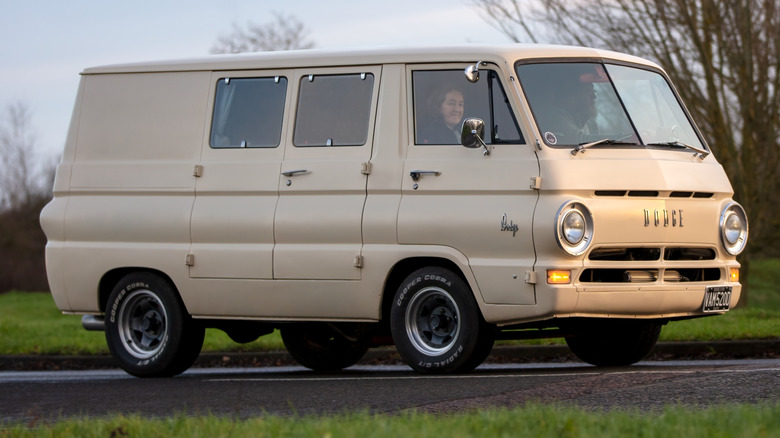
Dodge's A100 Van was also offered as a truck, and both body styles were, and still are, popular. Built to compete with vans offered by Ford, Chevy, and VW, the A100 Van came a little late to the party, starting production in 1964. But somehow, this particular model is an icon from a bygone era that hasn't been forgotten. This favored version of the '60s hippie van can be seen in the TV series "That '70s Show" and was often featured as the villain's getaway car in the "Batman" TV show. Many also speculate that the Mystery Machine from "Scooby-Doo" was the A100 Van, although it's never been verified. Perhaps its appearance on TV helped it gain notoriety, but it could just as easily be that this Dodge van was utilitarian and easy to customize.
The Dodge A100's covered engine sat in the cab between the driver and passenger. It came standard with a 2.8-liter slant six with a choice of either a three-speed manual or automatic transmission. Other engines were available throughout the A100 Van's life, including the 5.2-liter V8 that delivered up to 210 hp. Buyers could choose from several looks and setups for the van, making it a good fit for tradesmen and outdoor enthusiasts.
Recently, VW reintroduced the Microbus as an EV, so why couldn't Dodge bring back the beloved A100 in some form? Sure, Stellantis offers a Ram cargo van with upfit options, but modern cargo vans just don't have the classic appeal and cult following of the Dodge A100 Van from the '60s.
Dodge Charger Daytona
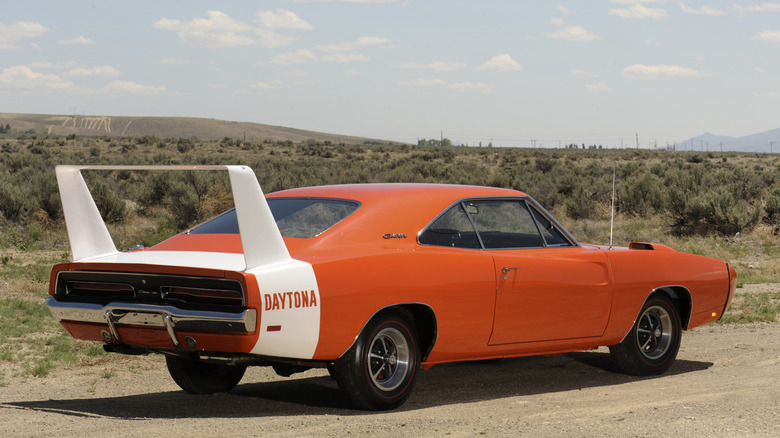
You're not likely to see a 1969 Dodge Charger Daytona cruising down the road, as only around 500 of these cars were built during the model's single production year. This was the number of Daytona Chargers Dodge needed to build to meet NASCAR's production car quota. That's right, the Dodge Charger Daytona was built for racing, something the car did well. In fact, it broke a record when it became the first NASCAR to hit 200 mph at Talladega. This accomplishment was made possible because of the car's unique design and powerful engine.
At the rear, the Charger Daytona featured an enormous 23-inch rear deck wing, while the front replaced the Charger grille with a more aerodynamic nose cone, gaining it an increase of 5 mph on the track. The car's head-turning design isn't the only thing that makes this a sought-after Dodge model, though. Under the hood, a 7.2-liter V8 engine provided the car with 390 hp, but the option of equipping a 7.0-liter HEMI V8 would give the Charger Daytona up to 425 hp.
To give this classic Dodge model another chance, the brand might need to equip it with a hybrid powertrain and slim the body down a bit. However, keeping the sleek nose, small grille, and eye-catching rear spoiler would make the car desirable to anyone who loves speed and a car that looks like nothing else on the road.
Dodge Ramcharger
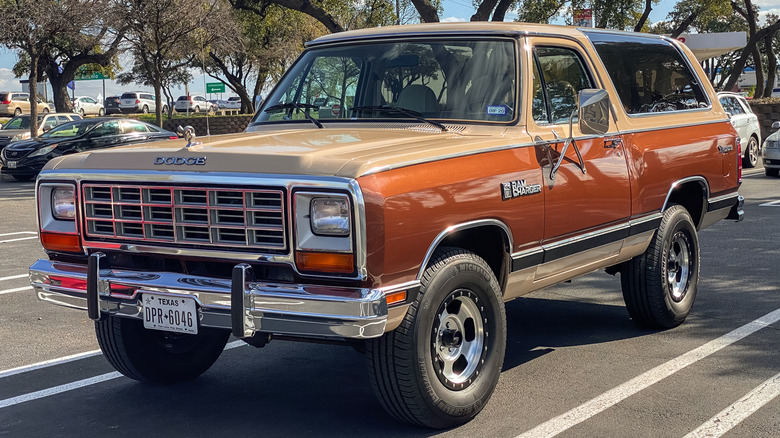
There's the Ram, there's the Charger, and then, there's the Ramcharger. This epoch off-road machine was put into play by Dodge in 1974 to compete with other off-road SUVs like the Ford Bronco and Chevy Blazer. Essentially, it was a truck body with a covered bed, and the Ramcharger offered an open top to get you closer to nature during off-the-beaten-path adventures. It only came with four-wheel drive in its first year, but Dodge added the option for rear-wheel drive starting in 1975. Later versions used an innovative transfer case that let drivers smoothly switch between four- and rear-wheel drive.
Power for the Dodge Ramcharger came from a variety of engines over the years. The 1974 model was the only one available with the hefty factory-installed 7.2-liter V8 that could generate 235 hp and 350 lb-ft of torque. In its second generation, which started in 1981, the Ramcharger offered only two engines that, until 1988, were carbureted. After 1987, Dodge switched to fuel injection for the 5.2-liter engine, and then went with only fuel-injected engines for the model starting in 1989.
It's true, the beefy Ramcharger didn't get great gas mileage, which contributed to its demise. Dodge discontinued the Ramcharger in 1993, but this rugged off-roader is a legend in four-wheeling communities. With Ford's reintroduction of the Bronco and Chevy bringing back the Blazer, there's no mistake that the Ramcharger is absolutely a Dodge model that deserves another chance.
Dodge Rampage
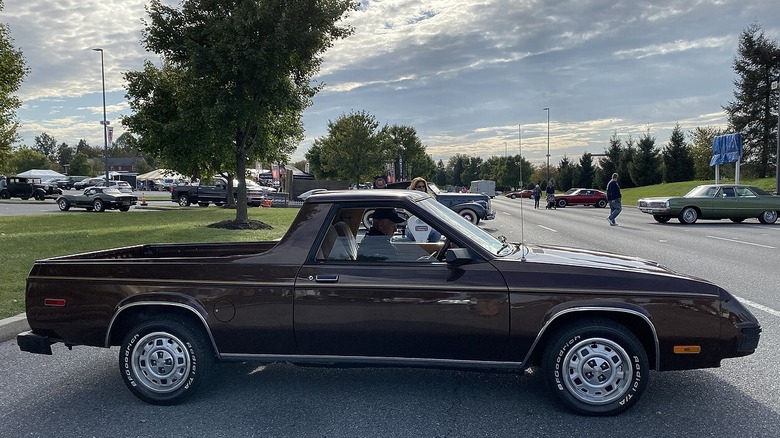
Was it a car? Was it a truck? No, the Dodge Rampage was a model referred to as a "ute," or a utility vehicle that resembles a car from the front and a truck from behind. You may better remember this body style from Subaru's more recent offering, the Baja, but the Rampage, although short-lived, made a strong impression. Dodge only offered its car-truck from 1982 through 1984 because of its comparatively weak production numbers. For instance, the Chevy El Camino sold 70,000 units during the same three-year run that the Rampage was good for just 37,401 units.
Using a 2.2-liter four-cylinder engine and front-wheel drive didn't provide the Rampage with much power, giving the car a mere 84 ponies. This was increased to 96 hp later, but with the Rampage, it wasn't about power. The vehicle drove like a car while giving owners the option of loading the rear with a payload of up to 1,145 pounds. Its exceptional fuel economy of 21 mpg in the city and 29 mpg on the highway was one of the Dodge Rampage's biggest selling points, and it still could be today.
Bringing the classic Dodge Rampage back to the lineup isn't a bad idea. These days, everyone wants a utilitarian vehicle that gets decent gas mileage. Adding a little room for more passengers and a modern transmission could be all it takes to get the Rampage back on the road.