

The Boeing 787's Wings Can Bend A Lot Further Than You Might Think

If you've ever watched a Boeing 787 Dreamliner take off and thought, "Wait, are those wings made of rubber?" — well, you're not alone in wondering about them. They really do bend that much. In fact, the 787's wings can flex up to 25 feet at their tips, and that's intentional. Boeing built the Dreamliner to be both lighter and stronger than any of its predecessors, and those seemingly elastic wings are one of the biggest reasons the plane flies farther, faster, and burns less fuel.
Back when Boeing engineers were stress-testing the aircraft before certification, they put those massive wings through what's called the "ultimate-load wing-up bending test," pushing them to 150% of the maximum aerodynamic load the jet would ever experience in flight. The resulting flex proved just how much energy the wings' carbon-fiber structure can absorb.
Traditional aluminum wings have limited flexibility, but the 787's carbon composite materials aren't only lighter, but also more elastic. So that incredible wing flex isn't something to panic over — it's actually what keeps the plane aloft efficiently. And it's the same kind of forward-thinking engineering that's also the reason why the Boeing 787 doesn't have winglets, reducing drag by up to 5.5%.
Why the 787's wings look like they're made of rubber
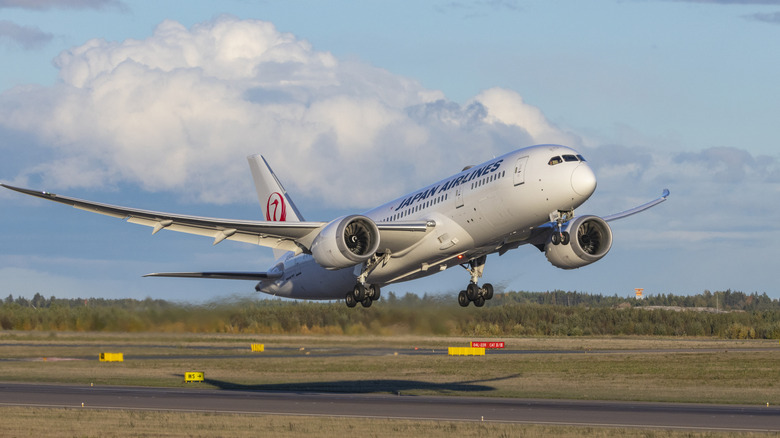
Between the Airbus A350 and the Boeing 787, the wings are notably different. While Airbus has tested the A350's wing flex to about 17 feet of deflection, the 787 surpasses it. The magic behind both planes' wing flex, however, lies in its extensive use of carbon fiber reinforced polymer (CFRP). The material gives it a higher strength-to-weight ratio than traditionally used aluminum construction.
Roughly half of the 787's wing structure is made from CFRP. CFRP is lighter and stronger than aluminum, and way less moody about fatigue and corrosion. It lets engineers push the boundaries of wing design, bending physics and aesthetics at the same time, all without the metal's bad habit of cracking under pressure. Flexible wings also translate to smoother rides, and the 787's lightweight composite structure makes it more fuel-efficient and easier to maintain, since it's less stressed by weight. That's more time spent flying instead of sitting in a hangar.
Aerodynamics also play a huge role. Flexing at takeoff and climb, when the jet is at its heaviest, helps it slice through the air more efficiently and squeeze every drop of fuel. As the 787 burns fuel, the wings gradually relax, flexing less as the aircraft gets lighter.
The flexibility also acts like a built-in suspension for the sky. Instead of tossing turbulence straight into the cabin, the wings absorb the stress, smoothing out the ride. The 787 uses software-driven gust-suppression systems to keep passengers from spilling their coffee. By spreading lift evenly and reducing strain on the airframe, those flexible wings don't just boost comfort, they also cut long-term operational costs.
Why Boeing tortures its wings before you fly
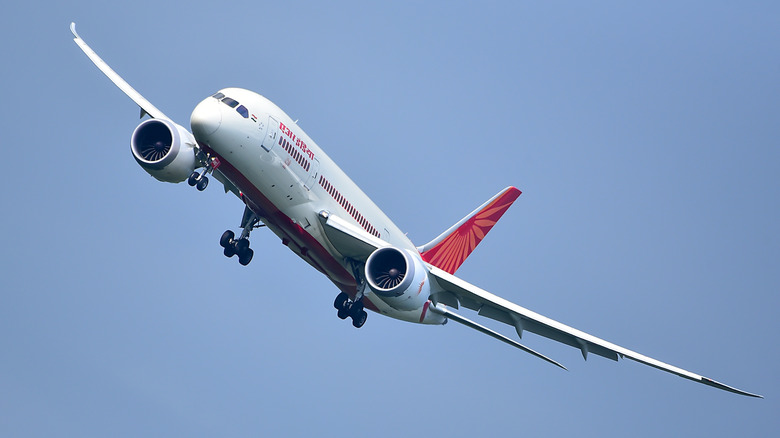
Before the Dreamliner ever carried a spassenger, Boeing tortured a prototype's wings and fuselage with the equivalent of 100,000 flight cycles, roughly three times the jet's intended lifespan. These weren't graceful arcs of flight, either; the airframe was repeatedly bent, twisted, and stressed to the limits, just to see what would crack first.
Fatigue testing isn't about proving that a plane can last forever. It's about figuring out when and where metal or composite fatigue might show up. This helps engineers build maintenance schedules that catch microscopic cracks long before they turn into expensive (or catastrophic) problems. That matters, because fatigue accounts for roughly 90% of mechanical failures across industries. Boeing and Airbus have never lost a commercial airliner to a full wing break, but both have logged their share of fatigue headaches. The last actual wing failure in commercial flight was back in 1981, when a Fokker F-28 flew into a thunderstorm pulling six g and snapped a wing clean off.
The lesson? Flexing is good. Rigid wings would make turbulence feel like a rodeo. That bend acts like a massive shock absorber, soaking up the chaos. Sure, it makes maneuvering trickier, but smoother rides and happier passengers are a fair trade. This not only improves comfort but also extends the aircraft's useful life — a big factor in determining the average lifespan of a Boeing passenger plane.Those sweeping, flexing wings have become a design icon. Watch a Dreamliner take off and you'll see them arch skyward like they're alive, a visual representation of just how far commercial aerospace has evolved since the days of riveted metal.