

Every F1 Car Has A High-Speed Camera That Is Never Used For Broadcasts
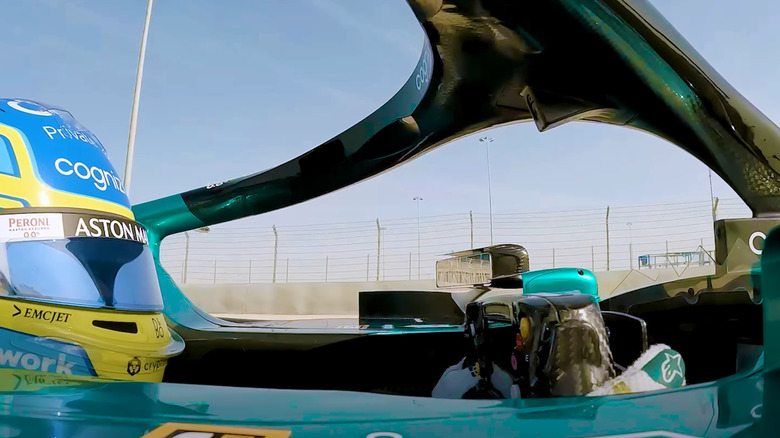
When you're glued to a Formula 1 race, you're seeing the action from a dozen different angles. There's the iconic T-cam above the driver's head, the nose-cone cam scraping the asphalt, and even the driver's eye view from inside the helmet — every F1 driver has had a helmet cam since 2023. But hidden in plain sight is one more camera that you will absolutely never see footage from on the broadcast.
Bolted inside every single F1 car is a mandated driver-facing, high-speed camera, whose only job is to watch for the worst-case scenario. Its purpose isn't entertainment — it's forensics. It's a purely scientific instrument for the Fédération Internationale de l'Automobile (FIA) Safety Department. This camera is hard-wired directly into the car's Accident Data Recorder (ADR) – basically its black box — to capture what happens to the driver during a crash. While your favorite broadcast camera is sending a paltry 25 to 60 frames per second wirelessly, this little eye is recording at a blistering 400 frames per second, giving investigators an ultra-slow-motion look at the brutal physics of an F1 crash.
It's all part of the black box
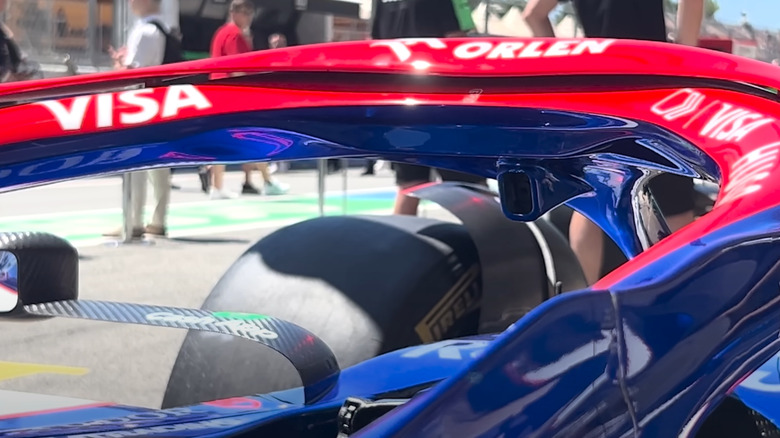
So what makes this camera so special, besides its exclusivity? For starters, it's a rugged little piece of kit. The mandated model is a Marelli HSC-120, a tiny aluminum-cased unit weighing just 4 ounces that's built to withstand vibrations and impacts. Costing just a tick over four thousand dollars, it adds to the list of things like expensive Formula 1 steering wheels or helmets – all of which carry an eye-watering price tag.
It used to be mounted on the chassis, where the steering wheel could get in the way, but the introduction of the Halo cockpit protection device provided the perfect perch. Now, it sits on the Halo's central pillar, looking down at the driver for a completely unobstructed view of their helmet, shoulders, and HANS device. This camera doesn't broadcast wirelessly. Instead, its feed goes straight to the car's ADR, where the footage is synchronized with a flood of other data streams. G-force readings from accelerometers in the driver's own earpiece, vital signs from biometric gloves, and every telemetry point from the car itself are all being compiled. This creates a complete, multi-layered picture of an accident, allowing investigators to perfectly sync the visual evidence of the driver's movement with the invisible forces acting on their body at every single millisecond.
This footage literally saves lives
The data from this camera isn't just for morbid curiosity — it's a critical tool that has directly led to life-saving safety improvements. Take Romain Grosjean's horrific crash in Bahrain back in 2020. The high-speed footage provided a frame-by-frame analysis of his body's reaction to the massive 67G impact and showed exactly how his fireproof gear performed while he was trapped in the inferno for 28 seconds. That analysis directly led to the FIA developing an improved standard for racing gloves with greater heat protection. Even in the frame-by-frame footage of Checo Pérez's crash in the linked source video, the removable cockpit headrest system can be seen absorbing impact forces and shielding the driver within the survival cell. In the world of Formula 1, even a split second of data can redefine what safety means for everyone on the grid.
This is one piece of hidden tech that's thankfully here to stay. That footage, as horrifying as it must be to watch, has proven to be an invaluable part of what makes a crash like Grosjean's survivable in the first place, something that was made clear in the aftermath of his accident.