

These Are The Hardest (And Easiest) Countries To Get A Driver's License

Earning the coveted license to drive is a big moment in life as it represents a maturity milestone, but most importantly, it means freedom. Everyone has their own 'getting your driver's license' story, which can vary in the U.S. as each state has its own take on some rules and requirements. But, have you ever considered what the process is like in other places across the world?
Spoiler alert; Americans don't have the most challenging system for obtaining a driver's license. This could also explain why the U.S. isn't among the regions with the fewest estimated accident deaths per 100,000, according to 2021 data by the World Health Organization. However, the states are far more thorough than some other countries, which ask very little of a potential driver before handing over a license.
Depending on the locale, you could be looking at a range of evaluations before being declared legally able to drive. These can include comprehensive theory tests, a prerequisite number of driving lesson hours, and of course, an actual test of your driving ability alongside one or more examiners. On the flip side, some countries barely require any testing, written or otherwise, while some will give you a license without even getting behind the wheel. Let's look at which places are the most difficult and which require the least amount of effort when earning a driver's license.
China's written exams are intense, but Uganda and Egypt are another story

The testing process in the states is a breeze compared to somewhere like China, that ratchets up the difficulty several notches. Although it still may be worth it for some U.S. automotive enthusiasts, as there are awesome Chinese cars America is missing out on. The Chinese theory portion of the driver's testing features 100 questions. This fact alone would make it tougher to pass, but things get worse. These questions are procured randomly from a database of more than 1,000, meaning to be properly prepared, you'll need quite an extensive study session.
So, with China's theory test packed with so many questions, you might think getting 20 wrong would still result in a pass, as that would be 80%. Unfortunately, you are required to get at least 90% of the questions correct, essentially making any grade below an A- the equivalent of flunking the test.
On the other end of the spectrum, you have Uganda, in East Africa, which has what seems like a decent knowledge level requirement for potential drivers, with a 30-question exam. After all, some U.S. states, like Colorado, use a 25-question test to get a drivers permit. However, unlike Colorado, which considers a passing score to be 80% or higher, Uganda will allow you to get as few as 25% of the answers correct and still move forward. At least the East African nation has had a written test in place. In Egypt, it's a relatively recent requirement to have a written test at all, and it's only 10 questions long, making it among the easiest to secure a driver's license.
Australia demands the most driving lessons, but places like Burundi require zero practical experience behind the wheel
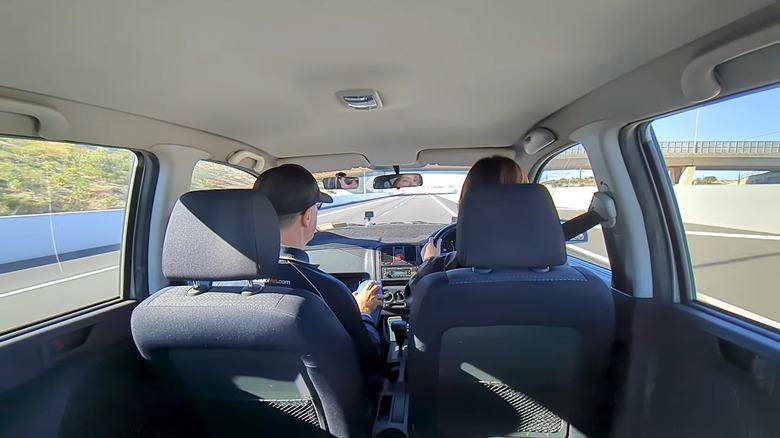
For teens in the land down under, the process of even reaching the practical test can be grueling. These rules can vary between territories, but in some cases can require you to officially log 120 hours behind the wheel with an instructor. Some of this time must also be earned during certain conditions, such as driving at night for example. In terms of the costs, it depends on whether you opt for private lessons or go for a more affordable package deal at a driving school. However, the average price per hour can range anywhere from $16 USD ($25 AUD) in the Australian Capital Territory, all the way up to around $59 USD ($90 AUD) in Queensland.
If you happen to reside in the East African country of Burundi, though, the process is significantly cheaper. This nation doesn't require any learning time behind the wheel, or even a basic classroom course. The fact is, many of Burundi's drivers aren't even actually licensed and are technically driving around illegally. Unfortunately, this is likely a significant contributor to this region being among the deadliest in terms of vehicle accidents.
You need extra focus for the practical driving tests in Japan, and Russia
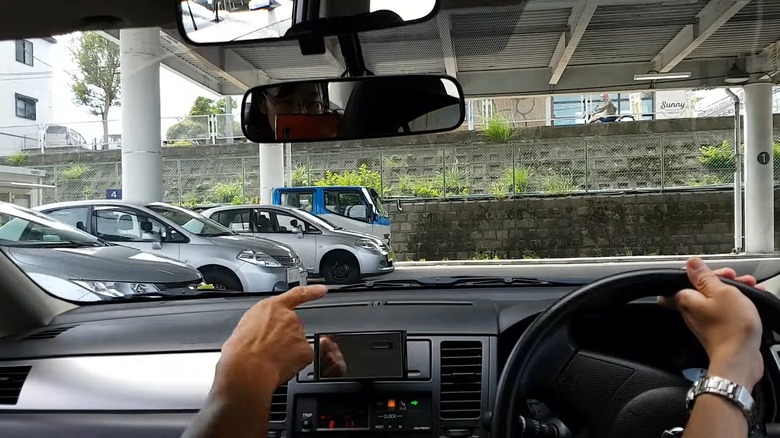
Getting behind the wheel with a driving examiner who is evaluating your every move can be nerve racking on the best of days. But for fledgling drivers in Japan, the stress is cranked up to maximum. Oh, and to make matters worse for some foreigners looking to get licensed, Japan has blue traffic lights instead of green in some cases.
However, in terms of the practical test, unlike some countries which can allow a bit of leeway and examiner discretion, any number of actions will result in an immediate fail in Japan. For instance, if at any time a driver exceeds 19 mph, the test is over. But that's not all, you must also maintain specific positioning in the lane, being meticulous during every step of the practical test. Of course, things like running a red light are also cause to end the test prematurely.
In Russia, the practical test may not be nearly as strict as Japan's, but you'll have to take two of them to get your license. While some countries may have you navigate around cones in the parking lot, or ask you to drive around town, Russia wants you to do both. Except, instead of a parking lot, you'll be on a test track and must successfully demonstrate competence in five different exercises, such as navigating in tight spaces, and parallel parking. To make matters worse, the examiner may attempt to deceive you with misleading questions during the test to verify your knowledge level is sufficient.