

Cellulose Vs. Synthetic Oil Filters: What's The Difference?
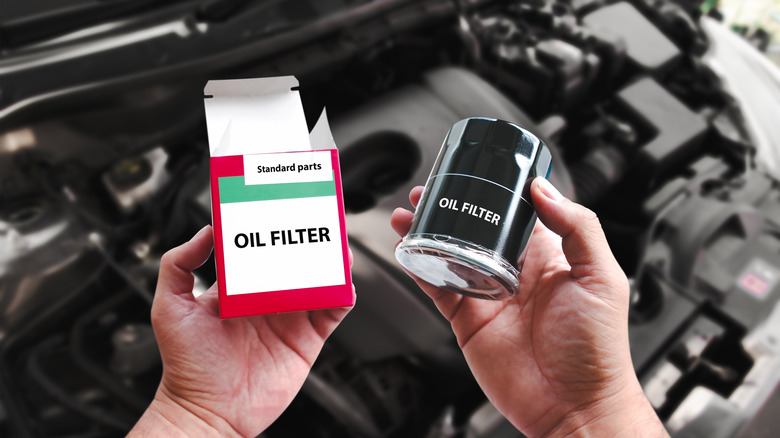
As if keeping track of your car's oil change intervals and motor oil type is not enough, you also have to remember to use the proper oil filter. The oil filter removes harmful contaminants from the oil and prevents dirt particles from recirculating inside the engine. Those particles, which are typically 10 to 20 microns in size, are byproducts of combustion and may contain tiny metal shavings that can harm the cylinders, bearings, and other internal parts. That's why replacing the oil filter during every oil change is critical to avoid contaminating the fresh oil with dirt and contaminants from the spent lubricant.
Just like motor oils come in conventional, semi-synthetic, and fully-synthetic grades, the humble oil filter can come with cellulose paper or synthetic filter media. Cellulose oil filters consist of paper or cellulose fibers and are the most common and affordable choice for motorists. Most paper filters have a filtration efficiency of 20 to 40 microns, enough to keep your engine's oil clean. However, their rather fragile cellulose filters have a short lifespan and should be replaced frequently.
On the other hand, synthetic oil filters are like synthetic engine oils in terms of lifespan. Equipped with micro glass, polyester, or a mixture of artificial fibers, synthetic oil filters can last up to twice as long, and many offer a filtration efficiency of 5 to 10 microns. Some brands have synthetic fibers that can filter out particles as small as 2 microns without restricting oil flow. Cellulose oil filters are fine for your average Civic, Corolla, or F-150. However, the superior filtration and extra durability of synthetic oil filters make them ideal for sports cars or high-performance engines.
Price difference is the key

Cellulose oil filters are the economical choice for most car owners. They usually cost around $5 but can cost more, depending on the size and engine type. Meanwhile, synthetic oil filters can cost around $11 each, which is roughly two times the price of a standard paper filter. Are synthetics worth the extra dollars? Well, it ultimately depends on the type of car and engine.
Paper oil filters are great for your daily drivers. They are cheap, abundant, and readily available at auto parts stores. Then again, cheap oil filters may easily become blocked or clogged with debris as the oil degrades, hindering the oil flow and potentially starving the motor of lubrication. Since there's no way of knowing if your engine's oil filter is going bad, replacing it frequently is necessary to maintain engine protection.
Meanwhile, the increased service life of synthetic oil filters is a huge plus for newer vehicles with extended service intervals. They're also great for heavy-duty engines or performance-oriented motors that demand a higher filtering efficiency, unrestricted flow, and longer protection. Synthetic oil filters could be overkill for some cars that need more frequent oil changes. However, if you don't mind the cost, the inherent durability and enhanced filtering capacity of synthetic oil filters are beneficial for any type of vehicle.
Then again, why spend more money on something your car doesn't need? Your best recourse is to check the owner's manual to know if your car needs a standard or synthetic oil filter. Moreover, adhering to the prescribed oil change intervals and frequent replacement of the oil filter takes precedence over choosing between paper and synthetic filters.