

Alaska Seized His $95,000 Plane Over Illegal Beer, And Now This 82-Year-Old Pilot Wants The Supreme Court To Force The State Give It Back
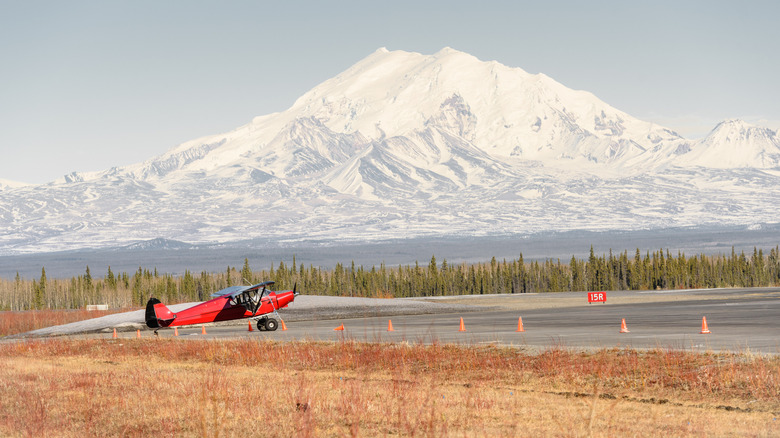
Civil asset forfeiture sucks, and, unfortunately for the people who end up on the wrong side of prosecutors who want their stuff, it covers more than just carrying too much cash. Take 82-year-old Ken Jouppi, for example. The Alaskan bush pilot was arrested back in 2012 after state troopers found beer in his passenger's luggage. Since they were headed to Beaver, a dry community, that was a big no-no, and Jouppi was eventually convicted of knowingly transporting alcohol into a dry community, which carried a sentence of three days in jail and a $1,500 fine, the New York Times reports. Then the state took his plane, too.
If you're a little confused here, that's understandable. Plenty of states in the U.S. allow local counties to ban the sale of alcohol, but they typically don't outlaw alcohol possession entirely. Alaska, however, is a little different, allowing some communities to ban alcohol possession, too. Advocates will tell you dry laws are an important part of combating alcoholism, while opponents will argue we already tried prohibition, and it didn't work. Regardless of where you fall there, though, it's currently the law, and Jouppi was convicted of breaking it. And according to the state, that entitled them to seize his $95,000 plane:
Donald Soderstrom, a lawyer for the state, said taking Mr. Jouppi's plane was a fitting response to his crime.
"For years, alcohol has had a devastating impact on Alaska, especially rural Alaska," Mr. Soderstrom said last year when he argued before the State Supreme Court. "Many of the communities that have chosen to prohibit alcohol lack law enforcement. They lack medical resources. Many of them are off the road system, and they are reachable primarily by air."
"This is why," he said, "forfeiture of an airplane used to import alcohol to those communities is reasonable."
Will SCOTUS take the case?

Jouppi's passenger had been planning to visit her husband, who was working in Beaver, when the state troopers showed up. And she did have some beer in grocery bags that she loaded onto the plane. If you ask Jouppi, though, he saw the tops of some cans, but he didn't think to check whether they contained alcohol, especially knowing that his passenger didn't drink. The state argued that he had to have known, and the jury sided with the state.
Regardless of whether he knowingly committed a crime or not, though, does a crime punishable by a mere three days in jail and a $1,500 fine really warrant stealing a $95,000 plane that he used to make a living? And are we really worried that the initial punishment wouldn't be enough to keep a guy who would have been almost 70 at the time of his arrest from doing it again? After the Alaska Supreme Court ruled against Jouppi, he's now pushing for the Supreme Court to take his case. And if the court does take his case, a ruling from 2019 could end up working in his favor:
That case involved Tyson Timbs, a small-time drug offender in Indiana who pleaded guilty to selling $225 of heroin to undercover police officers. He was sentenced to one year of house arrest and was ordered to pay $1,200 in fees and fines.
State officials also seized Mr. Timbs's $42,000 Land Rover, saying he had used it to commit crimes.
The Supreme Court unanimously ruled for Mr. Timbs. The decision was modest, saying only that the Eighth Amendment's prohibition of excessive fines applied both to the federal government and to the states. It did not rule on whether the forfeiture itself was lawful.
Whether or not the Supreme Court will actually take Jouppi's case still has yet to be decided, but he told the Times he's hopeful, saying, "As miserable as this whole thing has been," he said, "I'm glad that it came to the point where it is now, because we do have a chance in the Supreme Court. It's not only my right to fight this, but it's my duty, too, to see this through."
Civil asset forfeiture
While the concept of civil asset forfeiture in the U.S. dates back hundreds of years, we didn't see it in its modern form until the War on Drugs, particularly in the 1980s under Ronald Reagan. These days, civil asset forfeiture laws allow cops to take billions of dollars from people every year, many of whom were never charged with an actual crime. They also love taking people's vehicles, and just last year, the Supreme Court ruled that drivers don't have a right to an immediate appeal if they believe their cars were wrongfully seized.
While Jouppi was ultimately convicted of a crime, many of the people whose lives have been turned upside down by cops giddy to get their hands on as much stuff as possible never were. There's the Marine veteran who lost $87,000, because cops can take your money if they think you're carrying too much cash, even if you have a good reason. And in Minnesota, cops can wrongfully seize your car, sell it before you appeal and keep the proceeds. Taking cash on a flight? The cops might steal it. Technically, the cops aren't supposed to sell the assets they seize for personal profit, but that also happens. Back in April, an Illinois cop got caught selling seized motorcycles and then keeping the money for himself.
It's long past time for these laws to be changed, but sadly, considering the, uh, current political climate, that doesn't seem likely. Heck, Clarence Thomas isn't even pretending to care about precedent anymore, and good luck getting a bunch of Republicans to agree that cops shouldn't be able to do whatever they want whenever they want.