

The Cheapest And Most Expensive States To Buy Gas In America
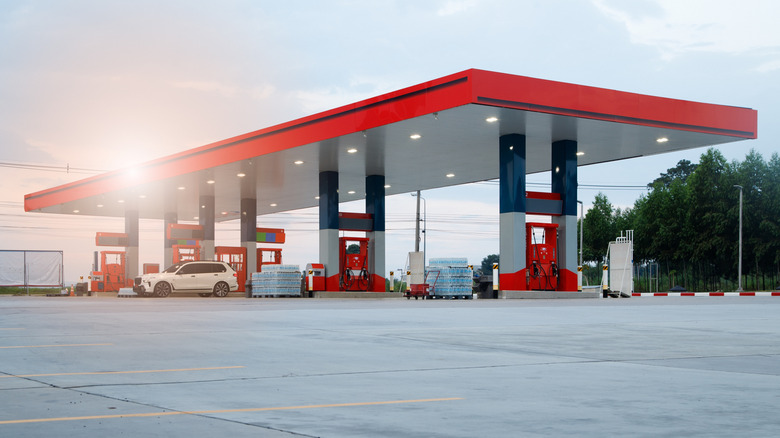
Old timers might remember what it was like to buy gas in 1999. Times have surely changed, and so have gas prices. Since the early 2000s, gas prices have shot up exponentially, going from bargain-basement prices to auction house levels of exorbitant. Weird as it may sound, gas prices across America aren't uniform. It changes from state to state. And you realize this most especially if you are taking a cross-country road trip or filling up your rental car on the other side of the country.
States like Washington, Oregon, California, and Hawaii have the most expensive gas, hovering above the $4 per gallon mark. Meanwhile, states like Texas, Mississippi, Alabama, and Arkansas have the most affordable gas, with prices below $2.7 per gallon, contrary to the White House claiming gas being at $1.98 per gallon. This includes pricing for regular, mid-grade, and premium gas, while including diesel as well. Let's take a look at the states with the highest gas prices and those with the lowest. Before that, though, let's take a look at the reason why gas prices across states differ, and it's a lot more to do than EV's and remote work.
Different states, different prices
The primary reason for the difference in gas pricing between states is the taxes levied on them. These include local and sales taxes, and simply put, some states levy higher taxes on gas than others. On average, gasoline prices comprise 17% of taxes. In fact, we pay less taxes on diesel, at 16%. That's just a fraction of the price levied above crude oil. When you factor in the regular gasoline price, crude oil comprises 52% of the total cost you pay for. The pricing includes the cost of refining (16%) and distribution and marketing (15%). In the case of diesel, while crude oil constitutes just 44% of the total cost, you end up paying more for refining (22%) and distribution and marketing (19%).
The reason why distribution makes up a large chunk of gas prices is its dependence on many factors. One is the distance from where the fuel is sourced, like a refinery, to its final destination, a.k.a. the gas station. The fuel can either be transported by pipeline, by road, or by rail. Then there is the geographical location, or how difficult it is to transport fuel. These factors affect the distribution cost. Then there is demand and supply. Fewer gas stations in the region lead to higher demand, ergo higher prices. Also, disruptions in supply lines, like a pipeline breach or a refinery shutdown due to a hurricane, can lead to a temporary hike in gas prices.
Some states have environmental programs that mandate reformulated gasoline. This gas contains additives that help reduce air pollutants caused by evaporating or even burning gasoline. Obviously, these additives add cost. Other environmental programs have tighter guidelines with regard to transporting and storing fuel.
Cities with the most expensive gas
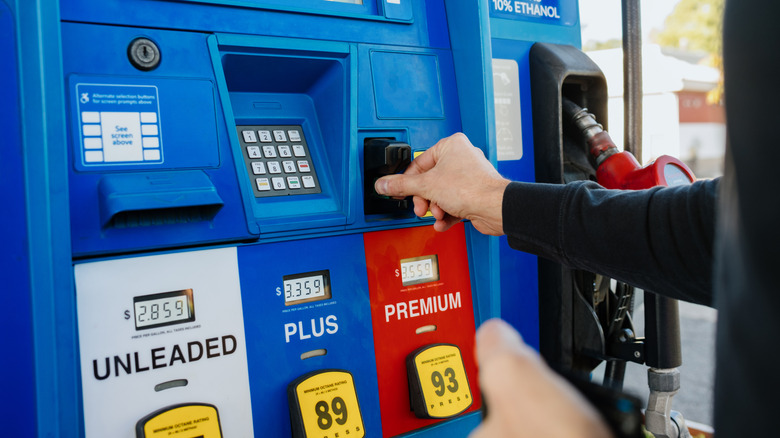
If you look closely, gas prices are mostly dependent on the region. Gasoline prices are the highest on the West Coast. These include states like Alaska, California, Hawaii, Oregon, and Washington. Next up are the states in the Rocky Mountain region and the Central Atlantic region. These states where prices hover over $3 per gallon are Colorado, Montana, Idaho, Utah, New York, and Pennsylvania.
The reason why gas prices are high on the West Coast is due to the low number of refineries, stringent regulations, and high amount of taxation. The third most expensive gas state is Hawaii. Prices for regular gas stood at $4.488 per gallon at the time of writing this article. Next up is Washington at $4.623 per gallon. The state with the most expensive gas is California, at $4.657 per gallon.
The high prices for gas in California are due to several factors. The state's geographical isolation from the rest of the country makes it harder to supply fuel via pipelines. Also, very few refineries outside California can meet the state's complicated reformulated fuel requirements. California's cleaner, reformulated gasoline exceeds even federal gasoline program guidelines. In fact, California imports its gasoline from India and South Korea, whose shipping prices add to the cost. The cleaner gasoline itself is expensive to make. California charges the highest fuel tax, up to $0.90 per gallon. Besides state taxes, environmental compliance costs add to fuel prices. Overall, fuel in California costs more than $1 per gallon when compared to the national average fuel prices.
Cities with the most affordable gas
The most affordable gas can be found in states along the Gulf Coast, and for good reason. States in the Gulf Coast are home to a large number of refineries that produce more than half of America's refining capacity. In fact, this region produces more gas than it consumes, leading to a surplus. Also, transportation costs are low, further reducing fuel prices. States along the Gulf Coast also levy fuel taxes that are lower than the national average, and some include Alabama, Florida, Texas, and Mississippi. The states with the third most affordable gas are Texas, at $2.753 per gallon, and Louisiana, at $2.754 per gallon. Oklahoma comes second, at $2.726 per gallon. Mississippi has the cheapest fuel, at $2.704 per gallon.
A major reason for Mississippi's low fuel prices is its low taxes. Mississippi's fuel taxes are the second lowest in the country, at around $0.18 per gallon of crude oil. The other reason is the reduced transportation costs. The state houses three refineries, which daily produce up to 2% of America's domestic refining ability. This, besides its proximity to refineries in neighboring states of Louisiana and Texas.
While that's a lot, Mississippi also does not have as many cities as most other states. The state has a lower fuel demand than other states, which leads to lower demand for gas. These factors contribute to Mississippi's low fuel prices. States in the Midwest, like Ohio, Minnesota, Nebraska, South Dakota, Michigan, and Illinois, also have low fuel prices. Also, states along the East Coast, New England, and the Lower Atlantic regions benefit from low gas prices.
How to make the best of state-wise fuel pricing?
If you are heading on a cross-country road trip, planning will literally save you gas money. The first step is to plan your route. While the most efficient route between two destinations is a straight line, taking a detour through states with the cheapest gas can result in significant gas money savings. Some apps show pumps offering the most affordable gas. Factor these in while planning your road trip. Fuel pumps along the highway tend to offer more expensive gas.
Instead, travel a few miles off the interstate in residential areas, where gas might be cheaper. Just in case you are low on fuel and the only options around are expensive gas stations, do not fill up all the way; just enough for you to get to the next cheapest gas station. On the other hand, you could simply road trip in an EV. To summarize, California is the state with the most expensive gas, with prices hovering around $4.657 per gallon, while Mississippi is the state with the cheapest gas, at $2.704 per gallon.