

Are Inverted Motorcycle Forks Just For Looks, Or Actually Better?
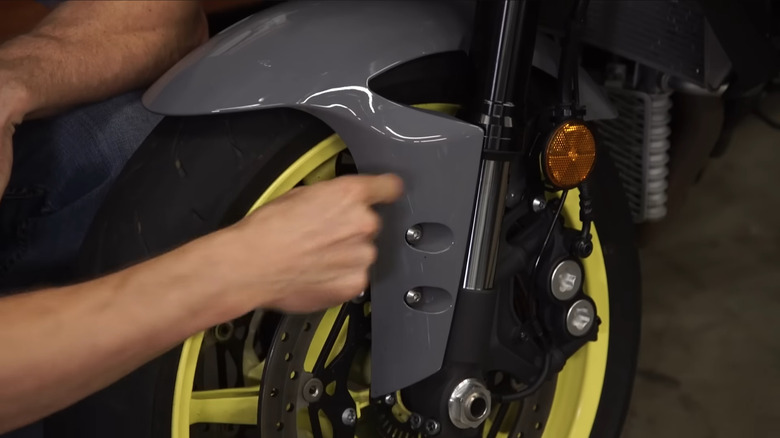
Inverted motorcycle forks, often called upside-down or USD forks, flip the layout of conventional telescopic suspension. Instead of the skinny stanchions clamping into the triple tree, the larger-diameter sliders mount up top near the frame.
That orientation matters. The wider tube resists bending forces better, so the front end stays stiffer when braking hard or leaning into a turn. This rigidity improves handling and delivers more feedback through the handlebars, something riders notice in high-speed or aggressive riding situations. It spreads loads over a longer area, reducing flex much like an extending ladder becomes sturdier with more rungs engaged.
Another factor is unsprung mass. In a conventional fork, the heavier outer tube sits at the wheel end, adding weight the suspension must move with every bump. Flipping the design means the lighter stanchion is attached to the axle, cutting unsprung weight. Less mass at the wheel lets the suspension react faster to imperfections, keeping the tire in better contact with the road. This makes a difference not just for sportbikes, but also for off-road and motocross machines (these are the fastest dirt bikes that are fully street legal) that take repeated hits. Continuous lubrication is another perk, since oil naturally pools where the seals and bushings sit in USD forks, reducing friction and improving small-bump sensitivity.
These benefits are why racing teams adopted inverted forks in the late 1980s. They're also why most modern performance motorcycles, from Yamaha's R-series to Triumph's Street Triple, now include them as standard.
Why inverted forks aren't always the best choice
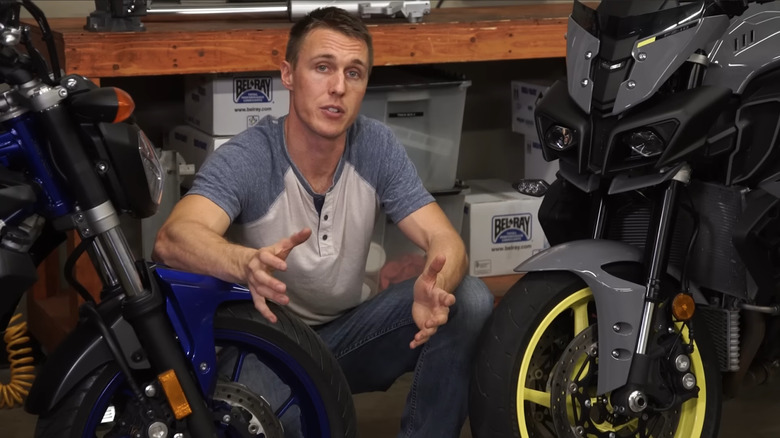
While upside-down forks bring performance gains, they aren't without compromises. Service is harder compared to conventional forks. Many inverted designs lack drain screws, making fluid changes more labor-intensive. Quick-drain oil plug, anyone? And if a fork seal fails, the oil sits above the seal rather than below it, meaning gravity pushes it down toward the brakes and tire. A minor leak on a traditional fork might be an inconvenience, but on a USD fork, it can quickly become a safety hazard. That makes maintenance more critical and usually more expensive.
Cost is another factor. Manufacturing inverted forks is more expensive than telescopic forks, which is passed on to buyers. Aftermarket conversions are available, but they're not cheap. Companies like K-Tech and Kraus Motor Company offer full kits, often including forks, brakes, axles, and wheels to preserve steering geometry. Prices can start at several thousand dollars, with some Harley-Davidson conversions costing over $5,000. For most everyday riders, refreshing existing forks is a better use of money.
Finally, not every rider needs the added stiffness. Street riders who cruise or ride casually won't push suspension to the limits where inverted forks shine. Conventional forks, especially modern cartridge-based ones, deliver reliable performance, easier upkeep, and lower risk from oil leaks. That's why many cruisers and commuter bikes still use them. Upside-down forks look premium and improve performance, but whether they're "better" depends entirely on how you ride and how much you're willing to spend.