

Every Car Brand Tata Motors Currently Owns
Everyone is in bed with everyone when it comes to the automotive industry. The two biggest automakers in Korea, Hyundai and Kia, are under the same ownership. Rolls-Royce and BMW went from making competing plane engines in WW2 to being in the same family as the Mini Cooper. Aston Martin currently relies on Mercedes power, and we're running out of fingers to count the brands Stellantis and General Motors have.
Outside of rising EV companies like Tesla and Rivian, very rarely do we see an automaker own just one brand or not be part of a larger conglomerate. Tata Motors is no different. Over the past few decades, India's largest automaker has collected a lineup of brands, ranging from bus builders to heavy machinery for construction. And when it comes to cars, there might be a few names you'd be surprised to see that are owned by the company. Here's every automaker that Tata's got skin on.
Jaguar
It's been a long, complicated history for Jaguar. A couple of sidecar builders decided to begin making cars in 1933, and won Le Mans before it merged with British Motor Corporation in 1966. British Leyland became a part of the team as well, until financial troubles hit the company, forcing Jaguar into privatization again in 1984. That lasted five years, when Ford purchased them in 1989. They'd be part of Ford's premier auto group all the way until the financial crisis of 2008.
Tata got Jaguar for $2.3 Billion in 2008 in a package deal alongside Land Rover (we'll get to them in a bit). For nearly 20 years, Tata has helped rebuild Jaguar from the ground up, first building an entire lineup of sedans and crossovers, ranging from the future classic flagship F-Type, to the brand's first SUV's, the E-Pace and F-Pace. For a while, it was working; the brand saw exponential growth, with sales going from 10,000 to nearly 40,000 in 2017. But that was the top of the pyramid, and sales figures have plummeted in the years since, with recent years still struggling to stay above 10,000 once again.
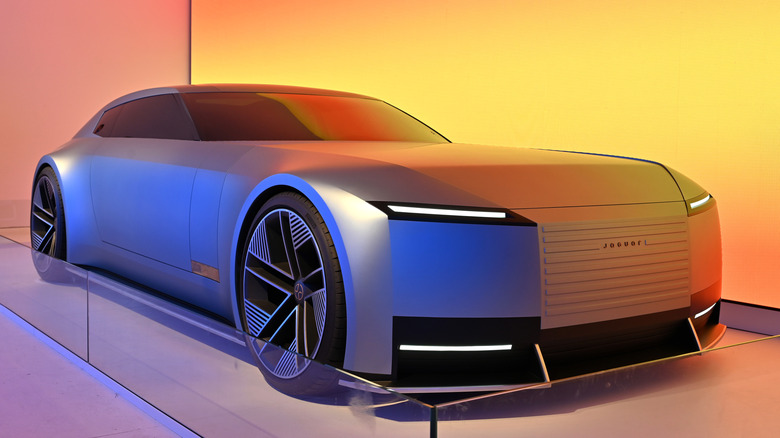
After a decade of trying, Jaguar couldn't become the British BMW and Audi fighter Tata hoped it would be. For CEO Adrian Mardell, the solution was to hit the reset button, electrify the brand, and move it upmarket, competing with the Bentleys and Rolls of the industry. Now in 2025, only the F-Pace is being sold stateside to make way for the new all-electric four-door sedan launching next year. We're big backers of the Type 00 Concept and Jaguar's rebrand announced in November 2024, but to say Jag's has been controversial is a criminal understatement.
Land Rover
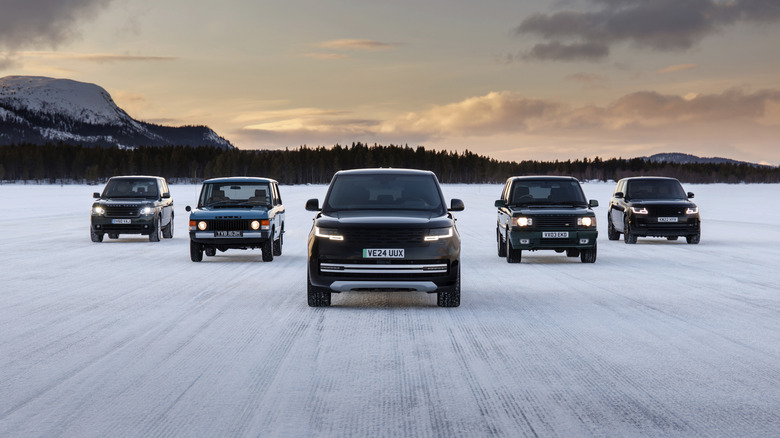
The second half of JLR, Land Rover, has a heritage just as complex as its sister brand. Introduced just after World War II, the Land Rover came with heavy inspiration from the American Jeep, hoping to combine its off-road capabilities with some good British sophistication and plushness. It sold so much that King George VI gave the car a Royal Warrant.
The car grew so much that it separated from Rover and became its own brand in 1978. Both Land Rover and just "Rover" were acquired by BMW in 1994 before they were traded to Ford in 2001. The blue oval sold the green oval to Tata alongside Jaguar in January 2008, with both brands starting to operate under the same roof as JLR.
Under new ownership, Tata's expanded the Land Rover fleet drastically. Most notable in recent years is the rebirth and reintroduction of the iconic Defender, which quickly became the brand's top seller Worldwide. They've also introduced new models like the always compact, and sometimes convertible, Evoque. Legacy models have also gotten updated variants, with Land Rover shrinking the Discovery into the Discovery Sport, and giving the Range Rover a third row with the Velar. With the company's first all-electric Range Rover set to start production soon and its first factory effort into racing at the Dakar Rally, Land Rover's future looks bright.
What else does Tata Motors own?
We mentioned earlier how Land Rover separated from its parent company of Rover, and how both brands became two of the many owned by Ford. Alongside Jaguar and Land Rover, Tata acquired the Rover moniker in 2008, as well as two other dormant brands, in the form of Daimler and Lanchester. One of the oldest automakers in the U.K., Lanchester, hasn't produced a car since 1955, and the last time we saw Daimler was in the form of a rebadged XJ, the Daimler Eight. Each of the three names could be revived, but only time will tell.
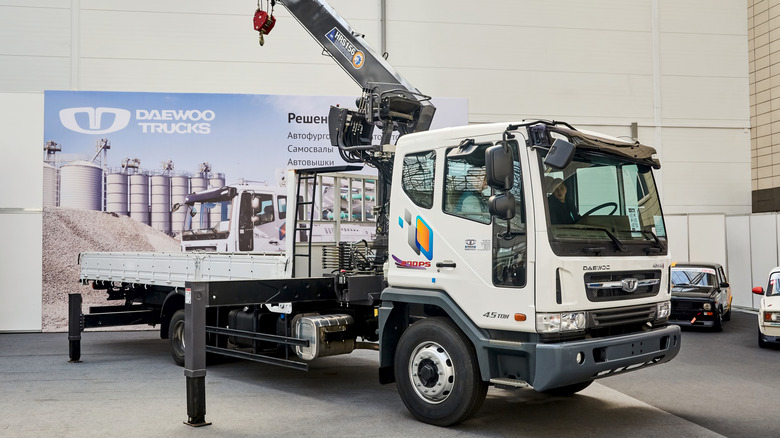
Another active brand Tata owns is Daewoo Mobility. After the Korean automaker went bankrupt in 2000, General Motors swooped in to snag its car division for a cool $1.2 billion, but it was Tata who acquired the brand's commercial vehicle wing. Tata Daewoo Mobility was born in 2004, and 20 years out, it's gone far better than the brand's former car division. GM Abandoned the Daewoo brand altogether in 2011, renaming the company to GM Korea, with Chevy stepping in as the new marquee. In trucks, Daewoo has become the second-largest commercial vehicle builder in South Korea, with trucks being sold in 92 different countries.