

These Sounds Could Mean Your Water Pump Is Failing
There are plenty of sounds you want to hear while cruising down the road. Your favorite song blasting through the speakers, the new exhaust setup you just bought doing its due diligence, and the road whooshling beneath you can all enrich the driving experience. What you don't want to hear is a cacophony of noise from the engine bay due to a failing water pump.
A car's water pump plays an essential role in keeping the engine cool, and in the process interacts with other crucial components like the radiator, engine belt, or other components depending on a given car's water pump configuration. When your water pump wears out, you may begin to notice high-pitched "squeals" or "chirps," whining, and in more severe cases, rumbles and grinding if other parts are being affected, like a serpentine belt. To further emphasize how torturous this can be for the ears, a loose belt is listed among the worst possible sounds your car can make.
Why do water pumps fail?
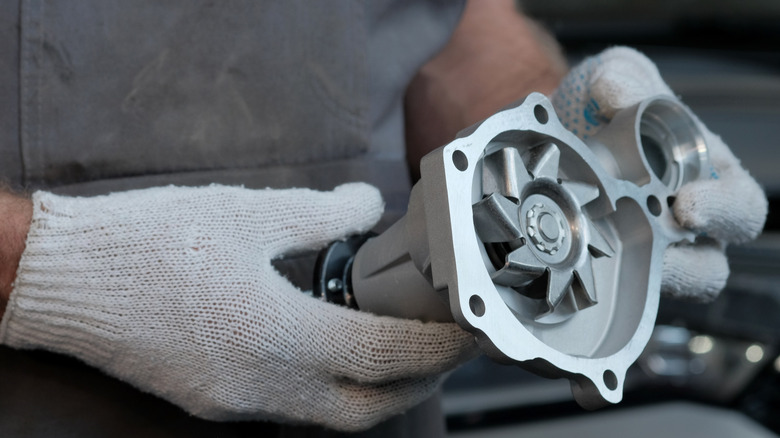
Your car's water pump uses centrifugal force generated by blades (typically, impeller blades) to move coolant through the engine and cooling system, regulating overall operating temperature. Water pumps are often situated in the engine bay and driven by engine belts. This is the typical setup, but the exact configuration of depends on your car's specific cooling needs (some pumps use gears, vanes, or turbines rather than standard impeller blades).
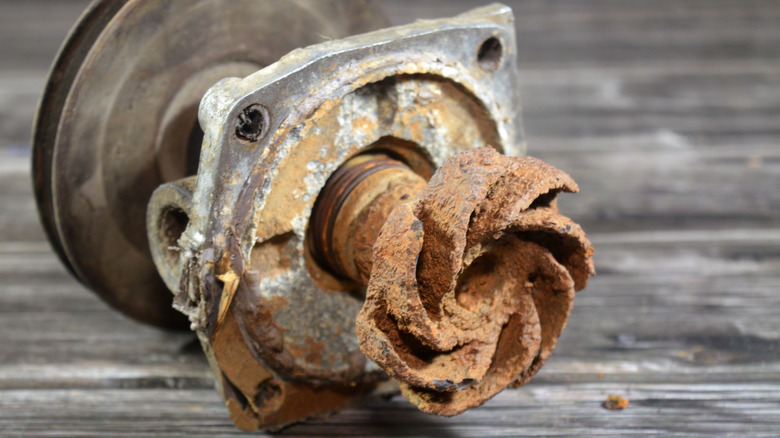
Water pumps perform a heavy lift for your vehicle by efficiently dispersing the intense heat a car's engine generates. They tend to fail for the same reasons many other car parts fail; wear and tear from being used, and lack of regular maintenance. Overheating and coolant contaminants like rust (which can mix into the cooling system when coolant isn't replaced regularly) can be culprits as well, and often a combination of these factors leads to water pump defeat. When the water pump can't do its job properly, the engine and other systems that rely on its cooling powers are put at very expensive risk.
Recognizing water pump failure sounds can help you catch the problem early
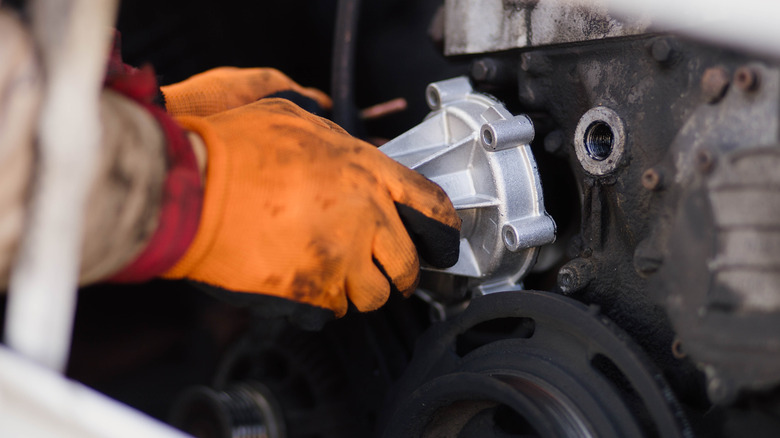
Observing and responding to the warning signs of a failing water pump can help prevent costly damage to the engine. High-pitched squealing and whining from the bearings wearing out are among the first signals that your pump is starting to deteriorate. It may even sound like the whine of a serpentine belt, and could actually be both the water pump and the belt if pump failure has started affecting other components.
If your water pump is indeed giving out, there will most likely also be visual signs. Be sure to check for coolant leaks on or under the engine as well as corrosion or rust on the pump itself. A coolant leak can be recognized by its bright color (typically variations of blue, green, pink, yellow, or orange) and sweet aroma, which help distinguish it from other types of fluids you may encounter, like water or a transmission leak.
Catching and replacing a failing water pump as early as possible can prevent you from needing more costly repairs. If a deteriorating pump is left alone, it could force you into premature coolant replacement, gasket repairs, and more extensive work that will undoubtedly cost more than the pump. Regularly checking your car's coolant level and the pump's belt tightness will help ward off pump failure and keep your car free of that pesky whining, so you can jam out in peace.