

What Is A Kei Car (And How Do You Pronounce It)
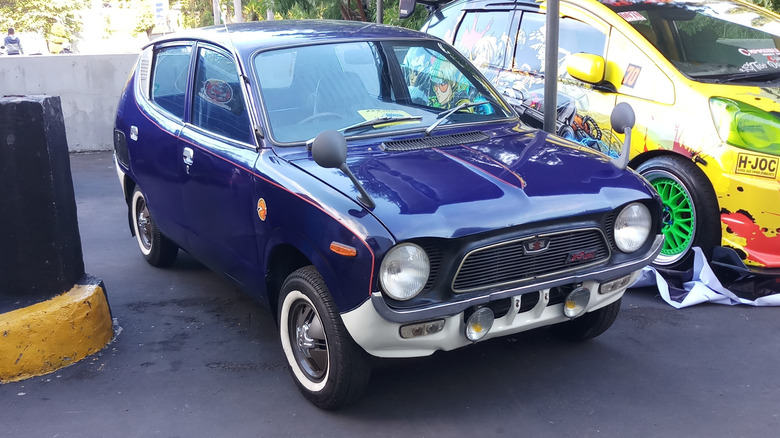
Although Donald Trump doesn't understand why people in Asia don't buy our cars, the main reason is actually pretty simple. Most of their roads and cities are built for much smaller vehicles — like Japan's tiny kei cars. That's pronounced "kay" and is a shortened form of kei-jidousha, the Japanese term for "lightweight vehicle."
Originally developed after World War II, kei cars were envisioned as an affordable transportation solution that would help get people back on the road as the country recovered. They came with financial incentives, too, since if a vehicle qualified for kei certification it would enjoy lower taxes and other fees than larger cars. Now, Japan wanted to make sure automakers didn't take advantage of these regulations, so it put a hard limit on the size of kei cars.
They have to fit inside a package that's 3,400 millimeters (134 inches) in length, 1,480 millimeters (58 inches) in width, and 2,000 millimeters (79 inches) tall, and their engines can't displace more than 660 cubic centimeters. When they first debuted, the displacement limit was a mere 150 cubic centimeters (100 cubic centimeters for two-stroke engines). This was upped to 360 centimeters in 1955, setting the stage for what's often considered the first true kei car, the Suzuki Suzulight, which was available in sedan, van, and even pickup body styles.
How small is a kei car really?
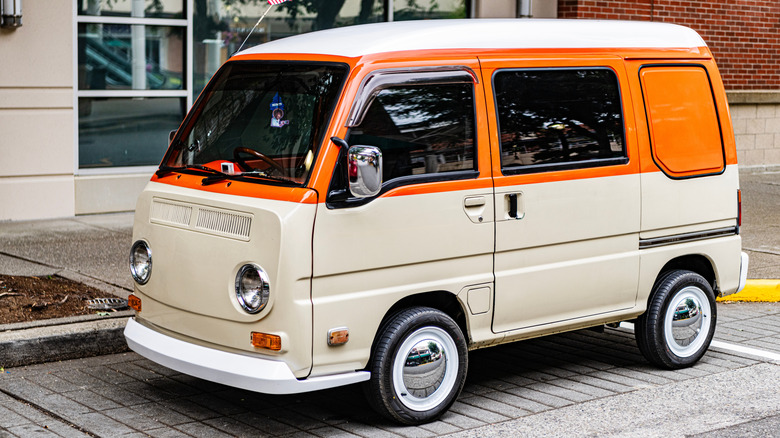
Of course, that may not tell you anything unless we compare those numbers to those of popular U.S. vehicles in popular U.S. measurements. Converting the kei car limits, we get a max length of roughly 11 feet with a width of approximately 5 feet and a height of about 6.6 feet. The smallest Ford F-150, on the other hand, is the regular-cab model that stretches 19.33 feet with a width of nearly 8 feet (including standard mirrors). Surprisingly, height isn't as much of an issue, as Ford's tallest F-150 is only a few inches above the kei-car height limit.
It's also worth remembering that beyond Japan's engine-displacement limit of 660 cubic centimeters comes a soft output maximum of about 63 horsepower. The Ford F-150 Raptor R, in contrast, can deliver well more than 10 times that amount, topping out at 720 horsepower.
On the other side of the spectrum, the Toyota Corolla — among the world's best-selling compacts — is about 4 feet longer than the longest kei car, and its standard engine is a 2,000-cubic-centimeter unit making 169 horsepower. As a result, its output is more than 100 ponies higher than the soft limit on today's kei cars. Inside a kei car, well, let's just say you may not believe how much room there is. Yet after seeing a 6-foot-4-inch man try to fit into a variety of kei trucks, you may not believe how little room there is, either.
Can I get a kei car in the United States?
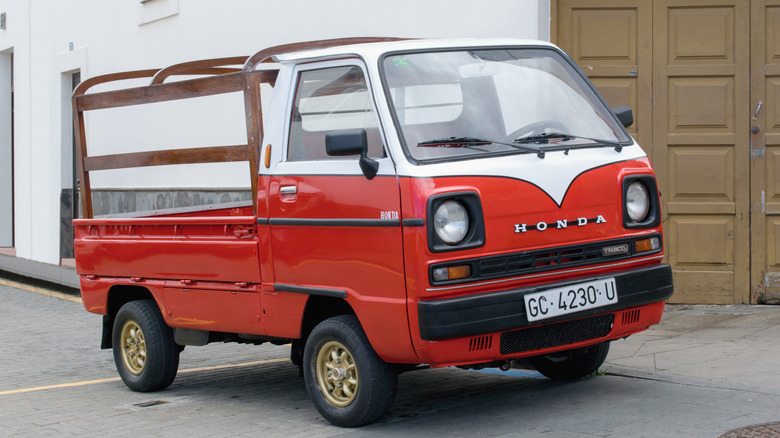
Absolutely! You do have to take into account the 25-year import rule, which right now means shopping for cars built from before 2000, but that actually includes many of the kei classics like the versatile Honda Acty minitruck; Subaru's first-ever car, the now-rare rear-engined 360; or the sporty Suzuki Capuccino.
The purchase process can be simple as well. Perhaps the easiest way to get your hands on a kei car in the United States is to try one of the growing number of companies importing the vehicles for you. This is like shopping at a used-car dealership, where you can go check the vehicles out in person or online, then drive one right off the lot or have it shipped to your location. Boeki USA, for instance, is among the popular picks for shopping for kei cars that are already in this country legally.
You can also shop for cars still in Japan, whether you go through a middleman like Car from Japan or the Import Guys or bid directly on a Japanese auto auction yourself. The downside is that the less help you get from an intermediary, the more paperwork and details you have to handle yourself, including going to the port and picking up the car on your own. The good news is that kei cars can be so inexpensive, with many priced under $5,000, that budgeting a little extra help can still be worth it.