

Harley Vs. Indian: America's Motorcycle War Inside A World War
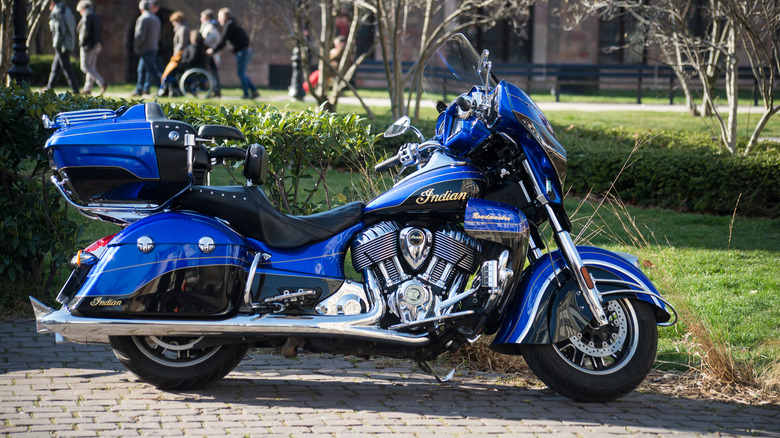
By the 1930s, only two American motorcycle companies mattered: Harley-Davidson (which is currently facing some financial troubles) and Indian. Excelsior-Henderson had folded in 1931, leaving the market to the Milwaukee Motor Company and its Springfield rival. Both wanted the same thing, riders' loyalty, and racing became the battlefield. The AMA split the competition into Class A for factory racers and Class B for modified street bikes. But neither class caught the wider public's attention, so in 1934, the AMA created Class C, using production motorcycles that had to be street-legal and ridden to the track. This shift let ordinary riders compete, and Harley's R-series squared off against Indian's Sport Scout in tightly matched contests. Wins depended on riders as much as machines, which made the rivalry personal and highly visible. Fans took sides with the same intensity as baseball or boxing.
The economic collapse of the Depression made racing more important than ever. It sold bikes when few people had money to spend. By mid-decade, Harley refined its Big Twins, and Indian promoted its Scouts, each company fighting for a shrinking pool of customers. Then came 1936. Harley introduced the overhead-valve Knucklehead, a motorcycle so advanced it made nearly everything else look dated. Indian stumbled with its redesigned Four, giving Harley a crucial edge heading into the next decade. When war came, Harley and Indian would carry their battle from racetracks and showrooms into military contracts and global supply lines.
The military calls for motorcycles
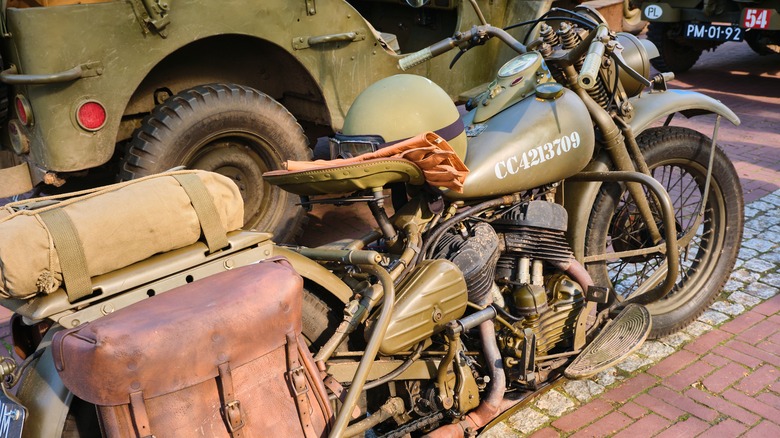
When the U.S. entered World War II, the War Department needed motorcycles in massive numbers. Both Harley-Davidson and Indian were immediately tasked with building machines that could handle rough terrain and military demands. Harley's answer was the WLA, a rugged 45ci side-valve V-twin that became the backbone of Allied motor pools. Indian supplied the 741, a 500cc model derived from its civilian Scout, along with the 640 series and a number of sidecar rigs. Both companies also built experimental shaft-driven motorcycles at the government's request, designed to mimic German BMWs. Harley produced the XA, modeled on the BMW R71, with a flat-twin engine mounted across the frame. Indian created the 841, a transverse 90-degree V-twin that prefigured Moto Guzzi designs decades later.
These shaft-driven prototypes were few in number but showed that both companies could innovate under pressure. Production was staggering compared to peacetime output. Harley delivered more than 80,000 WLAs and tens of thousands of spare parts, while Indian produced over 40,000 motorcycles, mostly the 741 model. Factories ran nonstop, with military contracts guaranteeing steady income despite the economic turbulence of the era. But with tooling already worn down from the Depression years, both companies struggled to keep up with demand. Still, motorcycles rolled out of Milwaukee and Springfield by the thousands, painted in olive drab and headed to the front.
Losses on the home front
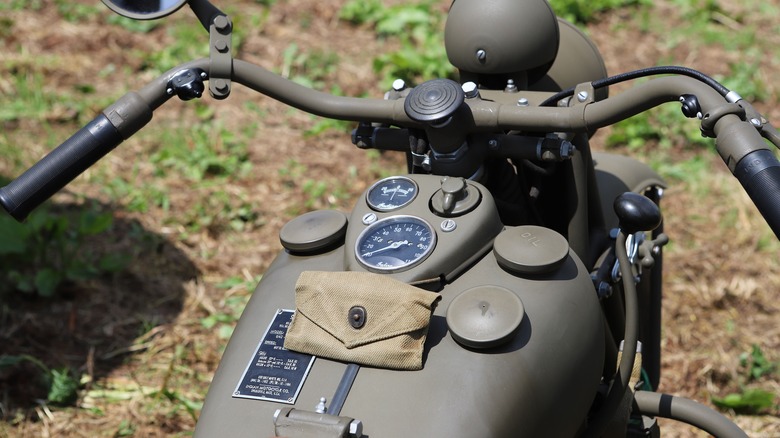
The war effort kept assembly lines busy, but it also took a toll. Harley-Davidson and Indian both lost key leaders during the early 1940s. Walter Davidson, who had been president of Harley for decades, died in 1942. His death came just as production was ramping up to meet government quotas, leaving the Motor Company without its iron-fisted leader. William Harley, the engineering mind behind the brand's success, passed away a year later. Indian's co-founder, George Hendee, also died quietly in 1943 at the age of 76.
These deaths marked the end of an era. The men who had guided both companies from backyard workshops into global manufacturers were gone, leaving their successors to steer through wartime uncertainty. Speaking of leaders, did you know that Harley's new CEO is a total dork?
Dealers across the country also struggled under rationing. Even with steady military contracts, the domestic market disappeared almost overnight. Riders who might have bought a Chief or a Knucklehead had to wait until peace returned.
Surplus and struggles after victory
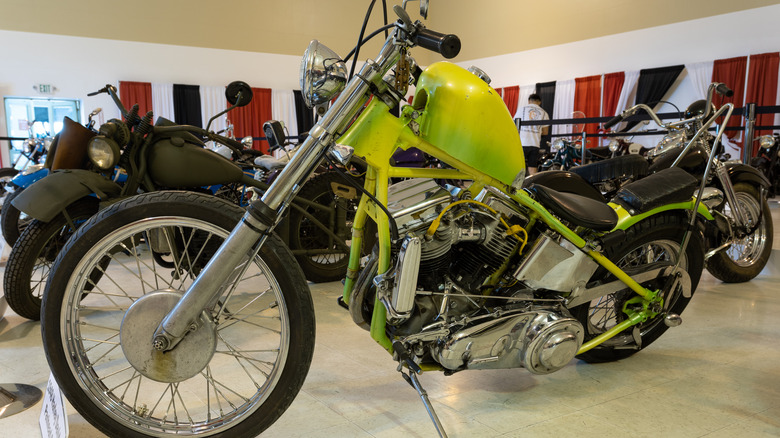
By 1944, with the Allies gaining ground, the U.S. canceled many open-ended procurement orders. Suddenly, Harley and Indian had warehouses of motorcycles with no buyers. Thousands of WLAs and 741s became surplus, sold off in bulk to dealers or shipped abroad. In the U.S., Harley dealers snapped up large lots, reselling them to civilians eager for cheap wheels. Indian's surplus often went overseas, with bikes sent to Canada, Britain, Australia, and even Russia.
While this kept the factory floor clear, it left Indian with less of a foothold in the recovering American market. At the same time, automobile production surged back to life. By 1946, U.S. carmakers built nearly seven million vehicles, soaking up consumer demand. Motorcycles suddenly looked less essential when families could buy cars.
Harley introduced the Panhead in 1948, followed by the Hydra Glide and later the K-model, moves that kept it relevant as the market shifted. Indian, meanwhile, stumbled with the Arrow, Scout, and Warrior, plagued by breakdowns and poor reliability. The Chief carried the brand for a short time, but leadership changes and financial troubles pulled it down. Racing offered some wins, yet they weren't enough to stabilize the company. By 1953, Indian shut down production, while Harley tightened its grip on the American market and prepared for new rivals.