

Here's What That Burning Smell From Your Car Could Mean

It's never fun to encounter a burning smell when you're out for an otherwise quiet, relaxing drive. Your car relies on a working symphony of over 30,000 parts to get you from point A to B. It also requires a variety of fluids, lubricants, friction materials, and fuel to get going. Everybody loves that new car smell (that is, until you find out that it may cause leukemia or certain cancers), but a burning odor is typically a sign of bad news, meaning one of the many thousands of parts has failed, or oil and lubricants are where they shouldn't be.
Vehicles are no different from their human owners in that they have distinct scents. Without proper care and maintenance (or an occasional shower), your car will start emitting unusual odors, indicating potential failure points. Mold and mildew can wreak havoc on your car's air conditioning system, resulting in a musty smell when operating the A/C. Meanwhile, a strong and pungent gasoline smell may indicate fuel tank leaks or injector issues. However, a burning smell can come from many sources within your vehicle, and it helps to know the most common problems that may cause that charred odor.
Burned clutch lining

Friction materials, such as the clutch lining, can produce a burnt chocolatey smell. If you have a manual car, a burning clutch can become noticeable when climbing steep inclines or when accelerating hard from a stop. The burning smell is likely due to transmission overheating, excess friction from improper clutch use, or severe mechanical issues, which could indicate a damaged clutch disc.
The clutch disc, pressure plate, and release bearing could last awhile with proper driving techniques. However, improper habits like riding the clutch when the vehicle is in motion, heavy towing, overloading, inadequate gear selections, improper double clutching, and otherwise fun activities like burnouts and donuts can lead to clutch burnout. As a result, this can cause burning odors while driving. If other symptoms, such as a spongy-feeling clutch pedal and poor acceleration, accompany the burning clutch smell, it's high time to consult a mechanic for a clutch job. The not-so-stellar news is the price: Replacing the clutch pack in a manual car will cost anywhere from $800 to $3,000.
Broken fan belts or stuck ancillary pumps
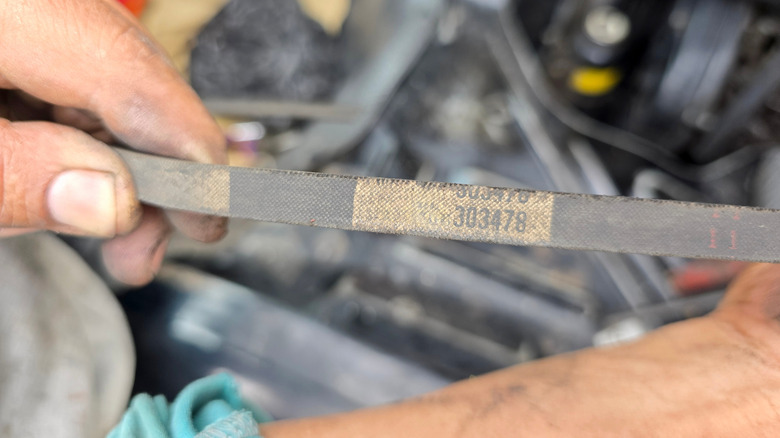
The smell of burning rubber under the hood typically indicates screeching or melting fan belts, which usually occur when ancillary pulleys or pumps fail or become inoperable. We're talking about the alternator, A/C compressor, water pump, power steering pump (if so equipped), and others. When the pulleys that turn those begin to fail due to broken bearings or component failure, the fan belt or serpentine belt will start making loud, screeching noises, which will eventually lead to a burning smell or, in some cases, thick smoke coming from under the hood.
It's why preventive maintenance is key to avoiding costly repairs. Bring your car to a mechanic if you begin noticing the fan belt slipping or making screeching noises. If your nose picks up a burning smell while the fan belt is slipping, reduce your speed and pull over at the next stop immediately. The immediate symptoms may include an illuminated battery light (indicating alternator failure), engine overheating (resulting from a broken water pump or loose fan belts), and warm air persistently blowing from the A/C vents (due to a faulty A/C compressor).
Failing catalytic converter
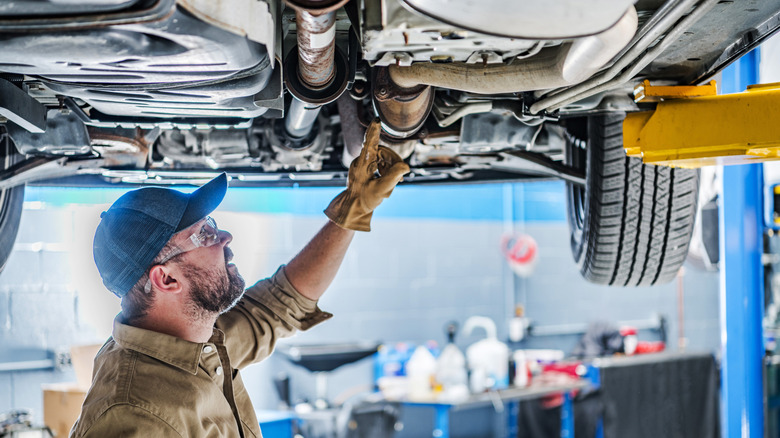
The catalytic converter converts harmful combustion gases, such as nitrogen oxides and carbon monoxide, into less noxious CO2 and water vapor, allowing your car to spew out fewer pollutants from the tailpipe. It achieves this by passing hot exhaust gases through a ceramic honeycomb substrate containing rare-earth metals, including palladium, platinum, and rhodium. Those expensive metals are why catalytic converter theft has risen over the years, with the latest target being school buses of a local school district.
Under ideal conditions, the catalytic converter of your car can last the life of the vehicle. However, feeding the engine low-quality fuel, misfires (caused by faulty spark plugs, ignition coils, or injectors), or a leaky head gasket may shorten the service life of the catalysts. For instance, excessive oil or coolant consumption due to a leaking head gasket may cause the catalytic converters to melt or burn out, resulting in a burning smell reminiscent of rotten eggs or volcanic sulfur. The check engine light will also turn on if the ECU detects issues with the catalysts or oxygen sensors. Replacing a catalytic converter will cost anywhere from $300 to $2,500, so it's worth taking care of it by maintaining a healthy running engine.
Wiring or electrical faults
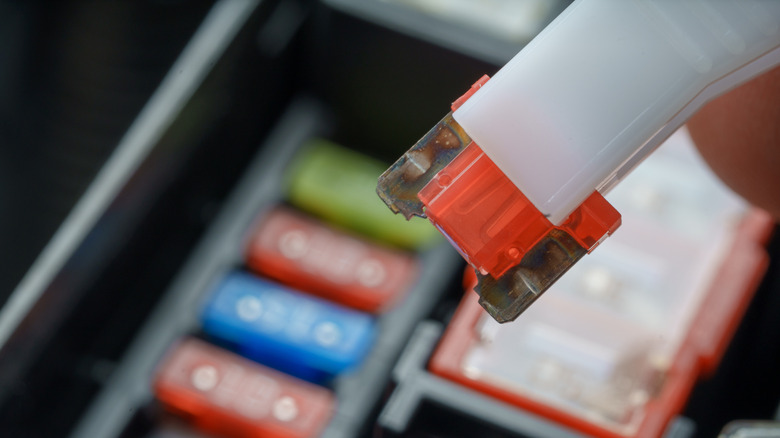
It's worth knowing a thing or two about vehicle electronics if you're passionate about aftermarket stereos, amplifiers, alarms, auxiliary lights, and accessories. Wiring faults or electrical issues can cause a burning smell if there are shorts, and it can even lead to fires if the accessories have inappropriate wiring. Moreover, all that heat exposure under the hood may cause fuses and relays to fail earlier than expected, with some causing a burning electrical smell along with noticeable smoke when they do so.
Fried wiring and shorted electrical harnesses can damage your car, so make it a point to have a professional (or a knowledgeable friend) install your preferred accessories to avoid electrical issues. Moreover, make it a habit to clean the 12-volt battery terminals regularly to prevent damaging corrosion, and ask your mechanic to inspect the alternator voltage before embarking on a road trip or before cold weather starts.
Other possible causes of that burning smell
Exhaust leaks, which are more common in older cars, can also cause a smoky, burning smell while driving. Holes or cracks in the exhaust pipes, combined with poor cabin insulation, allow exhaust gases to leak into the cabin while driving. Inhaling some exhaust fumes is one of the most annoying things unless you're driving a racing car, so it's better to get it fixed as soon as possible. Meanwhile, cooling system faults, such as a leaking radiator or a cracked heater hose, can cause hot antifreeze to splash or drip all over the engine bay. Coolant flows through numerous parts and components of the engine, and any weak point can cause coolant leaks, resulting in a strong, burning chemical smell.
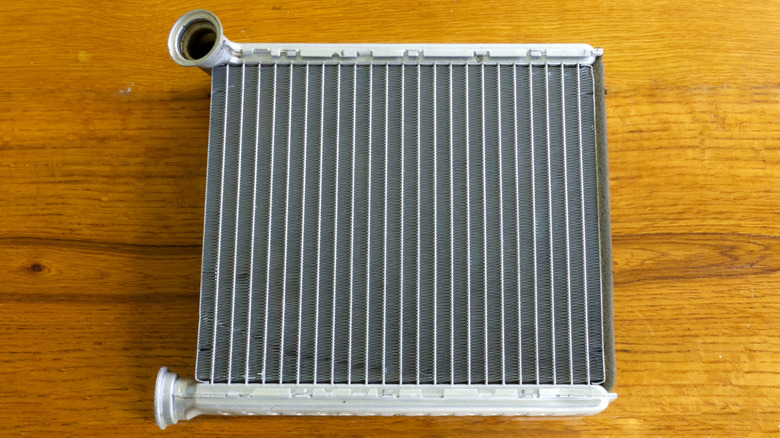
It also flows to the heater core, a small radiator located behind the dashboard, which utilizes hot coolant to warm the cabin. When the heater core or any of its hoses or connections start to leak, the hot coolant will unleash steam with a burnt smell. Regardless of the situation, a burning smell is a cause for concern and should be addressed as soon as possible to prevent the problem from escalating.