

Not All Subarus Come From Japan: Here's Which Models Are Built In America
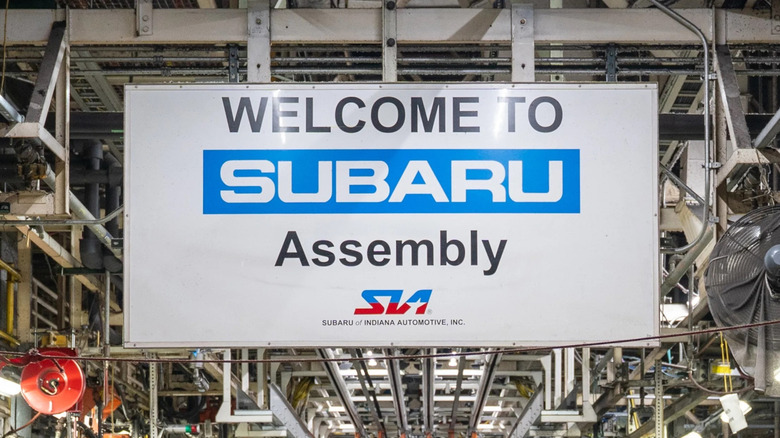
Subaru of Indiana Automotive — the brand's first and only U.S. manufacturing plant — celebrated building its 6-millionth vehicle in June, 2025. It produces nearly half of all Subarus sold in North America, including the Ascent, Crosstrek, and Outback. The Subaru Forester and Forester Hybrid are expected to go into production there this fall and next spring, respectively.
Of course, it wasn't always like that. Subaru considers its birthday to be July 15, 1953, with the founding of Fuji Heavy Industries. Subaru was created as the automotive arm of Fuji Heavy Industries in the late 1950s, and introduced its first car, the Subaru 360, in 1958. So far, so Japanese.
But a decade later, auto entrepreneurs Malcom Bricklin and Harvey Lamm began importing the 360 to the United States. And that's when the United States' love affair with Subaru began. The decision to actually start building cars in this country was economic, though. It turns out President Trump's trade wars on Euro car enthusiasts are far from the government's first battles with automakers: A previous political conflict, in the 1980s, helped convince the first wave of foreign manufacturers to begin opening plants in this country.
Honda was the first, expanding a motorcycle production facility in Ohio to start building cars in 1982. Nissan opened a plant in Tennessee in 1983, Toyota partnered with GM on a California facility in 1986, and in 1989, Subaru joined the club.
A quick look at American-made Subarus
The first car built at the brand's Indiana plant was a Subaru Legacy sedan, and so was No. 6 million mentioned above. However, we're nearing the end of the line for the brand's midsize sedan, which is expected to end production later this year. The Legacy is going out as an impressive value, though, with an MSRP of $27,980 (including $1,170 in destination charges) that gets you EyeSight driver-assistance technologies and symmetrical all-wheel drive as standard equipment.
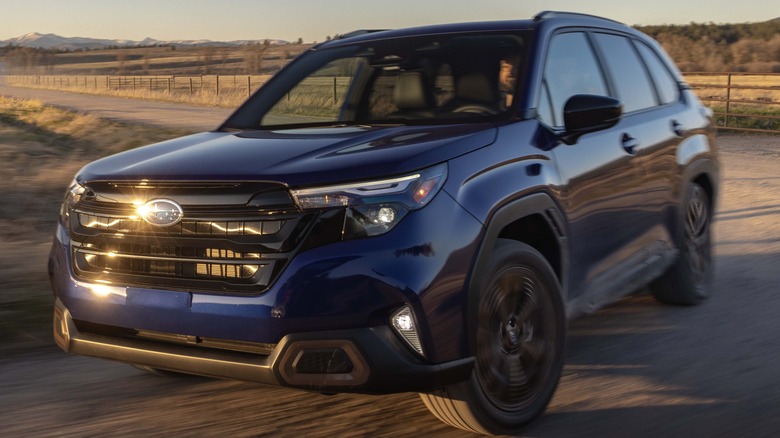
Essentially replacing the Legacy at Subaru's plant in Lafayette, Indiana will be the Forester compact SUV and the Subaru Forester Hybrid that gets 35 mpg. Also built in America is the midsize Subaru Outback, complete with six darling Easter eggs; the Subaru Ascent three-row SUV; and the Sport, Wilderness, and Limited trims for the small Subaru Crosstrek SUV.
Impressively, all five nameplates had average scores or above in the recent reliability testing by Consumer Reports, led by the Forester's near-perfect score. As a result, Subaru was Consumer Reports' overall reliability leader.
Which Subarus are built in Japan?
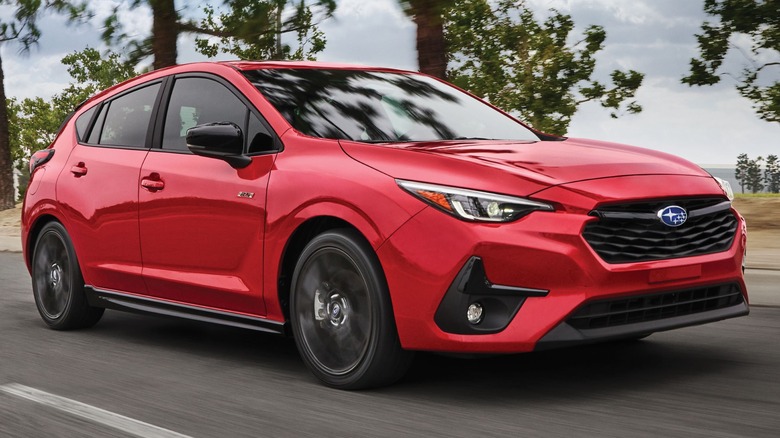
Currently being imported to the United States are the remaining trims of the Crosstrek along with Subaru's compact hatchbacks, the Impreza and the WRX — the latter being as close to an STI as we're going to get this year.
Finally, Subaru's partner vehicles have their headquarters in Japan, including the Subaru Solterra EV and Subaru BRZ sportscar that are both built in cooperation with Toyota. The Solterra's new sibling, the Subaru Trailseeker, shares a Japanese origin along with some of the Solterra's components, although Subaru has upsized and developed that starting point into a vehicle that fits in better with the brand's positioning. We called it "surprisingly quick (and surprisingly good looking)" when the Trailseeker debuted at the New York International Auto Show at the beginning of the year.
The Trailseeker is 6 inches longer and almost an inch taller than the Solterra, with a lot of that upsizing going to improve cargo space. Further Trailseeker advantages extended to more output, since the Solterra tops out with 338 horsepower and the Trailseeker checks in with 375. It's got enough grunt to match the Outback with a 3,500-pound tow rating. Which may help the Trailseeker pull in more sales than the Solterra does.