

At $10,500, Is This 1953 MG TD A Jolly-Good Deal?
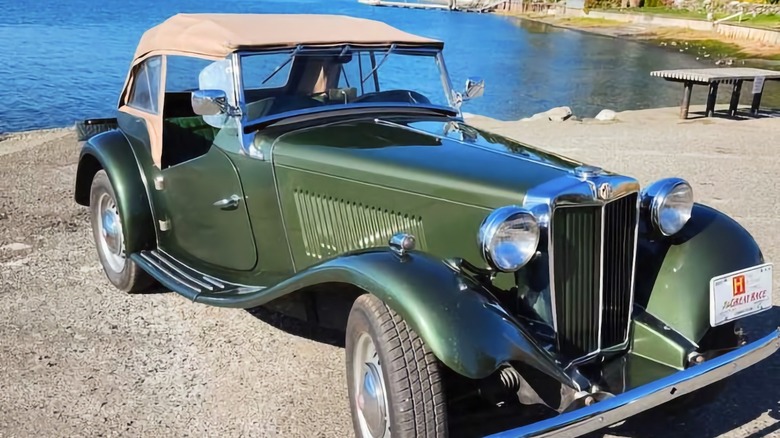
The seller of today's Nice Price or No Dice MG TD assures us it's "not a kit car." Being the real deal is all well and good, but could this classic roadster's price make it a real steal?
In general, major change takes major time. Whether it's the evolution of a species, glacial ablation, or the hold times to reach customer service, waiting for significant change can take eons.
The same isn't true of the fickle automobile market when fuel prices fluctuate. When gas prices are low, Americans, at least, go out and buy the biggest, baddest, most fuel-suckiest cars and trucks they can find. It's like a contest to see who can mainline the lowest gas-mileage numbers possible. Should gas prices tick up, as they did several times in the 1970s, 2000s, and at present, many of those inefficient, fuel-Hungry, Hungry Hippos get kicked to the curb in favor of more fuel-efficient rides, including (gasp) hybrids. That was perhaps one factor in the response to the Vancouver-located 2004 Ram SRT-10 we looked at on Wednesday. Rocking a Viper V10 and middle-finger-to-the-world single-digit fuel economy around town, that truck felt wholly out of tune with the times. At $49,900 Canadian Loonies, which works out to around $35,380 U.S., that also felt too rich for our collective blood, dropping the Dodge in a 64% 'No Dice' loss.
Out of the ashes of war
Before U.S. soldiers set foot on European soil as part of the Allied push to put Hitler in his place, the Yanks invaded England. A mass of around 300,000 American soldiers staged there for air combat missions and in preparation for D-Day. So many soldiers from the U.S. and Canada were in Great Britain that their presence became a chafing point for the normally welcoming and stoic Brits. A general consensus arose that the flashy Americans stationed in their country were "overpaid, overdressed, oversexed, and over here." Still, the Brits played the role of gracious host to the American men and women there to ensure German wouldn't become the national language.
When the war was over, and the Americans left Britain, they took with them an affection for the small roadsters that were basically unknown back in America. This proved a godsend for the British auto industry, creating an immediate export market for carmakers and providing ready cash infusions to counter Britain's war-crippled economy. At the vanguard of this "British Invasion" was MG, which, beginning immediately after the war's end, began shipping the TC Midget sports car to the States. While soldiers in England favored the TC, it wasn't well suited to American tastes, so in 1950, MG introduced the TD, which met most American buyers' needs.
Designed with America in mind
This 1953 MG TD may look like its pre-war predecessors, but it's substantially bigger and rides on a stouter chassis taken from the Y-type saloon. That means it features coil-sprung independent front suspension, precise rack-and-pinion steering, and a modern 12-volt electrical system. In fact, that electrical system was one of the minor complaints about the car since most American manufacturers were still stuck using 6-volt systems. One major change from the TC to the TD was the shift to LHD, making this model MG's first LHD export. Other updates included switching to 15-inch wheels and tires instead of the earlier cars' bicycle tires, and adding full-width front and rear bumpers.
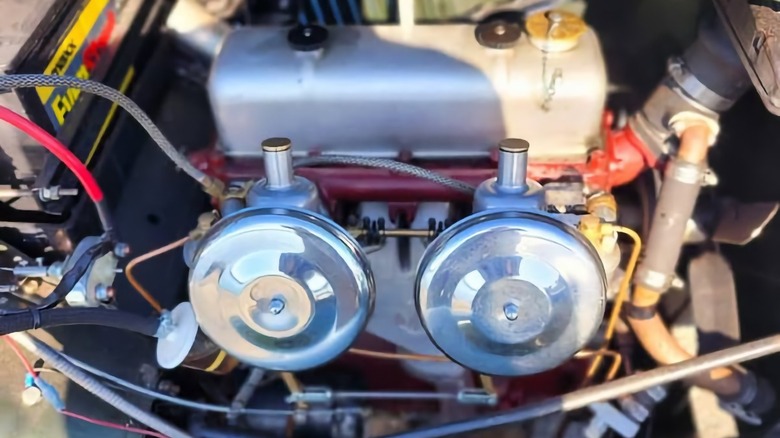
Under the hood is MG's XPAG 1,250cc OHV inline four, forged from solid, immutable cast iron for both block and head. That's fed by a pair of inch-and-a-quarter SU H4 side-draught carbs, making for a stellar 54 horsepower. Fed through a four-speed manual gearbox with synchro on the top three gears, that's enough to rocket the TD to sixty in under 20 seconds, and onward to a top speed of nearly 80 mph.
All original
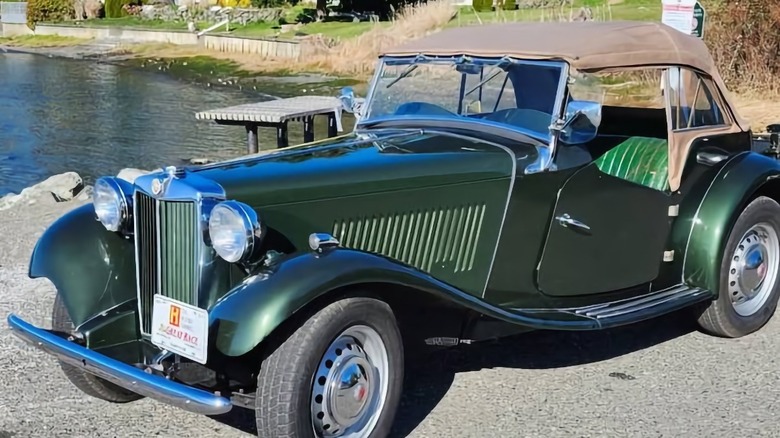
We get almost no historical information in this MG's ad. It only tells us the car has a clean title, four new radial tires, and that it is not a kit car. What we're not told is whether the metallic green paint (not British Racing Green, we should note) is original, or even an MG color. Regardless, it looks pretty stunning, and pairs well with the tan, three-bow roadster top. Hopefully the side curtains come along for the ride.
The engine compartment, accessed on either side via side-folding bonnets, looks well-managed. There are a pair of pancake air filters on the carbs, in place of the factory aluminum plenum and single air cleaner, but that's a period-correct mod.
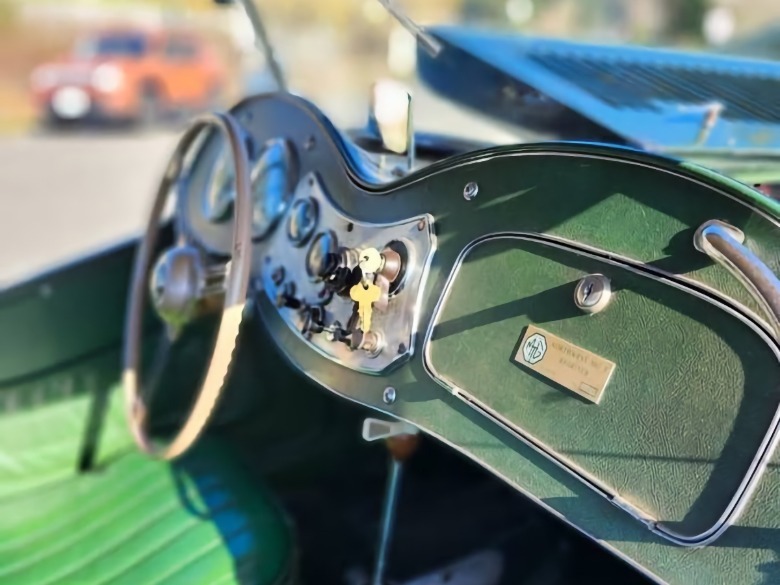
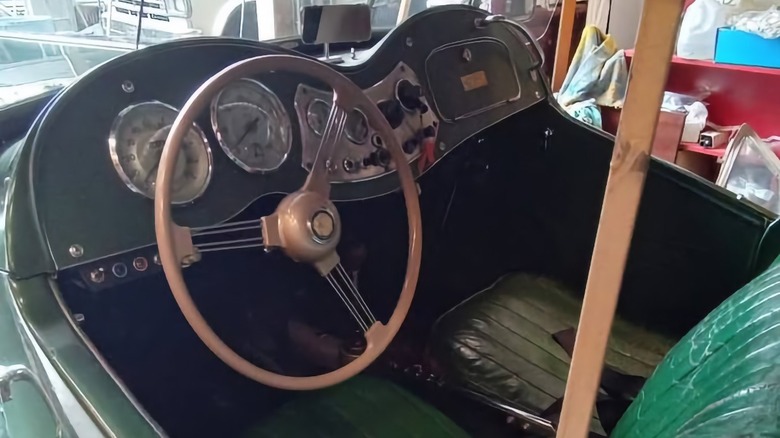
The interior has gained a nice patina, with the green leather on the seat back showing its age, but presenting as not too ratty. The handsome banjo-spoke steering shows no cracks or separations, which is a notable plus. These cars are basic and raw, with no sound deadening, so every mechanical noise enters the cabin, making the driver and passenger feel one with whatever's going on under the hood. Mileage is reported as 60,000, but whether that's the current reading of a rolled-over odometer or not is a mystery.
A budget roadster?
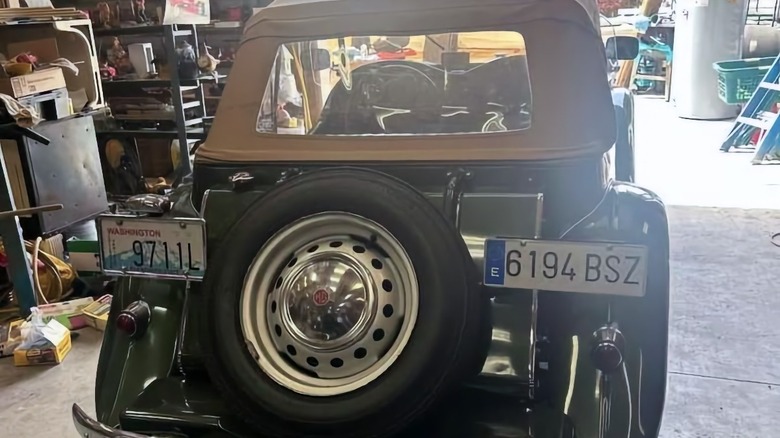
For its model run between 1950 and 1953, MG built over 30,000 TDs. Of those, more than 23,000 went to the U.S. into the waiting arms of apple pie-eating auto enthusiasts. Naturally, that was over three-quarters of a century ago, and many of the folks for whom cars of this ilk raise fond memories have passed on. People who can still appreciate raw, era-compromised cars like this are now few and far between. That naturally limits the appeal, and hence the audience, for a car like this MG, making us wonder who might be interested in it at its $10,500 asking price.
What do you think? Does this TD present well enough to find that needle-in-a-haystack buyer looking for some old-school sports car charm? Or does this MG's price mean it's overdressed, overpriced, and over here?
You decide!
Seattle, Washington, Craigslist, or go here if the ad disappears.
Help me out with Nice Price or No Dice. Hit me up at robemslie@gmail.com and send a fixed-price tip. Remember to include your commenter handle.