

Hey! Pay Attention! Drivers Find Multitasking Tough When Using Touchscreens, Says Study
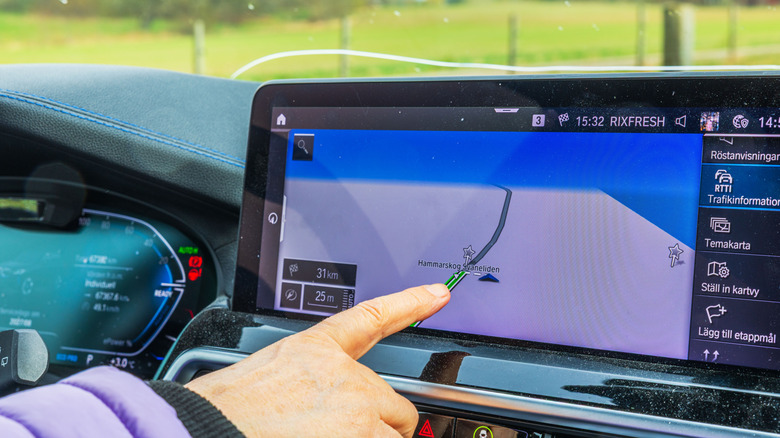
Here's a shocker: Tapping a touchscreen while driving makes you lousy at both tasks. According to a recent University of Washington study, trying to keep your car on the road while also tapping on a digital display leads to greater lane drift among 16 experienced drivers tested on a simulator. In fact, the study found that weaving like a drunk driver — or one with a hangover, which apparently is also dangerous — increased by a pretty substantial 41.9% on average. The tested drivers also got 58% worse at finding the input they were hunting for on the touchscreen.
You are probably already aware that distracted driving is dangerous — very dangerous. According to the National Highway Traffic Safety Administration (NHTSA), it led to 3,208 deaths in 2024. And according to the agency's tracking, in that year alone, distracted driving contributed to another 315,167 injuries on the road. And, unfortunately, some automakers like BMW claim to be responding to younger buyer demands by ditching physical buttons and pesky knobs. Meanwhile, NHTSA data shows that drivers between the ages of 25 and 34 comprised the most dangerous people on the road — they make up 22% of distracted drivers and 27% of drivers distracted by cellphones during fatal crashes.
A separate Insurance Institute for Highway Safety (IIHS) study out in August shows that police drastically undercount the involvement of cell phone distraction when they file accident reports. The IIHS says that number may be higher by a factor of seven after the non-profit instead used vehicle telematics to re-survey 17,000 crashes between 2021 and 2024. Distraction by IIHS's measure includes both passive and active use, such as interaction with navigation apps, though IIHS notes that a quarter of participants in a separate study admitted to watching a video on their phones while driving within the past 30 days.
Bigger buttons don't matter
You know how automakers think, right? They'll just make the on-screen buttons bigger so they're easier to tap. Sadly, the University of Washington researchers found that doesn't help. According to the researchers, we aren't equipped to adequately handle the complex task of driving and then glancing away from the road and onto a screen to find the widget, button, or volume knob while, say, tracing the curvature of the road or the brake lights ahead. The researchers instead suggest that screens need to be designed to anticipate what users are looking for, or in their language, to enhance visual saliency, such as by using ambient lighting adjustments or "subtle animations to draw attention to actionable elements." Another aspect of the study was to look at multi-step tasks.
The more we have to pay attention to a primary cognitive task, the less able we are to also drill deeply through nested menu structures, and the more time this consumes. The University of Washington researchers suggest a remedy for this by "flattening" the number of steps to complete an action, and suggest that "frequently used functions should be surfaced as one-tap actions when high cognitive load is detected." While there are efforts to reduce distracting elements in vehicles, automakers tend to default to warning drivers that they're distracted, such as by using eye- and head-tracking. But that doesn't fix the underlying issue of what's causing the distraction in the first place — the difficulty of using a touchscreen during driving.
If they won't give us buttons, they'll have to study our heart rate
To make interfaces safer, the authors of the University of Washington study suggest it would be better to monitor what's happening to the driver and then adapt the in-car tech in response to the distraction. They'd do this by using more in-depth measurements than just tracking our head or eye movements. In their study, they measured eye-tracking, skin temperature, and pupil dilation as well as eye movement and live task performance. In theory, then, menus might get simpler when we're stressed by the act of driving.
Not to belittle the University of Washington findings, but they're not exactly groundbreaking. For example, a 2018 AAA and University of Utah study found that both Apple CarPlay and Android Auto were less stressful for drivers inputting touchscreen tasks like sending a text than five automakers' native systems, but still cognitively demanding. However, another 2020 study by the U.K.'s Transport Research Laboratory found that both Android Auto and Apple CarPlay cause significant distraction, with participants struggling to drive a simulator while using them. For instance, drivers using Android Auto spent as much as 20 seconds in total with their eyes off the road while trying to tune to a specific Spotify playlist. And their reaction times slowed by as much as 53%.
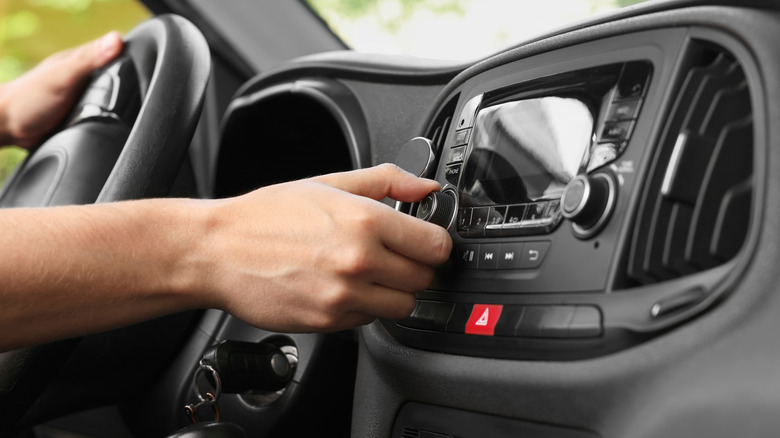
Many drivers still have a preference for physical buttons, and perhaps that's the solution. And in Europe, the New Car Assessment Program (NCAP) now mandates that some functions be "operated by a direct physical input rather than a touchscreen," and it seems touchscreen-only interfaces are too distracting to receive five-star safety ratings there. In fact, NCAP calls touchscreens "needlessly fiddly," and says research has shown a "higher distraction potential for a driver compared to physical buttons."