

You Can Drive Without ABS Brakes, Here's What It's Like
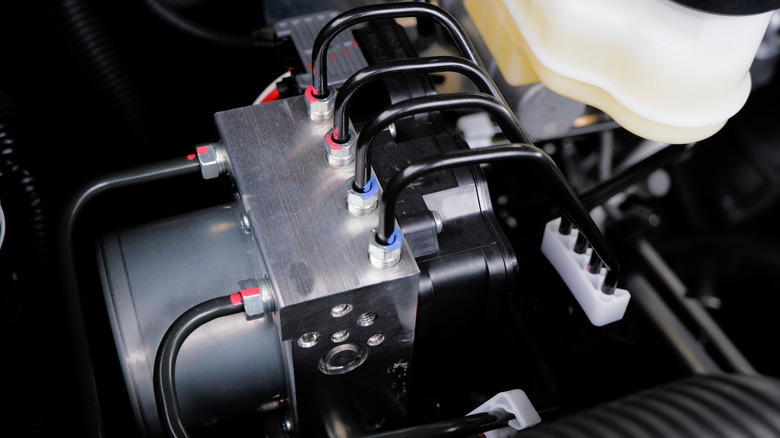
All vehicles, especially those of the modern variety, are made up of very complex systems. The engine is full of components to make it efficiently produce power, and send that power through a series of components known as the drivetrain to the drive wheels. Its brain is the ECU, which tells it what to do and when, such as adjust the ignition timing, rev up and down, and much more. Then there's the anti-lock braking system (ABS), which kicks in to help perform smooth and controlled stops in the event of an emergency, among other things like contributing to electronic stability control (ESC) and traction control's efforts.
ABS has been standard on all cars for quite a long time now, and driving with it is generally second nature for anyone on the road. However, it's not immune from experiencing issues and failures. So does that mean you safely roll down the road without it? You can drive without ABS brakes, here's what it's like. It takes a keen sense of the car's grip and smooth inputs. Additionally, set an appointment with a repair shop, because when the ABS light turns on, it's best to have it looked at as soon as possible.
It's a good idea to increase your stopping distance
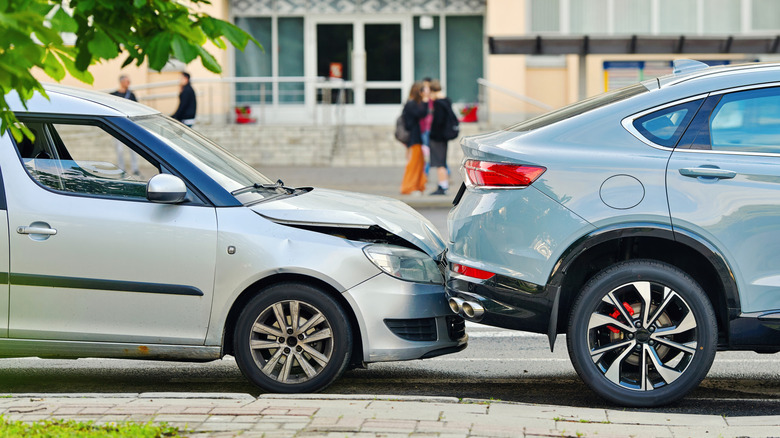
Let's say you've experienced an ABS failure, which can be caused by a blown fuse (which is easy to check and replace), failed ABS module, low brake fluid level, broken wiring, or another issue. It happens — no car is guaranteed to never experience any of these. When faulty, the ABS system can't pulse the brakes at each corner in a manner that allows for safe and controlled stops, rather than just locking up the brakes and skidding out in a flurry of tire smoke.
The car will drive normally, but the brakes will lock up unless you pump and actuate the brakes yourself. So, here's what to do: first and foremost, lower your speed and increase your braking distance, as this helps avoid any emergency braking. Remember, ABS can change your braking distance. Then, apply smooth and steady braking pressure to avoid overwhelming the tires' grip and car's weight balance. Avoid sudden braking, acceleration, or steering input, too, as any of these could trigger the ESC/traction control, thus making the car feel as if it's completely flustered. Finally, ensure your tires are inflated to their official pressure recommendation (usually found on a sticker in the driver door jamb) and in good shape. If they're not, this is another point against optimizing grip and therefore control.
Here are two more points to keep in mind: if the ABS light in the instrument cluster is solidly lit, that means there's some kind of fault and should be dealt with sooner than later. If it's flashing, that could allude to a much more dangerous issue, such as a brake fluid leak or other greater braking system failure. In the case of the latter, definitely do not drive the vehicle until it's been checked over by a mechanic.