

Britain Turned To Racing Drivers To Teach Its Police Car Drivers In The 1930s
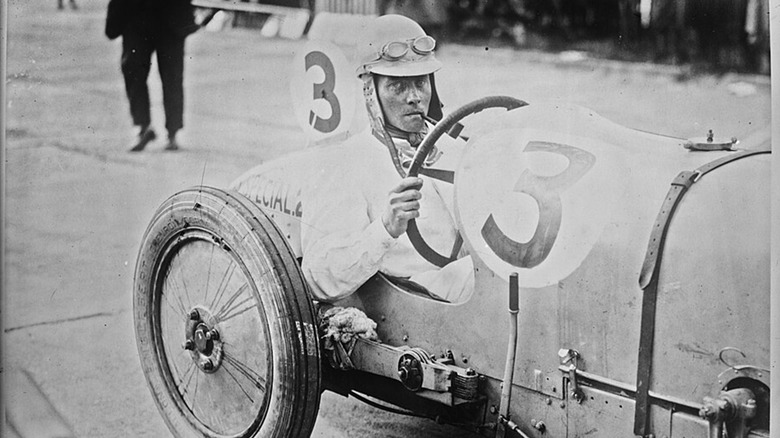
Who doesn't love videos of police cars sliding about while in hot pursuit of a speeding perp? It's exciting stuff. In reality, things are less glamorous, more dangerous for bystanders and police alike. It's one of the reasons law enforcement agencies require officers to complete advanced driver training, like car control and pursuit driving. Not just here on this side of the pond, either. Police officers in the United Kingdom also are expected to learn the sort of driving skills that make them less of a liability on public roads. Today, U.K. police officers train using "Roadcraft," the system of car control British law enforcement has turned to for over 75 years. As you might imagine, Roadcraft has some pretty interesting lineage.
Law enforcement driver training, here and in the U.K., often consists of police instructors teaching police students. But those instructors had to learn their craft and skills somewhere, and, in the case of the British police, it started with motorsport. Way back in the 1930s, the Metropolitan Police Service turned to a well-known racing driver who was also the earl of Cottenham to train its instructors. The instructors could then teach police officers in the U.K. about life-saving driving skills like car control. It's more than fancy driving; the teachings led to a substantial decrease in British police accident rates.
In 1937, the Metropolitan Police turned to literal racing royalty to teach police drivers
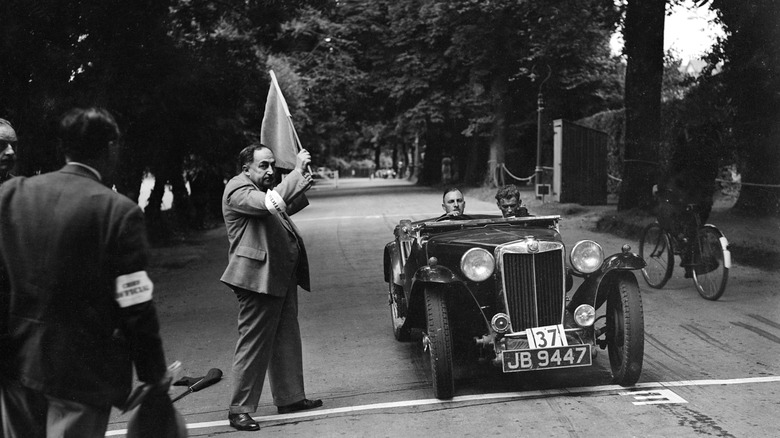
Driving was still a rather new thing in 1930s Britain. The test drivers must pass to lose those eyesore "L" plates got its start in 1935. The year before, the U.K. Home Office got to work creating police driving schools, including one at Hendon in London for that city's Metropolitan Police, to train British law enforcement officers. The schools sought to improve police proficiency behind the wheel, as well as decrease the accident rate.
The Metropolitan Police commissioner didn't stop there. In 1937, he reached out to Mark Everard Pepys, better known as the 6th Earl of Cottenham (and the 6th Viscount Crowhurst, if you want to get that specific), to help train the bobbies in advanced driving techniques. See, in addition to being an earl, Pepys was an accomplished racing driver. Lord Hugh Trenchard, the man behind the Hendon Police College, assembled a committee with Pepys and other experts, including skilled racing driver Sir Malcolm Campbell, a speed fiend with a penchant for chasing records.
The racing drivers' instruction was invaluable for police drivers, as were the individual contributions of the racing earl. Pepys devised a system of car control for the police driving students that — per Roadcraft, the company that publishes Britain's police driving manual — emphasized a "right place, right time, right speed, and right gear" approach to driving and decision-making. Today, almost 90 years after its inception, police drivers in the U.K. still learn the Roadcraft system of car control.
Life-saving training from a racing background
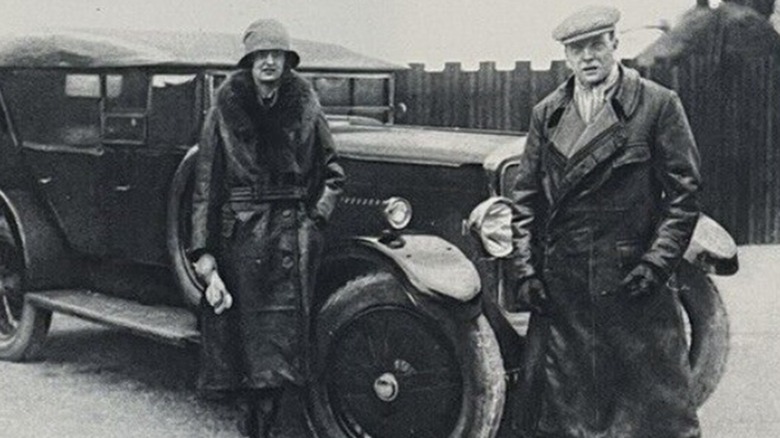
So, did it work? Did injecting some racing DNA in police driver training really save lives and property? Believe it or not, it did. After instructors started teaching to the Roadcraft standard at the Hendon Driving School in the late 1930s, the Metropolitan Police's accident rate plummeted. By 1939, the collision rate dropped from one crash every 9,000 miles to one every 25,000 miles. By 1954, despite a huge increase in the number of cars on the road, that number fell to one crash every 72,500 miles. It makes sense, too. After all, a total rookie can gain so much from a trip to the Skip Barber Racing School or a similar schoolhouse of speed.
At its core, racing drivers like the Earl of Cottenham, Mark Pepys, and Sir Malcolm Campbell taught instructors to emphasize decision-making skills. Not the terrible decisions like the ones that prompted a British traffic cop to get caught going 154 mph. Remember kids, you can't drive that fast and expect to get away with it — even if you have a badge.
No, the system of car control teaches students to understand where their cars should be and how fast they should be going to avoid hazards as they arise. Sounds basic, but it's important. The training was so successful that a Hendon Driving School instructor published some of Pepys' driving wisdom in the 1955 book "Attention All Drivers!" None of it would have happened without lessons Pepys learned on the race track.