

Here's How Much 2022 Jeep Wagoneers Have Depreciated In Just 4 Years
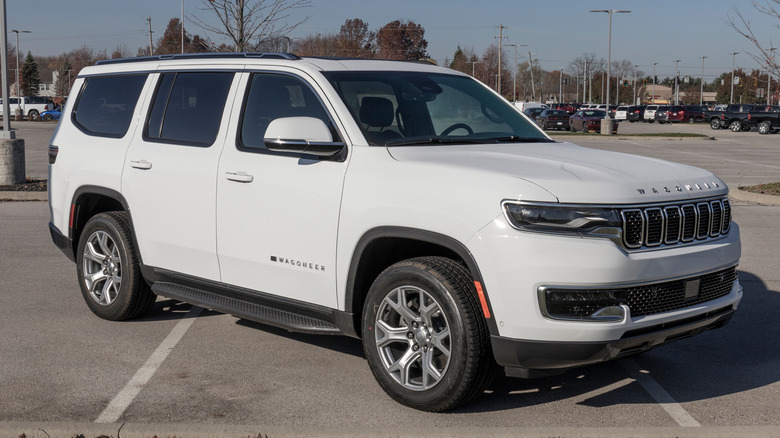
After three decades of absence, the Jeep Wagoneer came back for the 2022 model year. Rolling out of a plant in Warren, Michigan, it once again serves as the brand's full-size, three-row SUV. Jeep offered one engine for 2022, a 5.7-liter V8 rated at 392 horsepower and the tow rating tops out at 10,000 pounds. It measures 214.7 inches, weighs 6,244 pounds, seats up to eight, slots beneath the 471-horsepower Grand Wagoneer, and goes after rivals like the Chevrolet Tahoe, the Suburban, and the Expedition. Stickers ran from $63,995 to $83,190 depending on trim, which left plenty of room to fall over four years.
Four years on, the answer depends on who is counting. CarEdge says a 2022 Wagoneer that cost $72,870 new is now worth $40,065, a 45% loss, though its general curve puts any four-year-old Wagoneer at 50.9% of its original price and a five-year-old one at 47.1%. iSeeCars skips the four-year mark, but its 37.7% three-year and 46.8% five-year figures, the latter a $31,917 resale value, bracket the answer.
Kelley Blue Book (KBB) fair purchase prices of $32,500 to $36,400 equal a 49% to 56% loss against sticker, while J.D. Power average transaction prices of $34,460 to $37,085 on the 4WD Series I through III imply 46% to 53% against KBB's original prices. Trade-in values land lower still, at roughly $24,000 to $32,200. If we loosely blend all four, a typical 2022 Wagoneer has lost roughly half its value — not as bad as the worst depreciating SUVs in the last five years — but not much better either.
Why did the 2022 Wagoneer lose so much value?
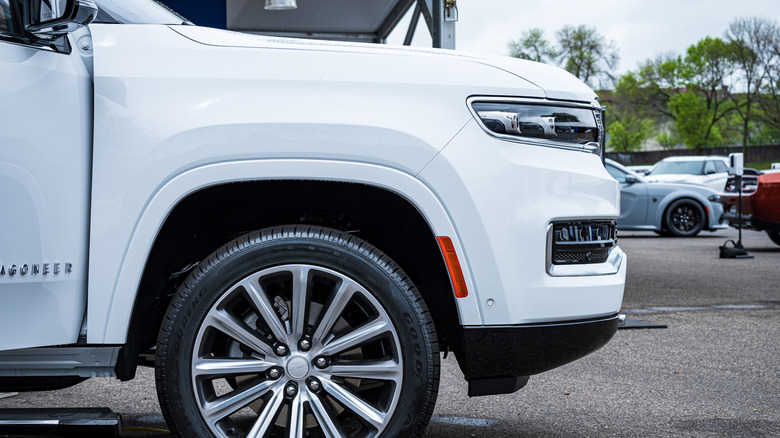
Pricing is the first reason. KBB fair purchase prices run from $32,500 for the Series I to $36,400 for the Series III Carbide, a gap of just $3,900. The same two trims were $19,195 apart when new, so the top trim's $46,790 drop is the largest in the lineup. The entry Series I lost 49.2% of its $63,995 sticker, the smallest percentage hit, while the Series II Carbide and Series III Carbide lost 56.4% and 56.2%.
Bob Broderdorf, then head of Jeep in North America, spoke with Motor1 at the 2025 Detroit Auto Show and he summed up the sticker prices in one line: "Wagoneer, it's too far," meaning that Jeep may have been a bit too ambitious with the pricing. Jeep also shaved $3,000 to $6,000 off the 2025 Wagoneer, with the exact cut set by trim. The KBB annual breakdown shows private-party value falling from $55,811 in 2023 to $46,315, then $38,887, and $30,900 today, with each year costing between $7,428 and $10,404.
The driving experience was never the problem: KBB's experts scored the Wagoneer 4.7 out of 5, and owners rated the reliability 2.9 out of 5 across 40 reviews, with only 53% saying they would recommend it. J.D. Power owners rate it 92 out of 100 for driving experience while quality and reliability were rated at 59 out of 100, a "Fair" rating. Moreover, the depreciation also has to do with the segment itself where SUVs as a whole typically lose around 45% of their value after five years.
Is a used 2022 Wagoneer worth it now?
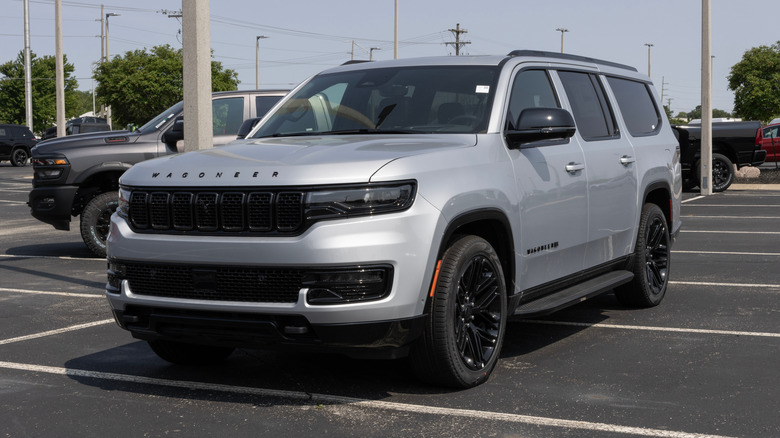
CarEdge rates the 2022 model year a "Better" value, one step behind the 2024, and its general curve projects about $2,656 of further depreciation during year five. A 2024 now costs 65.6% of its original price at $48,876, while the 2022 sits at 55.0% and $40,065. J.D. Power scores its three-year resale forecast at 96 out of 100, which earns its "Best" label.
The rivals are worth a look too. KBB's comparison table shows a used 2022 Ford Expedition at $28,200, which is $4,500 below a Series II Wagoneer at $32,700. Although not a head-to-head competitor, a used 2024 Honda Pilot lists at $31,800, only $900 less for a three-row SUV two model years newer. On the J.D. Power Series II 4WD page, buyers paid an average of $35,460, with 80% landing between $32,148 and $38,878, while the average trade-in value is $27,250, an $8,210 spread to keep in mind when it is time to sell.
Ownership costs should also be mentioned. CarEdge estimates a typical insurance bill near $2,537 a year. The 3-year/36,000-mile basic warranty will usually have expired by now, and the 5-year/60,000-mile powertrain coverage is close to running out on mileage, since CarEdge assumes roughly 54,000 miles at four years old.
Because used prices barely separate the trims, the higher trims are where the value sits. A Series III costs only $2,300 more than a Series I on KBB's fair purchase prices, and the first owner already paid for the extra equipment. Ultimately, everything depends on the specific example you are looking at, but overall, it seems like most of the depreciation storm is behind the 2022 Wagoneer.