

3 Of The Worst Issues With Boxer Engines In Particular
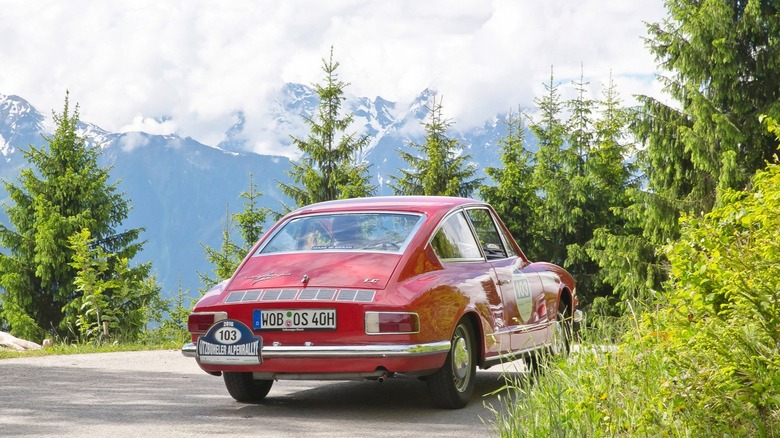
A boxer engine is a relatively unique configuration. In the car world, it's famously the layout of many Subarus and some Porsches, especially going back to air-cooled 911s. It was also used in old air-cooled Volkswagen Beetles, Karmann Ghias, VW Buses, and other models. If you could see through the front of the engine, you'd notice the pistons bouncing outward and inward in opposition to each other, virtually boxing. This is in comparison to a V8 or V6 configuration, where the pistons move up and down at an angle.
Also, the boxer idea is old. Carl Benz invented the boxer in the late 1890s. Ever since then, one advantage that brands like Subaru still tout is that pistons moving in opposition to each other naturally counterbalance the forces of the engine, quelling vibrations. Since their pistons move side to side rather than up and down, boxers can also sit lower in the chassis. So, Subaru still uses boxer engines instead of inline-4s to lower the car's overall center of gravity, and that's one of many reasons fans find cars like the WRX unexpectedly appealing.
However, there are disadvantages, too. If you rotate an inline engine and mount it sideways, that tall engine would suddenly be a wide engine. That's the issue with the boxer — it requires width for that piston path. Also, because it's not an inline-4, and because all of its pistons fire side to side in opposition, it requires duplicate parts, like a V-shaped engine. That means double intake and exhaust manifolds, head gaskets, and camshafts. Plus, that wide engine can make it harder to design the suspension and steering layout.
Boxer engines are complex
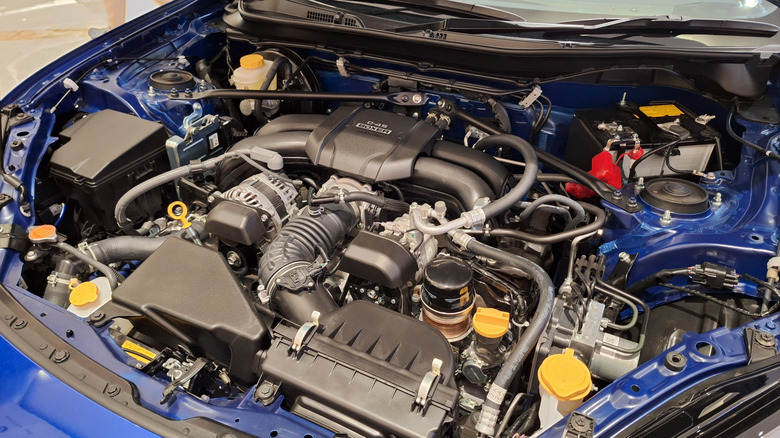
Just look at that picture of a Subaru BRZ's motor shoehorned under the hood. Now, try to imagine getting to either side of that engine bay to change a spark plug. It won't be an easy job. And, again, notice the position of the strut towers, and think of this in terms of modifications you may want to make if you're aiming to enlarge the motor — a point we'll get back to later.
Further, the added complexity and duplicate parts required of a boxer mean that repair costs can be higher than similar work on an inline engine (overhauls will require duplicates of everything). Plus, because the engine is harder to work on, you may wind up delaying those repairs — which could make the eventual fixes even more costly. Whether you delay or not, that complexity will require paying more for service time on top of those duplicate parts than you would on an equivalent inline-4.
A relatively simple valve adjustment on an overhead inline-4 isn't simple on that Subie — it means accessing both sides of the boxer engine. Unlike a V-shaped motor, which, again, would be accessible from overhead, in the Subaru, you have to get in from the side.
Boxing in a steel cage
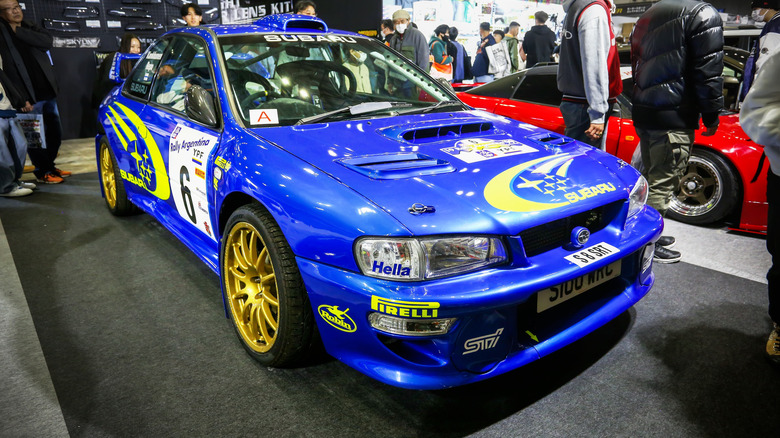
It would be absurd to claim that you cannot get more power out of a wide, flat boxer engine. Subaru is fairly legendary for its World Rally Championship-winning cars, and in the 1990s, Subaru won three WRC Constructors titles in boxer-powered vehicles. Porsche has also been plenty competitive in racing 911s — way back in 1951, it was winning at Le Mans in an air-cooled 356.
However, there is less real estate for expansion. A typical modification of a car with an inline or V-shaped engine is simply to swap to a bigger motor. On the extant engine, you can also increase bore and, sometimes, stroke. And the Subaru tuner world is full of stroker kits ready and waiting in the aftermarket. But actually fitting in a physically bigger engine and retaining the boxer design leaves even less room under the hood. Simply increasing bore size is one solution, but oversquare engines tend to get less efficient, whereas, in general, a longer stroke leads to better efficiency.
So, in retaining this engine design, Subaru has boxed (pun intended) itself in, because it can't just chase bigger engines to increase output. That's at least one reason why, historically, Porsche hasn't sought to make a front-engine boxer-powered car.
Porsche's 911 has gone from a 2.0-liter 6-cylinder in 1964 to a 532-horsepower monster in today's 911 Carrera 4 GTS Coupe. But that boxer is still only 3.6 liters, and at the back of the car, where at least Porsche doesn't have to fight a steering rack. Still, have you noticed how big a modern 911 is? To shoehorn in that bigger motor, its rear track is almost 10 inches wider than that 1960s car.
Fun with head gaskets
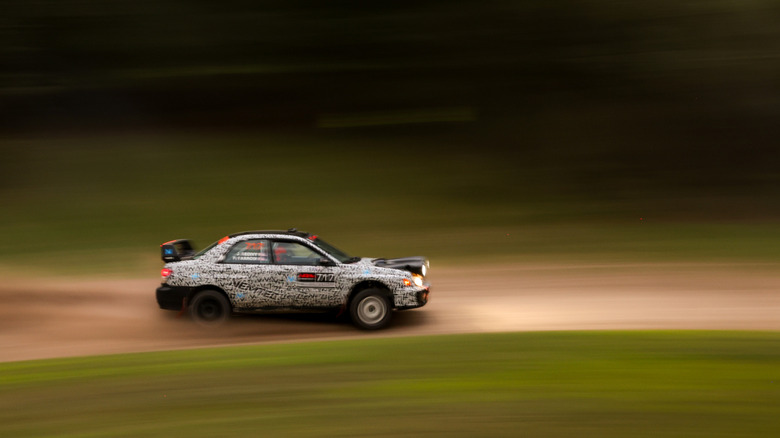
Subaru has been making boxer engines for decades — and you may, in fact, be reading this piece because you're so into the brand that you want a comprehensive guide to Subaru engines. Instead, we'll explain that some vintages of the EJ engine have had issues with head gasket failure. EJs were used under the hoods of Subarus from 1989 through the early 2020s, and not all EJs are the same.
Unfortunately, EJ25 and EJ251 engines have also had a long legacy (get it?) of head gasket failures, and the telltale signs include oil and coolant leaks. Also, if you're losing coolant, your car could overheat, and by that point, you're at risk of further engine damage. You can often diagnose a leaky head gasket just by the smell of oil under the hood or in the coolant overflow reservoir. Alternatively, if oil is leaking down into the exhaust, you'll usually have fumes from that oil burning off. The bummer, of course, is that with dual cylinder heads, that means two head gaskets and double the cost of repair.
Why is the head gasket a fail point on these Subarus? When the car's turned off, the oil drains to the bottom of the engine — where that head gasket material is exposed to oil. That material has been known to break down, allowing coolant to leak through the gasket.
None of that has dissuaded legions of Subaru fans from loving the unique boxer character. And we're not here for that. Our point is just to let you know what can go wrong.