

How Often Should You Bleed Brakes (And How Long Does It Take)?
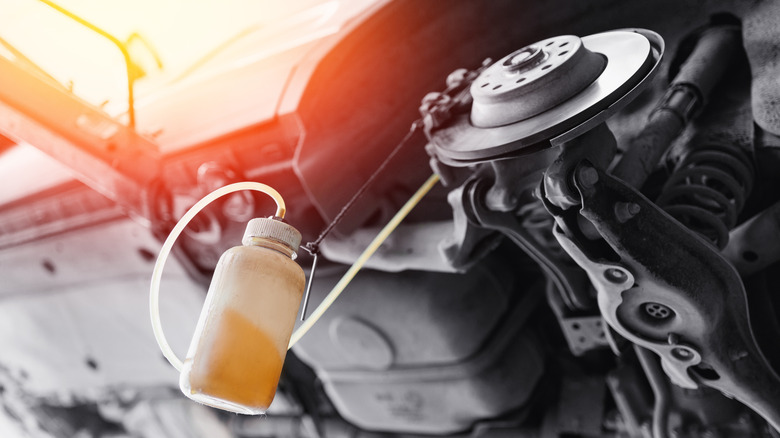
Some of a car or truck's most important systems that are crucial for safe operation are surprisingly simple in their design. A steering rack, for instance, is pretty basic on the inside, especially if it's hydraulically or manually operated. The same goes for the hydraulic brake system.
Because the vehicle's brakes are controlled via hydraulic fluid, it's important to keep that fluid in good condition. Regardless of whether you use Dot 3 or Dot 4 brake fluid – or any other type, for that matter — not only does its effectiveness wear out over time because it sucks in moisture from the air (it's hygroscopic), but it also simply degrades like any other fluid found in vehicles' systems. Moisture in the brakes can also cause other issues — namely corrosion, which can affect and destroy brake lines, calipers, and even ABS systems. Owners may opt to do a quick bleed or a full-on flush — the difference is the latter replaces all of the fluid, whereas the former only pushes enough out the bleed nipple until it look clean or rids the line of air.
So how often should you bleed your brakes and how long does it take? It depends on whether it's a quick bleed or a full-on flush. For a full flush, besides a quick check of your individual vehicle's needs via a service or owner's manual, a good, general rule of thumb is every two to three years or 30,000 miles, whichever happens first (via AAA). On the other hand, if the fluid is in good shape but you have a spongy brake pedal, simply bleeding the brakes may be enough. How long it takes depends on the method, but plan on it taking at least an hour once the car's safely secured on jack stands.
Clear or slightly yellow, you've got healthy brake fluid, fellow
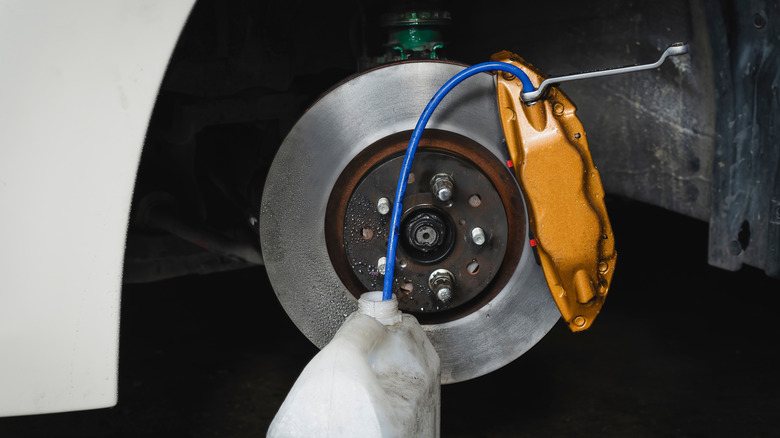
If the brake pedal feels spongy or has a lot of travel before the car slows down, bleeding the brakes is often the first solution to try, unless the fluid has gone bad. Examining the color of the brake fluid can clue you in on this; it should be clear or slightly yellow — any darker, and you need to put it at the top of your need-to-service schedule. Additionally, the whole system should be checked for leaks and proper operation. It's a good idea to change your brake fluid more often if you do a lot of heavy braking. We're talking towing, lots of stop-and-go traffic, driving in hilly or mountainous areas, or running autocross or track days. There are many performance brake fluid options out there that offer a higher boiling point than the factory fill, too, which is always worth considering.
Otherwise, the standard "two-to-three years or 30,000 miles" recommendation is because of brake fluid's pesky hygroscopic nature, though you should always check your vehicle's factory-recommended service intervals. Introducing moisture into the braking system cuts down on its effectiveness by reducing the boiling point of brake fluid. Once that happens, since vapor compresses more easily than liquid, it can cause a greatly reduced or total loss of braking power when the brake pedal is pressed. Changing it keeps such contamination at bay and ensures you'll always have peak stopping power. This is assuming the rest of the equation's in good condition, such as the rotors, pads, master cylinder, lines, etc. Companies also make brake fluid testers that measure how much moisture is present; stick it in the reservoir, and you'll get a reading.
How long does bleeding brakes take?
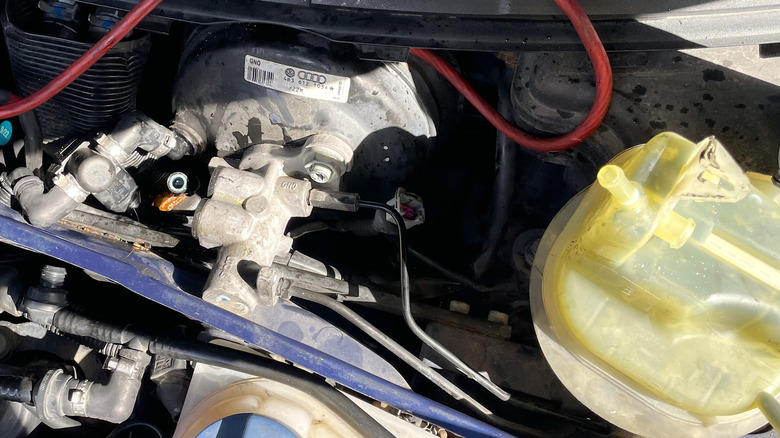
How long it takes to do a full bleed or flush varies, but count on it being an hour job once the car is secured on jack stands. Experienced bleeders can probably get it done much faster, and first-timers may take their sweet time, and the method you use may add or subtract the time spent. Doing a conventional bleed where one person pumps the brake pedal while another cracks open the bleed nipple is the slowest. There are ways to bleed your car's brakes by yourself, too, such as using a power bleeder that pressurizes the reservoir, or using software that triggers the ABS system to push it out electronically. Carefully research the right procedure for your own car if you attempt the latter. There are also DIY-friendly vacuum pump kits that suck the fluid from the bleeder nipple, as well as pneumatic fare that require an air compressor and tank. Or, do a reverse-bleed.
Generally, you bleed the furthest corner from the master cylinder first: right-rear, then left-rear, then front-right, and finally front-left. Ensure the reservoir stays topped up with fresh fluid throughout the process. For a full flush, bleed until the clean stuff flows out of each nipple; for a simple bleed, stop when the bubbles are gone. It's worth pointing out that using a pressure bleeder is great, but a crappy one and/or a worn-out reservoir can turn this simple task into a bad day.
From my experience with my 2002 Audi S4, the reservoir cracked and spewed brake fluid all over the place when I hooked one up and started pumping. Some bleeders don't hold a tight seal around their various connections, which can also result in leaks or pressure issues. Not only is brake fluid immensely toxic, but it also eats automotive paint.