

Here's What Routine Maintenance Looks Like On An Older, Depreciated Aston Martin

To state the obvious, Aston Martin makes some seriously expensive cars. Even its cheapest new offering, the Vantage, sports a suggested price dangerously close to $200,000 these days. But many older sports and GT cars from the British automaker have depreciated into affordability, with models from the early '90s into the Gaydon-era '00s cars now readily changing hands for below $50,000.
At this price point, it's understandable that many enthusiasts may get tempted, and wander into Aston Martin ownership, but are they setting themselves up for budget thrills, or is a depreciated Aston likely to spell financial ruin? The truth is actually a little bit of both, and having worked on and extensively driven an early DB7 myself for many years, I have a little firsthand experience when it comes to keeping these cars on the road.
In short, the basics of servicing an older, depreciated Aston Martin are easily tolerated and quite accessible. Interim services are easily tackled by DIYers with a few simple tools and a spare Sunday afternoon. Also, the parts-bin construction of these cars, mocked by many when they debuted, actually helps to keep the cost of many repairs nice and low. Enthusiasts are keen to share their parts-sharing finds with other owners, with shared examples including Jaguar-sourced thermostats fitting the V8 Vantage at a fraction of the price, while DB9 braking and wheel-hub accessories can be sourced as Jaguar and Land Rover parts.
Making routine servicing less expensive
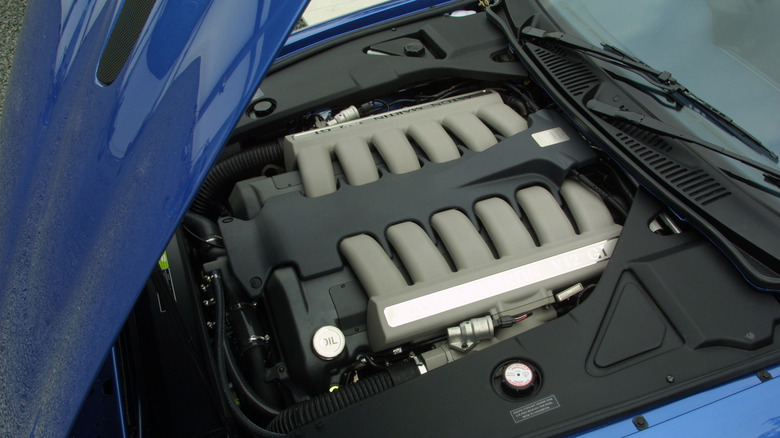
The cheapest way forward is for owners to do as much of the routine servicing as they can, whether that's just learning to change the oil or tackling more complex jobs. To give an example of how much this could save, two well-respected Aston Martin specialists in the U.K. quote (prices based on current exchange rates) of $945 (from Aston Workshop) and $1,074 (from H.R. Owen) for basic service on an '05-onward V8 Vantage. While those prices are in state-of-the-art workshops with trained technicians and likely also include a thorough inspection, owners can get a complete service kit including the oil, oil filter, sump plugs and washers, and air and pollen filters from online specialist Flying Spares for just $174.
The same is naturally true with brake services, spark plug changes, and other routine jobs. The more owners can tackle themselves, the more they can save.
Part and parcel of owning older cars like these, though, is replacing tired components that don't fall under the umbrella of typical service work. Here is where it's especially useful to be aware of parts from other automakers that can fit the bill, rather than buying Aston-branded items and wasting valuable cash. Enthusiasts have developed a database of interchangeable parts at Aston DIY to help keep costs low. Examples such as a $161 starter motor from Jaguar being interchangeable with a $2,164 Aston-branded item can make maintenance on an older Aston far more accessible and affordable.
Not everything can be done on the cheap

All that probably makes Aston Martin ownership look like a walk in the park, especially for those with a decent workspace, a solid selection of tools, and some DIY know-how. However, not every part is interchangeable with a cheaper alternative, and when Aston-specific parts are called for, the bills can be quite astounding.
A common flaw on the DB7 is failing heater blowers, and they sit deep behind the dashboard. They both failed on a DB7 I was running, and pulling the dash with all the associated 30-year-old wiring out was a task I didn't fancy. A quick quote from a specialist was a real eye-opener; $4,078 for the labor, and $2,038 (each) for the blower motors. The required evaporator was a comparative bargain at "just" $815. The blowers still operated on "full," and needless to say, that's how they remained.
Other examples include brakes for the first-generation Vanquish; there are no parts-bin items to be had here, and even the cheaper specialists want in excess of $6,000 to swap both pads and rotors out. Corrosion is another real concern for owners of older Astons, so rust prevention must be part of their routine maintenance, as Aston panels are far from cheap. In short, a lot of repairs and maintenance can be tackled at sensible prices, but every once in a while, owners need to be prepared for a truly Aston-sized invoice.