

How Oil Spills In The Ocean Get Cleaned Up
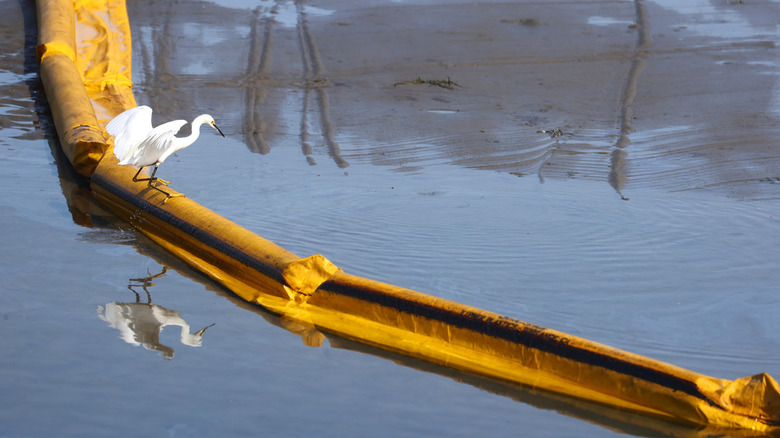
When thousands of tons of crude oil rupture into the ocean, it turns into a ticking time bomb. Oil has a lower physical density than seawater, causing it to float on the surface. Currents and wave action then spread the toxic sheen across vast square miles of ocean. Rapid response is paramount; the longer an uncontained slick sits on open water, the larger the affected surface area becomes, escalating ecological devastation exponentially. To prevent this, oil containment measures like floating booms, oil skimmers, in-situ burning, and chemical dispersants are used.
The first operational line of defense in open water relies heavily on floating booms — long, buoyant barriers designed to isolate and prevent the slick from expanding. These specialized containment booms, typically deployed in cylindrical or flat floating profiles, do not absorb the crude themselves. Instead, they serve as hydrodynamic fences to corral floating crude into thick layers. That allows oil to be more easily collected from the ocean using simple, mechanical methods.
But booms alone aren't always enough. Beyond surface spills, undersea sources of oil — such as sunken shipwrecks (like this cool WW2 ghost ship found at the bottom of the sea) — act as a ticking environmental time bomb. Reports from the National Oceanic & Atmosphere Administration indicate there are at least 87 hazardous sunken vessels in U.S. waters alone, accounting for millions of gallons of oil in corroding steel hulls at risk of breaking down. If the floating crude is left untouched, natural weathering, sunlight, and wave movements eventually emulsify the petroleum with sea water and sand, forming dense tar balls that scatter across thousands of miles. That's why some cleaning methods have to go beyond the surface.
Heavy hardware: Skimmers, subsea robodrills, and in-situ firestorms
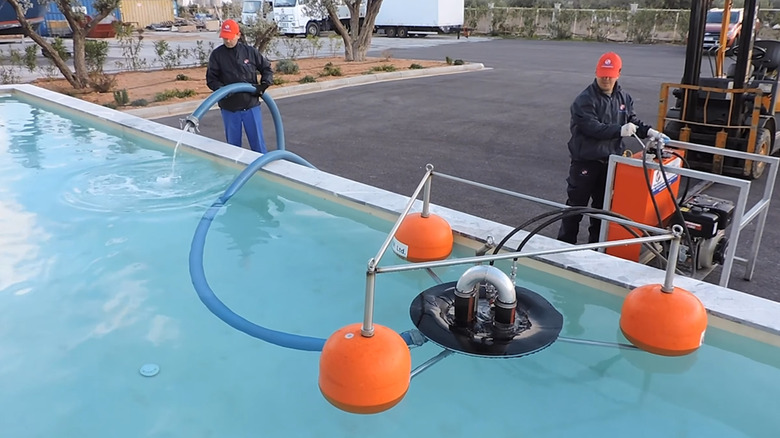
Once containment booms lock down an offshore slick, heavy mechanical extraction systems move in to scoop up the floating petroleum off the surface of the water. Response fleets utilize different architectures of skimmers to collect oil using vacuums, drums, brushes, belts, or discs. There are also specialized vessel-integrated systems, such as the Lamor Oil Recovery System. This system deploys outrigger jib arms and sweeping booms to guide oil straight into hull-mounted brush compartments that separate crude from seawater at high volumes.
For catastrophic submerged leaks, engineers deploy deep-sea intervention hardware like the Miko Moskito, a remotely-operated subsea hot-tapping machine. It uses an electrically driven 3-inch drill to pierce steel hulls up to 1.5 inches thick, allowing it to pump oil directly to surface storage vessels at rates reaching 50 cubic meters per hour. If cold crude proves too viscous to flow, steam injection lines heat the petroleum in place. This isn't the only thing cleanup crews rely upon, though; the future of oil cleaning could be this adorable minibot.
When mechanical skimmers cannot keep pace with massive surface slicks, emergency response commanders resort to in-situ burning. By corralling fresh, highly concentrated crude inside fire-resistant booms, response teams ignite the surface layer, burning off vast volumes before it reaches shore. While in-situ burning rapidly removes surface volume, it can come with major environmental costs. Low-quality combustion emits thick black plumes of soot and particulate air pollution while leaving heavy residual slag that can sink.
Chemical surfactants, bioremediation ecosystem shifts, and shoreline recovery
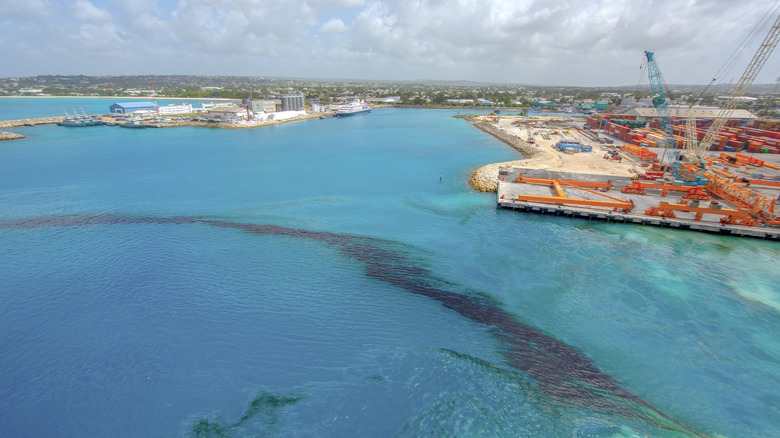
When mechanical recovery reaches its operational limits, response teams turn to chemical dispersants (like dish soaps) and biological countermeasures. According to chemical engineering research from Carnegie Mellon University professors Shelley Anna and Lynn Walker, chemical dispersants rely on surfactants to dramatically reduce the surface tension between oil and water. In open ocean applications, dispersants shatter thick surface slicks into microscopic droplets, forcing the petroleum down into the water column. This rapid dispersion prevents surface slicks from hitting coastal wetlands and expands the surface area accessible to naturally-occurring oil-eating bacteria.
However, CMU researchers emphasize that these methods carry severe ecological trade-offs. Flooding the marine environment with dissolved hydrocarbons triggers massive bacterial blooms, fundamentally altering the microbial ecosystem. To reduce chemical toxicity, scientists are exploring sustainably-sourced alternatives, though high production costs of these alternatives currently limit their large-scale deployment.
Once oil reaches coastal zones, like with the 2021 South California oil spill, NOAA protocols shift towards shore-based containment and physical restoration. Cleanup crews deploy shoreline flushing using high-pressure water hoses to wash off rocky shores into containment booms, where industrial vacuum trucks remove the concentrated residue. Combined with specialized chemical shoreline cleaners, these multi-tiered chemical and biological recovery tactics form the final line of defense against long-term ecological destruction.