

Japan's Bear Attacks Are A Real Problem, But I Don't Think A Weird Bicycle Helmet Is An Actual Solution
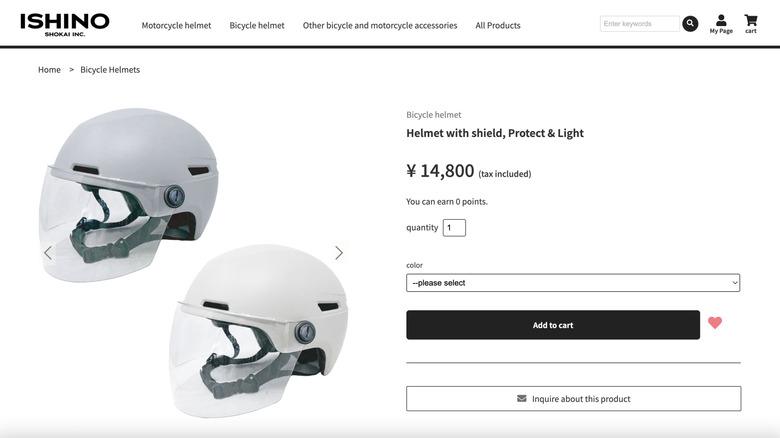
When you make helmets, every problem looks like the solution could come in the form of a helmet. And if we're talking about activities that lead to head injuries, helmets are great. Your brain is important, and if it gets damaged, bad things can happen. Like becoming an automotive journalist. When it comes to protecting yourself from bear attacks, though, let's just say I have some questions about how useful the new anti-bear helmet from Ishino Shokai, a Tom's Racing subsidiary, would actually be.
Initially spotted by CarScoops, Ishino Shokai's Protect Light helmet is essentially a bicycle helmet with a transparent polycarbonate face shield that can be lowered to protect the wearer's face in the event of a bear attack. It costs ¥14,800, or about $90 at current exchange rates, and there isn't much about the design that suggests it's meant to protect your face from bears. Still, the press release makes it clear it's for bear attacks:
In recent years, bear sightings and attacks on people have been frequent throughout Japan, making concerns about outdoor activities such as farming and walking a local issue. There are many concerns in particular about injuries to the face. Against this backdrop, Ishino Shokai has utilized its long-cultivated helmet manufacturing know-how to adopt a shield structure with a certain gap in front of the face. The structure positions the shield in front to protect against external contact, and the lightweight design based on bicycle helmets also takes into consideration the burden of everyday wear.
If the people of Japan didn't have any other options for warding off bears, maybe bear helmets would make more sense. The problem is, bear spray is perfectly legal in Japan, it costs less than a helmet, and it remains the top-recommended defense against bear attacks for a reason. Then again, bears are a much bigger issue in Japan than they are in North America, and if you're already being attacked by a bear, it certainly can't hurt to have a helmet on.
An increase in bear attacks in Japan
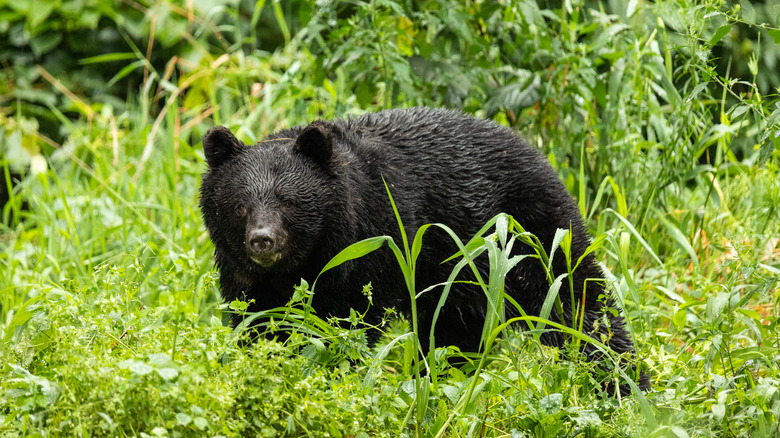
Depending on how much Japanese news you read, you may or may not know how big a problem bear attacks have become in Japan. In fact, it's enough of a problem that there's now an entire website called Kumamap dedicated to tracking bear attacks in the country. And according to Kumamap, Japan saw more than 57,000 bear incidents in 2025, more than three times the number recorded in 2024 and more than eight times the average recorded annually between 2015 and 2024. And according to the Wildlife Society, those incidents resulted in 235 attacks that injured more than 100 people and left 13 dead.
Meanwhile, I was only able to find three fatal bear attacks on humans in the U.S. in 2025 — one in Florida and two in Arkansas. So while America definitely isn't short on bears, bear attacks are far more likely in Japan. Per the Wildlife Society, that's partly because conservation efforts have led the country's bear population to rebound, but the issue appears to be more than just a geometry problem. From the Wildlife Society:
Because Japan has a temperate climate with strong seasonality, these bears typically hibernate each winter. And before they hibernate, they eat anything they can get their paws on, relying heavily on acorns and beech nuts in the fall. But in 2025, there was a mass failure in acorn and beechnut production, so bears, including mothers and cubs, had to travel farther into unknown territories to find food.
Declining rural populations also appear to be a factor, as Masahiro Ohnishi, principal research scientist at the Wildlife Management Office in Japan, told TWS. "Farms and orchards have been abandoned by many farmers because they don't have successors to take care of them," Ohnishi said. "And those resources have become food for many species, including bears, deer and boars." Ohnishi also pointed to the declining popularity of hunting in Japan, saying, "The average hunter age has been around 65 years old for many years."
Still, there's another factor at play — human-caused climate change. Previous studies have already connected climate change and increased contact between humans and wild animals, and bears that are used to gorging themselves on beechnuts before hibernating are going to find other food sources if a changing climate causes more crops to fail. The good news is, Japan's Forestry Agency says to expect a better harvest this year.
Helmets have helped, though
Clearly, Japan has a much bigger problem on its hands than it can solve with masked bicycle helmets, but that doesn't mean helmets are useless. In fact, there are at least a couple documented instances in North America where bear attack victims credit a helmet with helping them survive. For example, back in 2007, a black bear attacked Anthony Blasioli on a mountain bike trail in Olalla, Washington. From WAVE 3 News:
Blasioli said the bear knocked him backward into the brush and bit into the helmet, ripping out a chunk of foam along with the cartilage of his right ear and then tearing some muscle from his arm and shoulder as he kicked and tried to fight back.
"At one point, he bit my side and did one of those bite and jiggle things,” he said. "I thought, 'There goes a bunch of meat there.”'
Blasioli said he prayed for his life and almost immediately the bear ran away.
Similarly, in 2020, a mountain biker in Lillooet, British Columbia, survived a grizzly attack that left him with stomach and leg injuries, but his head was mostly fine thanks to his helmet. How long he would have lasted if his wife hadn't used bear spray to chase the sow and her cubs off, though, we'll never know.
So, while Japan's bear-attack problem is definitely bigger than not enough people wearing helmets, and bear spray remains the most important defense in the event of a bear encounter, there's definitely some evidence that bicycle helmets can help protect victims. Maybe wearing the helmet and carrying bear spray simultaneously will add an extra layer of protection that makes the difference between life and death. It couldn't hurt, right? And hey, there's always the chance that the face mask could prevent some of that bear spray from accidentally ending up in a victim's eyes. I hear that can be pretty painful, too, and it probably pales in comparison to being attacked by a hungry bear.