

Iran Declares Itself Ticketmaster Of Oil, Will Drop Tolls To Transit Strait Of Hormuz In Favor Of Undisclosed 'Fees'
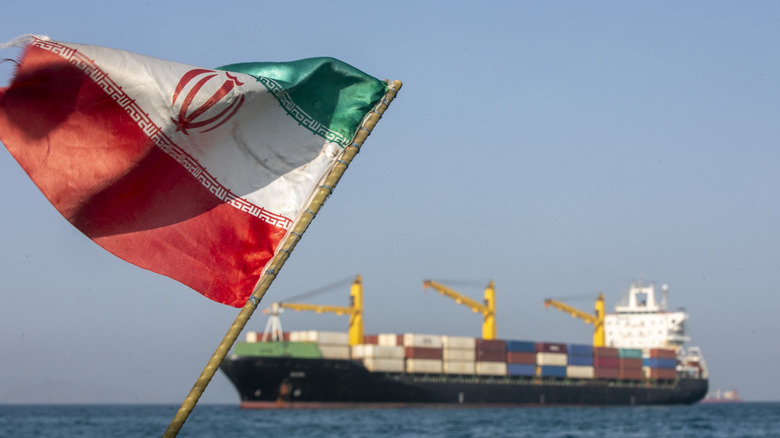
When Iran announced cargo ships could move freely through the Strait of Hormuz as long as they paid the new toll, it didn't just threaten to enrich the oppressive regime that runs Iran. It also violated ships' long agreed-upon rights to freely navigate the seas, something the international community couldn't possibly let stand. Whether a peace deal is still a peace deal if both sides keep shooting at each other, who's to say? The good news is, the New York Times reports Iran just announced it's doing away with tolls and will instead charge fees, like it's the Ticketmaster of oil.
Early in the war, Omani officials more or less told everyone they had no interest in running a cargo tollbooth with Iran, but more recently, they've changed their tune. According to the Times, Iran has worked out a deal with Oman to charge fees for ships passing through the strait, and the two countries plan to move forward despite international objections. Oman reportedly brought "a formal proposal" to U.S. negotiators that would allow both it and Iran to monetize passage through the strait without technically violating international law. That proposal wasn't well-received, per the NYT:
A person familiar with the U.S. position said that American negotiators had received the Omani proposal and had concerns that they intended to discuss with Omani officials. That person and the regional diplomat both said that the proposal mentions voluntary fees, rather than a mandatory toll. The officials and diplomats cited in this article all spoke on the condition of anonymity to discuss sensitive diplomacy.
How hard the U.S. will actually push back, though, remains to be seen.
Voluntary, 'voluntary,' or mandatory?
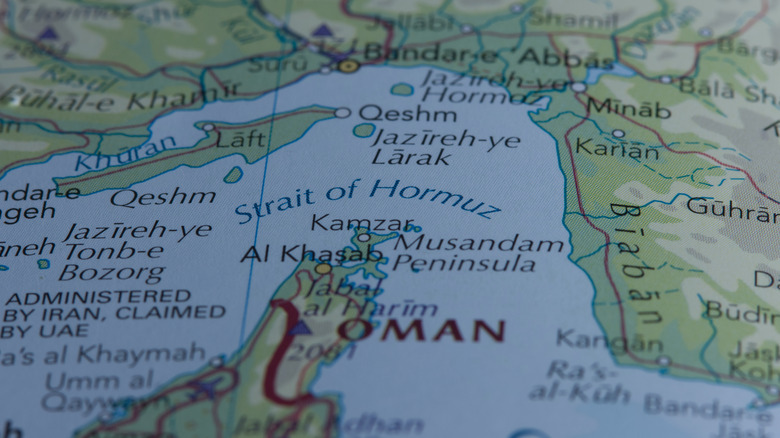
As the Times points out, while tolls violate the freedom of navigation that the international order holds sacred, it isn't unheard of for ships to pay the occasional fee. Ships passing through the Straits of Malacca and Singapore contribute to a voluntary fund operated by a private foundation that promises it uses any money it collects to ensure safe navigation. What isn't clear is just how voluntary fees to get through the Strait of Hormuz would be.
As the NYT put it, "Any fees in the Strait of Hormuz would be voluntary, the diplomat said. The Iranian official, however, said that the payments would be obligatory." So maybe the fees will be mandatory. Maybe they won't. Maybe they'll officially be "voluntary," but the only way to get through without huge delays will be to pay up. Or the mandatory convenience fees will start small, only to get increasingly expensive. Then again, maybe our bad experience with ever-ballooning concert fees has caused some unfair bias, and Iran really will just pass around a collection basket just to see if anyone wants to donate something. Sure, Iran's new leaders are reportedly even more hardline than the leaders they replaced, but we don't know for a fact that they're worse than Ticketmaster.
It would be easy to look at the amount of money Oman stands to make from these fees and assume its leaders got distracted by dollar signs, but there's likely a lot more going on here than a scramble for cash. As the last several months have demonstrated, Iran's fully capable of closing and controlling the strait on its own, and its leaders sound determined to monetize the strait no matter what. Oman working out a deal with Iran would at least give it a seat at the table, instead of being at Iran's mercy.
"They are taking a longer view of the conflict and regional security and are focused on how to keep Iran at the table," Anna Jacobs, a nonresident fellow at the Arab Gulf States Institute, told the New York Times.
Service fees, convenience fees, processing fees, expediting fees, fee collection fees...
So getting oil through the straight comes with fees now? Especially with U.S. negotiators in the room, no one can really say for certain, but based on the Times' reporting, it sounds like European leaders, at least, have accepted that it's inevitable:
The three European diplomats said that, initially, Omani officials had portrayed their efforts as an attempt to find a backup plan to try to facilitate the flow of maritime trade if the conflict continued.
Although European countries are displeased with the idea of the fees, they are now focused on making sure it is at least done in a way that does not violate international law, the diplomats said. Voluntary fees could satisfy that requirement.
Other parties, including the International Maritime Organization, international shipping's regulating body, may have resigned themselves to Iran and Oman charging fees, but Saudi Arabia has proven to be the most vocal opponent so far. Per the NYT, Saudi Arabia's foreign minister Prince Faisal bin Farhan recently declared the Strait of Hormuz "must return to the status quo before the war," asking, "Why should we now, as a result of a conflict, accept some novel arrangement that is going to be imposed on it?"
As regular people who aren't experts in international diplomacy, the concept of "voluntary fees" may sound, at best, like the beginning of one of those books about mice that want cookies. But maybe the experts have a more optimistic take on these so-called "voluntary fees." When NYT spoke with H.A. Hellyer, a senior associate fellow at the Royal United Services Institute, a defense and security think tank, he said, "Call it voluntary if you like — Hormuz was completely open before this war, and now it isn't. That is not Oman's doing, they never wanted this. All this hassle is part of Washington's bill for starting an ill-advised war." Well then. Should be interesting.