

Can You Remove Suspension Bushings Without A Press? Yes, But Here's What Can Go Wrong
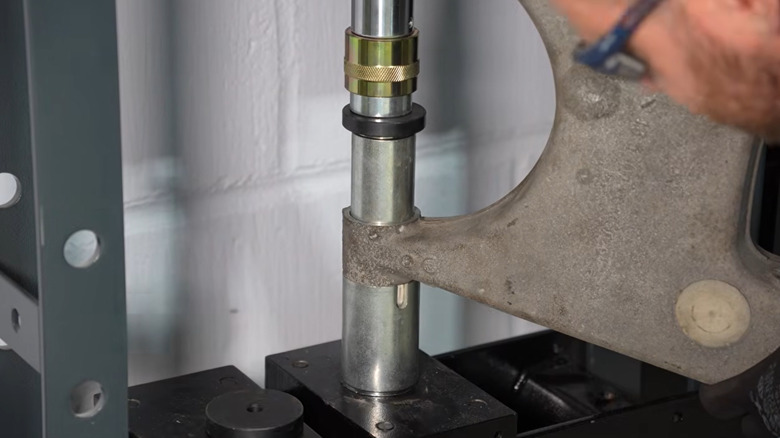
Rubber bushings are crucial car maintenance items. When they're in good condition, they ensure solid ride quality, good steering response, and an overall safe driving experience. When they're worn out, the opposite of all those things happens, with the addition of annoying clunking noises for good measure. It's a telltale sign that your suspension might be failing, and you'll need to take care of it as soon as you can. A shop hydraulic press makes the shortest work, but there are other more DIY-friendly methods – if you're willing to accept some risk.
When replacing worn bushings with fresh ones, there are a handful of paths to take. Beyond using a press, you could use a myriad of kits with different-sized cups and threaded rods. Fire is also an option, as is simply drilling it out. So, you can remove suspension bushings without a press. But there are plenty of things that could go wrong: slippage, exerting a heck of a lot of strength, potential burns, and injuries from being dangerously close to a spinning drill bit.
One bushing, two cups
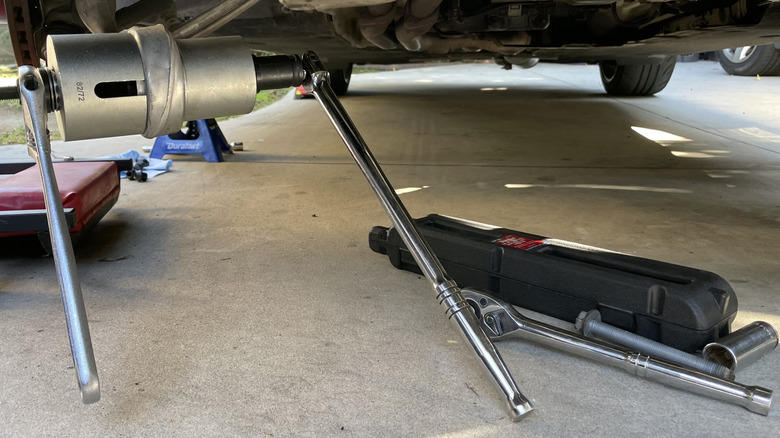
The idea behind the cup method, or threaded press, is very simple: Utilize a cylindrical object that's the same diameter as the bushing to press it out of its home, which is leveraged out via a cup on the other side that's bigger than its diameter. YouTubers like M539 Restorations, ChrisFix, and GoGoGarage do a great job demonstrating how it works. The cup method can also be used to install bushings, but you should account for any metal lip that may need to protrude, depending on the manufacturer's design.
Because a lot of force is being transferred, it's important that everything is lined up straight. Otherwise, removal will be harder than it needs to be, and you might end up overexerting yourself. In fact, despite the wonders of leverage, it can still be really tough extracting stubborn bushings. Sore hands and arms are a common result of such force (ask us how we know). Additionally, any slip while tightening the tool down to either extract or install a bushing could be violent. Being in the vicinity of any form of press that loses its grip can be terrifying, so it's a good idea to wear protective gloves and eyewear.
Heed the burning bush
Another method is utilizing humanity's cruel mistress: fire. You could simply set the rubber bit on fire and watch it melt out. But if you want to avoid burning yourself, it's not wise to deal with molten-hot rubber — or, if it's a fluid-filled bushing, a bomb of molten-hot liquid. It's better to instead use a torch for finer heat control. Once the bushing frees up/slightly melts, it should be easy enough to remove via a hammer or press. Again, though, wear safety equipment, because you still might get burned.
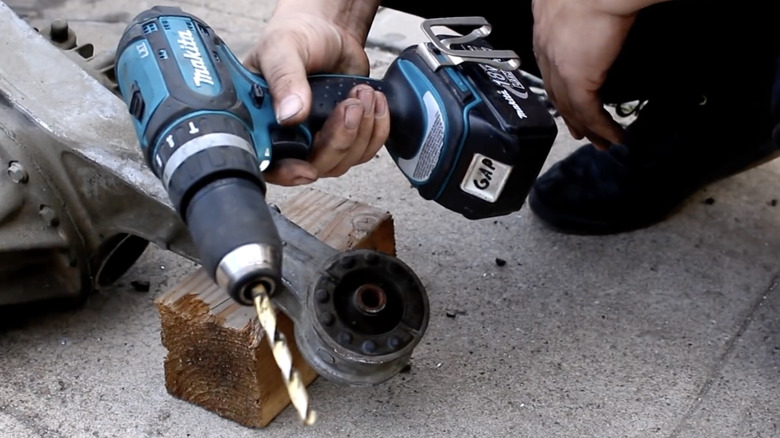
It's possible to drill out the old bushing, too. But if you aren't careful here, that drill could make its way from the bushing to your body, causing serious injuries. Use proper protection, keep your hands well clear of the spinning bit, and move slowly. You could use a hammer or a saw instead, but all of these methods risk damaging the component that you're removing it from — or the metal shell of the bushing itself. On top of a damaged shell making the removal process harder, depending on the designs of both the new and old bushings, keeping the shell in there may be necessary. In other words, using drills or hammers could hurt your body, your car, and your wallet all at once.
If any of the above methods seem like too much to deal with, ditch them altogether and just go with the tried-and-true hydraulic press. You can remove suspension bushings without one, but that could leave you with soreness, violent slippage, cuts, burns, and other injuries. And that could turn this job into one of your worst car project experiences.