

Why Don't More Automakers Use Magnesium Engine Blocks?
On paper, magnesium looks like the ideal automotive material. It's 75 percent lighter than steel and 33 percent lighter than aluminum, dampens noise better than both, and is among the most abundant elements on the planet. Yet today's average vehicle contains less 1% percent magnesium by weight. Three persistent problems have determined the gap between what magnesium promises and how widely it's used in cars today — cost, corrosion, and heat.
The automotive history of magnesium dates back further than most people realize. Ferdinand Porsche's original Volkswagen design in the 1930s required a rear-mounted engine light enough for the front wheels to maintain proper road grip.
With weight considerations, magnesium was the obvious choice for the engine block and gearbox. VW would build a dedicated magnesium foundry in Kassel, Germany, while purchasing 60 percent of Norsk Hydro's entire magnesium output between 1951 and 1981. This supply relationship would cover around 20 kilograms of magnesium per car.
Decades later, BMW would take a crack at magnesium internals with its N52. The naturally aspirated inline-6 became the first water-cooled engine to use a magnesium block. Aluminum alloy cylinder liners were used inside the block to handle higher mechanical demands and corrosion risks in the bore area, with coolant circulating only through the aluminum sections. Although it worked, the N52 illustrated the lengths required to make magnesium viable in water-cooled applications.
Corrosion is a persistent obstacle for magnesium car internals. In a wet or salty environment, with any contact between magnesium and another metal, it oxidizes and dissolves first while electrons flow toward the more noble metal, corroding itself in the process. This makes multi-material assemblies, which are standard in modern engines, difficult to engineer around magnesium without extensive protective coatings or careful isolation of contact points.
Magnesium burns through motors and wallets alike
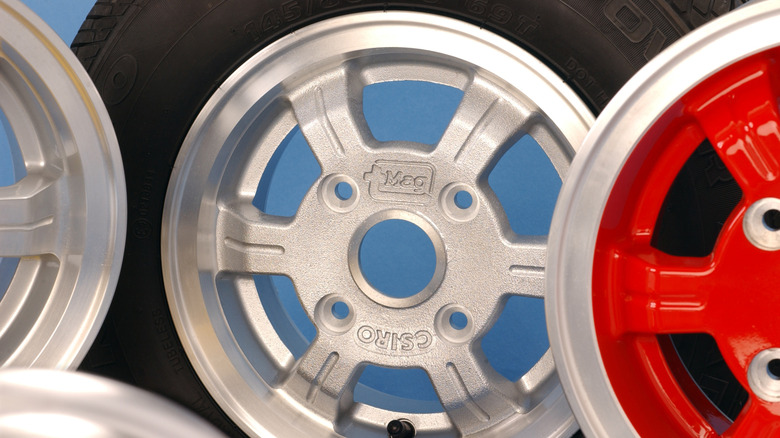
Flammability is also a real risk with Magnesium, though it's often overstated. Magnesium does ignite, and when it does, the fire burns hot and becomes difficult to extinguish. For parts not directly exposed to combustion, the fire risk in normal operation is low. In fact, you could get your Mustang GTD with magnesium wheels and active aero if Ford approved your application. But the perception persists for internal use, creating both engineering conservatism and regulatory caution that aluminum seldom faces.
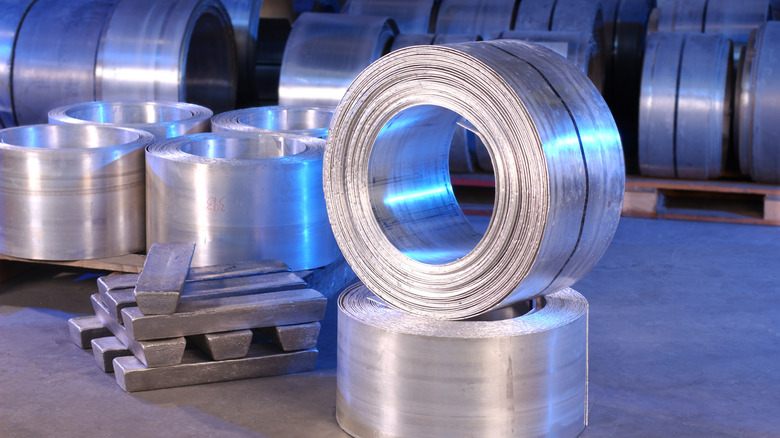
Cost uncertainty compounds the other challenges. The automotive, aerospace, and defense industries all compete for magnesium supply, which is dominated by Chinese production, with prices historically volatile — European magnesium prices surged nearly 100 percent in 2021 amid supply disruptions.
Production engineers tasked with reducing costs in later model years frequently identify magnesium components as straightforward targets for substitution — replacing them with cheaper materials and quietly undoing the original design intent.
Magnesium earns its place where weight is critical, and corrosion exposure is manageable. Steering column brackets, instrument panel structures, seat frames, and gearbox casings are all established applications. The C6 Chevrolet Corvette ZR1 uses a magnesium engine cradle that weighs 35 percent less than its aluminum equivalent, while the Porsche 911 GT3 RS uses magnesium wheels that reportedly save 17.6 pounds.
End-of-life recycling adds another complication. Magnesium looks so similar to aluminum that it regularly contaminates aluminum scrap streams, requiring specialized sorting equipment to separate effectively.
Magnesium hasn't failed per se. It's simply more demanding, and the automotive industry's appetite for proven, scalable, and cost-predictable materials hasn't found a way to use it broadly without compromising. For now, aluminum favorably handles many of magnesium's shortcomings.