

How The 1965 Auto Pact Tied Canada To America's Big Three Production Lines
Canada's relationship with the North American auto industry was largely one-sided before 1965. Truck and car parts were manufactured in the United States and shipped to Canada for assembly and profits from these Canadian branch plants flowed back to the American parent companies. By 1963, Canada had a $580-million trade deficit in automotive products. Something had to change soon.
As early as 1960, the Canadian government had appointed Vincent Bladen — an economist from the University of Toronto — to assess the country's automotive industry. Bladen understood the imbalance, but was wary of full free trade or heightened tariffs. The United States had pivoted to Canada to avoid tariffs elsewhere in the first place, so going head-to-head with the American industrial machine wasn't much of an option.
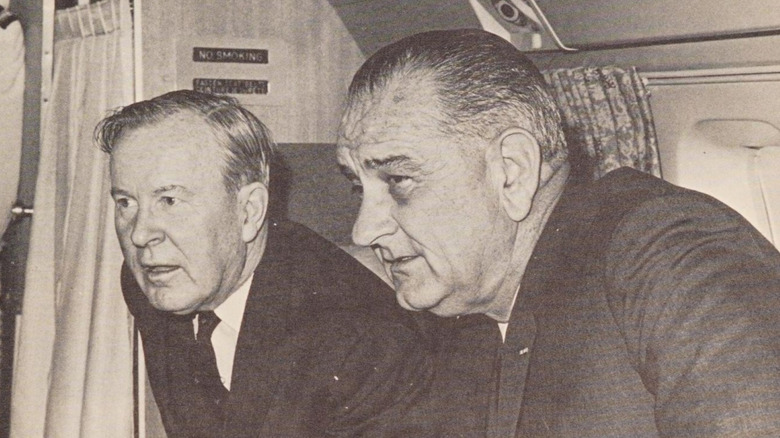
What emerged in 1965 was a carefully structured compromise between the U.S. and Canada. Signed by Canadian PM Lester Pearson and American President Lyndon Johnson, the Automotive Products Trade Agreement (also known as the Auto Pact) was close to free trade, but with provisions designed to protect Canadian production and employment.
The Auto Pact removed tariffs on cars and parts moving between the two countries with specific caveats. Manufacturers had to meet Canadian content requirements for vehicles sold in Canada, maintain production levels at or above 1964 figures, and make a buy-in investment of $260 million. The agreement applied only to existing manufacturers — not new entrants — which meant it was built around the mighty Big Three automakers from the outset.
The lasting effects of the Auto Pact
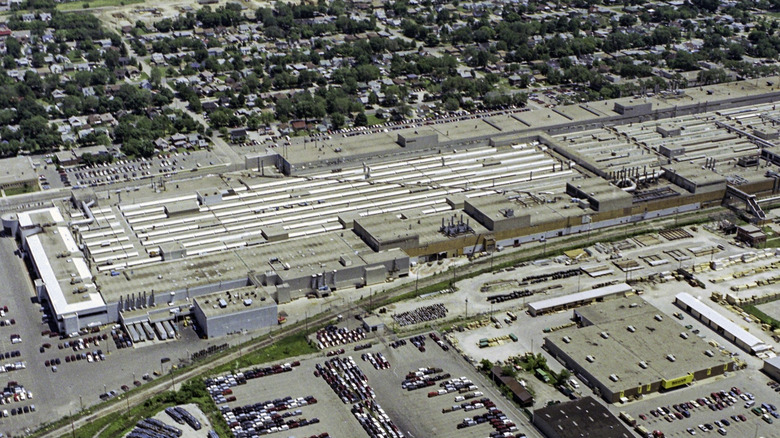
With tariff barriers gone and content rules in place, investing in Canadian branch plants became not just viable but profitable for the Big Three, making Canada crucial to U.S. auto manufacturing. Production and wages climbed sharply. By 1969, GM's Oshawa plant alone produced nearly 500,000 vehicles — roughly 100,000 more than the entire Canadian industry had produced a decade earlier. Canada had gone from being a net importer to a net exporter of automotive products.
The Auto Pact also shifted how vehicles were built across both nations. Production was rationalized across the continent. Canadian facilities began to concentrate on specific models or components that fed into a shared North American supply chain. Efficiency improved with the newfound specialization, which was squarely the intent of the pact. The auto-manufacturing industry grew to become Canada's most valuable thanks to rising wages and job opportunities alike.
The Auto Pact was unpopular in the United States, where critics argued it gave the Canadian auto industry an unfair advantage by guaranteeing production levels and content requirements that American plants didn't face. In Canada, control never moved north. The lucrative industry remained firmly in the hands of the American Big Three, with Canadian operations functioning as integrated branches of a continental production system rather than independent national manufacturers.
The Auto Pact lasted 36 years before the World Trade Organization ruled it illegal in 2001, finding that its content and production requirements violated global trade rules. Canada's auto industry has navigated turbulence ever since, as evidenced by the ongoing trade war that's threatening to shut it down. However, the continental integration the pact established didn't disappear with the agreement itself. The production relationships, supply chains, and cross-border dependencies it created remain the structural foundation of North American auto manufacturing today.