

The First Vehicle With A Direct-Injection Diesel Engine May Be Older Than You Realize
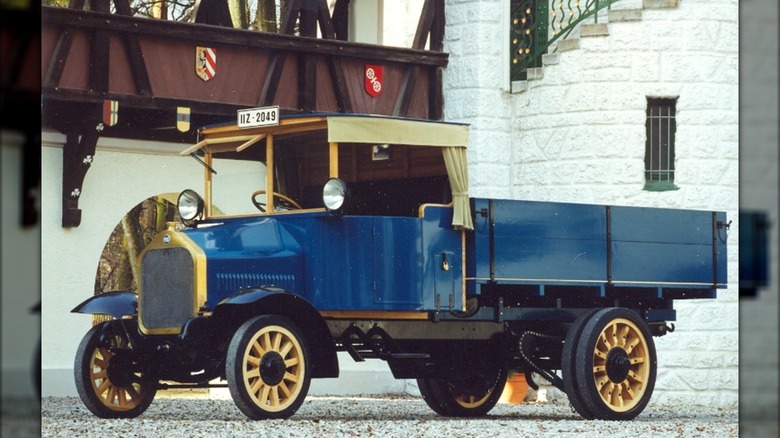
If you ask any modern automotive nerd to name the first vehicle to feature a direct-injection diesel technology, you will likely get one of two answers. The Volkswagen Audi Group loyalist will point towards the 1989 Audi 100 TDI, while the European enthusiast will show you the 1986 Fiat Croma TD iD. However, once you consider the broader scope of the automobile, you will realize that the answer leads all the way back to 1924, in Germany. Before turbochargers went mainstream, a massive German industrial conglomerate, MAN, introduced the transport world to direct injection.
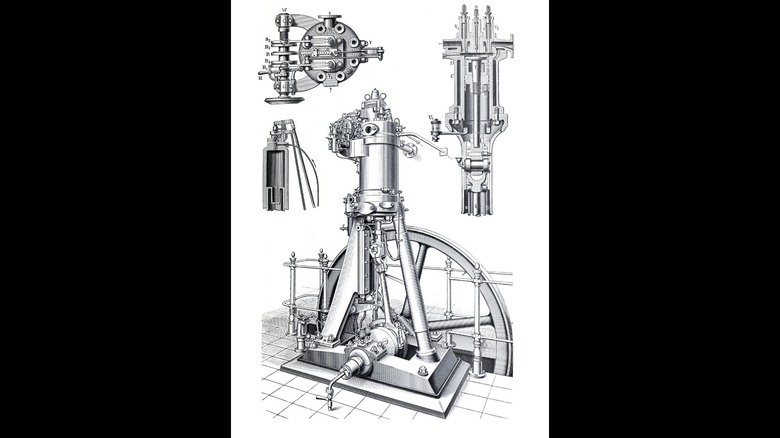
In the early 1920s, Rudolf Diesel's revolutionary engine design was widely adopted, but it was essentially confined to stationary industrial plants and massive marine vessels. These early engines relied on air injection, using a massive, heavy air compressor to blast fuel into the combustion chamber. This setup was far too heavy to mount on a mobile road vehicle.
Enter Maschinenfabrik Augsburg-Nürnberg (MAN). MAN realized that if they wanted to put a diesel engine into a truck, they had to eliminate the air compressor. The solution was airless injection, or what we now universally call direct injection. By using a mechanical fuel pump to force fuel through a specialized nozzle directly into the cylinder head at immense pressure, they could create combustion without the extra plumbing.
The real pioneers of diesel trucks and direct injection diesels
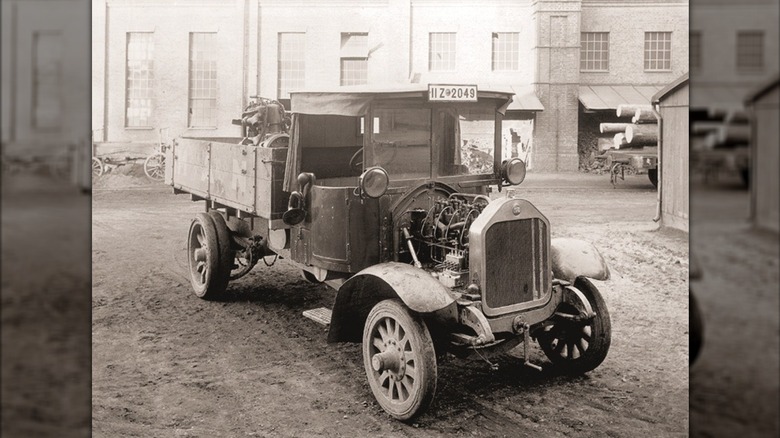
At the same time, Benz & Cie. (before the legendary Daimler-Benz merger) was working on its own solution, an indirect pre-combustion chamber design. In 1923, they built a diesel truck utilizing this pre-chamber system.
However, MAN was hot on their heels with something far more advanced. In December 1923, MAN engineers completed a 4-cylinder, 40-horsepower test engine utilizing direct injection. By early 1924, they bolted this engine into an open flatbed test truck. In the spring of 1924, MAN engineers Sturm and Wiebicke drove this experimental direct-injection truck 87 miles from the factory in Augsburg to Nuremberg, then 1,500 miles from Nuremberg to Berlin, a two-day journey. The truck performed flawlessly, proving to a skeptical automotive world that a lightweight, high-pressure direct-injection diesel engine could be reliable. MAN officially unveiled the production version at the Berlin Motor Show in December 1924.
When it debuted, the MAN truck completely rewrote the rules of commercial logistics. Compared to the gas-guzzling carburetors of the era, the direct-injection MAN truck boasted a staggering 80% reduction in operating costs. It was so fundamentally efficient that it immediately set off an industry-wide scramble to convert heavy transport from gasoline to diesel.
Why does this 1924 breakthrough still matter today?
Why did it take 55 years for passenger cars to adopt this technology? The issue came down to refinement. Direct injection injects fuel straight into the combustion chamber. In 1924, the combustion process was incredibly violent, resulting in massive internal pressures, extreme vibrations, and a signature, hammer-like engine knock. For a commercial truck built on a heavy steel frame with solid rubber tires, this wasn't a deal breaker. For a passenger car meant to ferry people in comfort, it was unacceptable.
For decades, car companies used indirect injection (IDI) in passenger cars such as the Mercedes-Benz 260D and the Volkswagen Rabbit Diesel. IDI sprayed fuel into a small, separate pre-chamber first, which smoothed out the explosion and dampened the noise, but at the expense of efficiency and thermal energy. It wasn't until electronic engine management caught up in the late 1980's that Fiat and Audi could finally tame the violent nature of direct injection for everyday drivers. So the next time someone tries to tell you that direct injection is a modern-era invention, tell them that a group of German engineers in flat caps brought it on the road more than a century ago.