

Why So Many Accidents Happen In Parking Lots

Maybe you're not aware of this bit of trivia, but America has about 2 billion parking spaces. And perhaps you have your own stories or pet peeves about parking lot shenanigans, where someone might simply park their vehicle in the most egregious of ways just to annoy everyone else. Something you've probably never thought of, however, is the number of accidents that occur in parking lots.
While we'd have happily referred you to the latest data, unfortunately, the last time the NHTSA released statistics relating to parking lot incidents (non-traffic/non-roadway in regulatory speak) was in this 2024 report that mostly talks about injuries and fatalities until 2021. According to the report, an estimated 3,990 people were killed, and 64,838 people were injured in non-traffic vehicle crashes in 2021 alone. Although that sounds alarming, understand that "non-traffic" includes incidents or crashes in driveways, private roads, parking lots, and even carbon-monoxide poisoning inside vehicles. If we go by Axa XL's reporting, more than 500 people die every year from parking lot incidents, while this Kids and Car Safety report states that at least 50 children are backed over in the United States every week, mainly in driveways and parking lots.
Distraction is the primary reason, according to the National Safety Council's 2016 survey, which covered 2,409 drivers above 18 and 1,005 individuals between 15 and 17 years of age. The non-profit found that around 66% of respondents drive through parking lots while on their phone, and more than 50% use social media or are busy texting behind the wheel. Other distractions include taking photos or videos (49%), sending emails (50%), and programming the navigation system (63%). Although a fairly old survey, you could argue that the underlying pattern still holds even today.
Distraction and blind spots
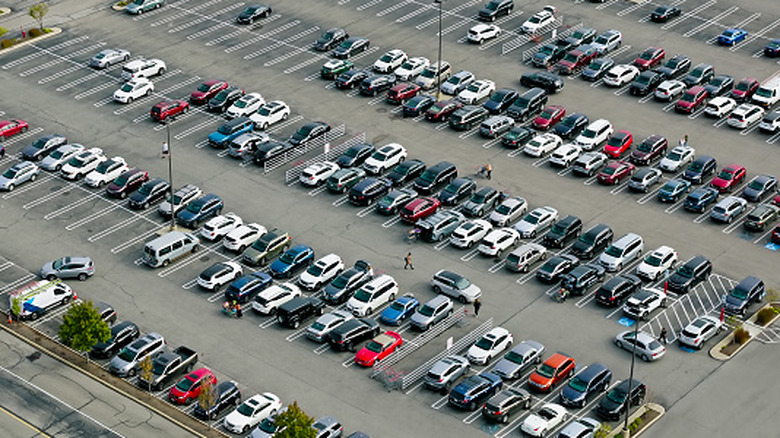
Something else worth noting is that blind spots are common in modern cars, as they typically have thick A, C, and D-pillars — depending on the vehicle type — for improved crash protection. Although all-around parking sensors, cameras, and crash-avoidance systems are available to mitigate blind spot issues to some extent, the false sense of security that often comes with driving slowly through a parking lot can still lead to incidents, even when those failsafes are in place.
Then comes the chaos of crowded lots, where the rush to grab that free spot before someone else does not only leads some drivers to exercise less caution, but also to completely ignore right-of-way rules. This can lead to incidents, especially when combined with a distracted pedestrian or someone who's unaware of their surroundings, such as a teenager immersed in their phone. Improperly maintained lots with unclear signs, pavement markings, and insufficient lighting can also lead to mishaps.
Your first line of defense is to exercise caution when backing out, especially when you notice kids, older adults, or parents with strollers nearby. The National Safety Council recommends staying alert and, although not always easy, anticipating what the other driver is about to do. Also, don't be that guy or gal who cuts across lots — stay in your lane, maintain proper driving etiquette, and most importantly, be civil. Remember, just because someone else is being a complete idiot doesn't mean you have to be one.