

Automakers Adopted Rack-And-Pinion Steering Because It Was Better Than Alternatives
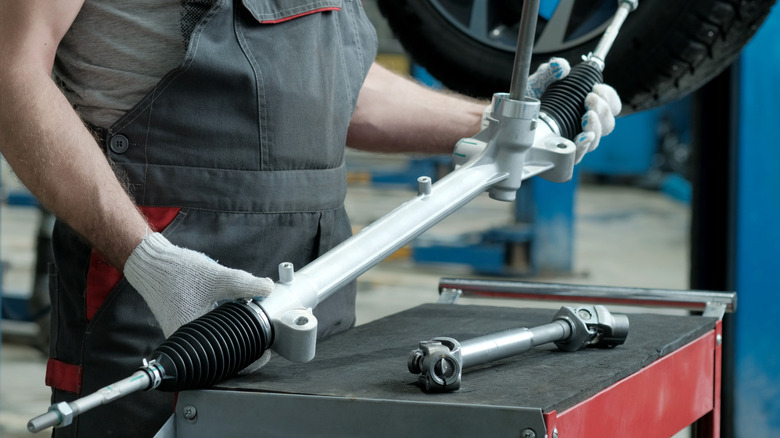
For the most part, the mechanical system in your car is the same one used in almost every other car on the road. There are exceptions, of course, but there's one system that you'll be hard-pressed to find any differences in between models. It's called rack-and-pinion steering, and it wasn't the default choice back during its debut in the 1930s. But once automakers realized its advantages, rack-and-pinion has been the most widely-used system of turning front wheels in the world since the 1950s — and for good reason. It's superior to most other systems thanks to its low cost, simple packaging, and fantastic steering feel.
Throughout history, there have been a few other systems of turning front wheels, like cam-and-lever steering and recirculating-ball steering. Most of them are older technologies, and among them, recirculating-ball is still the only alternative that's used in modern cars and trucks. Rack-and-pinion is by far the most commonly used, with only a handful of vehicles using anything else.
How is rack-and-pinion different from other steering systems?
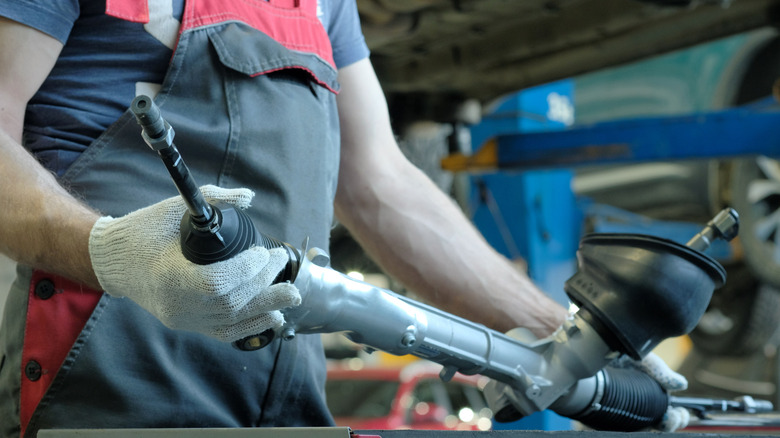
Rack-and-pinion steering is pretty simple. In a nutshell, when you turn the steering wheel, you're also turning the steering shaft. That shaft has a circular "pinion" gear at the bottom of it. The teeth of that pinion connect with the teeth of a horizontal rack, which is connected to tie rods that are connected to the wheels. So as you turn the steering wheel, that pinion turns and pulls the rack in the direction you're turning. Simple, right?
The most common alternative is recirculating-ball steering. While it's often used in heavy trucks thanks to its durability, it's a bit more complex than rack-and-pinion. It uses a worm gear inside of a steering box, which engages with a sector gear that moves a pitman arm. That arm is connected to the tie rods via a track rod. This system is called recirculating-ball steering because ball bearings recirculate through the worm gear teeth, reducing friction and gear slop. It's very durable and can handle heavier loads, but there's a lot going on there.
However, because recirculating-ball has more moving parts, more wear items, and takes up more space than rack-and-pinion, it's not quite as loved by auto engineers. Additionally, because it has more mechanical bits between the front wheels and the driver's hands, it can lead to worse steering feel.
The advantages of rack-and-pinion and why it's become the most common system
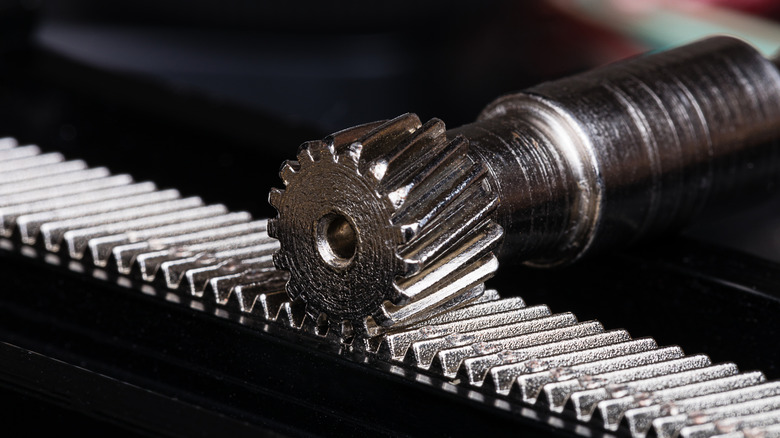
Since rack-and-pinion uses a single pinion connected to a toothed rack, it's the simplest of all steering systems. That makes it lighter, cheaper, and more compact. And since it's so simple, it also provides better feedback from the road to the driver's hands. It's also easier for car companies to tune the steering for specific cars by simply changing the spacing or size of the teeth on either the pinion or rack. By changing those, you tune a car's steering by altering how far the rack moves based on how many turns the steering wheel makes. The difference in how many turns of the steering wheel to how much the actual wheels turn is the steering ratio. Rack-and-pinion steering allows for automakers to play with steering ratios far easier than any other system, and the variable ratio rack was invented in the 1970s.
Most car companies switched to rack-and-pinion for these reasons, but there have been a few holdouts. Mercedes, for example, stuck with recirculating-ball steering in the G-Class SUV until 2019. Jeep still uses recirculating-ball steering in the Wrangler, and even the new Ineos Grenadier uses it. Meanwhile, some automakers like Tesla, Lexus, and Mercedes are slowly switching to pure steer-by-wire systems, where there's no physical steering column between your hands and the front wheels. But even that still uses a rack and pinion to turn the wheels, proving that it's the preferred method even today.