

Why Daytime Running Lights Are Mandatory In Europe But Not In The US
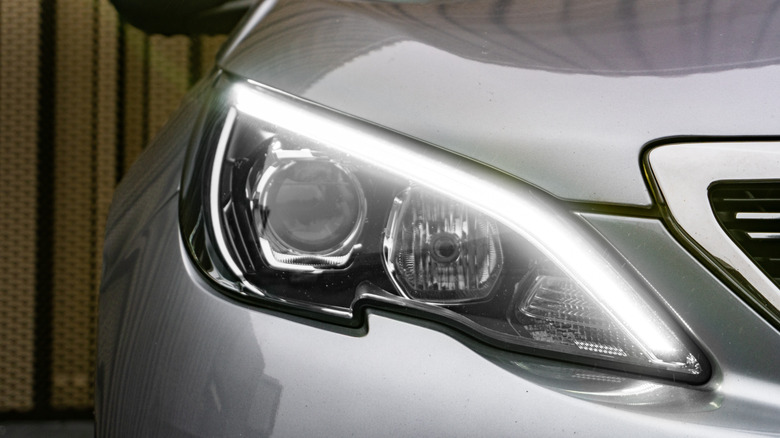
As the name implies, daytime running lights (DRLs) are illuminated continuously, especially when regular headlights aren't, when the Sun is out. Located on the front of vehicles, the DRL system turns on automatically with the engine and can't be controlled manually or turned off. Their purpose is to increase visibility around the clock, not just at night.
Europe has traditionally been a big believer of DRLs, going as far as making them a requirement. In fact, Sweden mandated them all the way back in the late '70s. Since then, several other countries have joined, such as Iceland, Finland, and Canada, among others. In 2011, E.U. legislation made DRLs compulsory for cars and delivery vehicles, with the following year including larger vehicles in that group. Despite this, the U.S. remains a holdout, where DRLs aren't required. (Although, America's side lighting rules go above and beyond.)
One answer to why the U.S. hasn't mandated DRL use can be found in a 2008 National Highway Traffic Safety Administration study, "The Effectiveness of Daytime Running Lights For Passenger Vehicles." In it, multiple crash scenarios were investigated, comparing vehicles with and without DRLs. It concluded that DRLs didn't provide any meaningful difference in the accident outcome. Although, other studies have found daytime running lights reducing the risk of car crashes by about nine percent. Nevertheless, these additional lights come included in most new vehicles, primarily due to the additional cost it would require automakers to include them for some countries but not the U.S. Seasonal conditions of some northern countries might also have something to do with making DRLs a matter of law that wouldn't apply to most Americans.
Northern countries experience a midnight Sun in the summer

While many places around the globe have taken up the viewpoint that DRLs are advantageous, some countries near or beyond the article circle may have an additional reason. During the summer months in places like northern Sweden, there is a period where the sun doesn't truly set, only dipping toward the horizon before rising again. Referred to as "Midnight Sun," instead of night, there is a prolonged period of what looks like dusk.
Dawn and dusk are among the most challenging times to be on the road, both in terms of the Sun's glare and visibility behind the wheel. At dusk, the darkness isn't quite prevalent enough for effective headlight use, but long shadows are cast along the ground potentially obscuring others on or next to the road. And it isn't only humans behind the wheel that struggle with it, as Tesla's "Full Self-Driving" system in low visibility conditions has reportedly some serious accidents.
According to the European Commission, DRLs being required has little to do with providing the driver with more light. Instead, it's for allowing other motorists, pedestrians, and cyclists to see them better. The use of DRLs, which are most effective during periods like dusk, could prove to be especially useful in regions experiencing months without true darkness at night.
The argument against daytime running lights
The idea that daytime headlights prevent car accidents is considered a myth by the National Motorists Association. The group theorizes that the belief started with a public relations campaign from Greyhound Bus meant to bolster its commitment to safety. Other critics have pointed out that, in some cases, DRLs can actually make things more dangerous. For instance, some have expressed that these extra lights add unnecessary distractions. While DRLs have you focused on a particular motorist, you may also miss a less conspicuous vehicle or pedestrian.
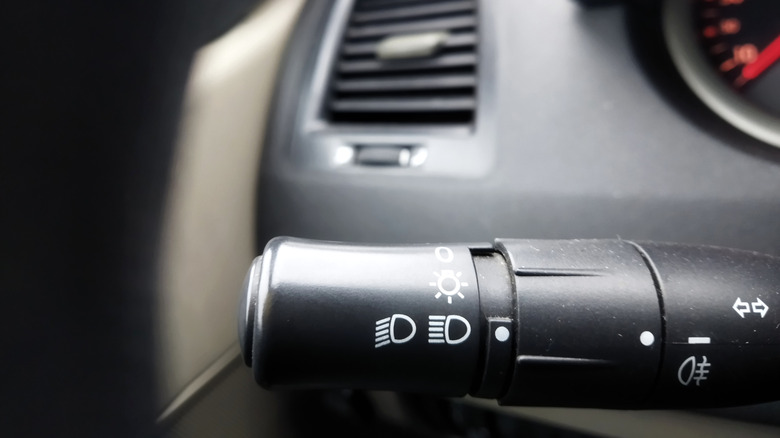
Another issue for forgetful drivers (without automatic headlights) is how DRLs apply a degree of lighting in front of the car. As a result, an absent-minded motorist may neglect activating the headlights. This scenario causes reduced visibility in front of the vehicle, as DRLs aren't bright enough on their own at night. Worse yet, the lights on the back of the vehicle are also unlit as a result, potentially leading to a rear-end collision.
What do you think? Should the U.S. follow Europe and make DRLs mandatory, or is their impact on safety overblown — to the point where they can lead to more harm than good?