

Why This One-Off Steel-Bodied Corvette Looks Suspiciously Ferrari-Esque
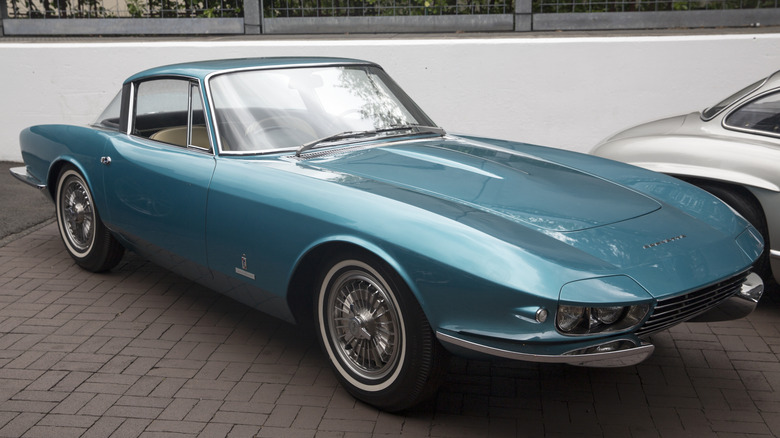
Within Corvette's storied history lies a little-known variety, one that, although American at heart, shares a lot of its design ethos with its European contemporaries. Encompassing the passion and flair of a 1960s Ferrari, this one-off Corvette Rondine was a design exercise by the famed Italian coachbuilder, Pininfarina.
Based on a '63 split-window Corvette, the Rondine ditched the C2's fiberglass bodywork in favor of steel. While the split-window had muscle that defined the overall design direction, the Rondine was all about being classy and understated, which, admittedly, can't be said about certain other Pininfarina car designs. The Rondine was first shown in the 1963 Paris Motor Show, the same year Chevrolet debuted the divisive C2-generation Corvette.
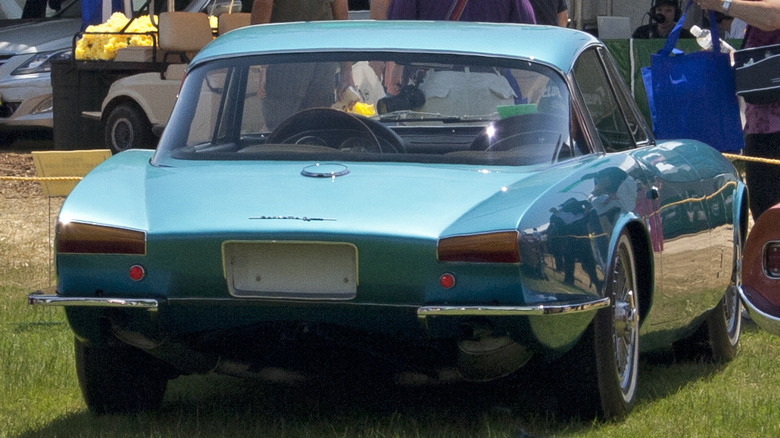
The Rondine incorporates several of Pininfarina's classic design cues, which you may have seen on other cars from the same timeline. American designer Tom Tjaarda — whose portfolio includes the Ferrari 330 GT 2+2, 365 California, and De Tomaso Pantera — took the lead in this design exercise. That's probably why the Rondine looks awfully similar to the GT 2+2, especially from the back.
If you look closely, there's even a hint of Lamborghini 350 GT, which actually was a Carrozzeria Touring commission and had nothing to do with Pininfarina. Even though the front end of this one-off Corvette may split opinions, the rear shouts classic '60s Italiano.
Italian excellence meets American Ingenuity
The Rondine greets you with a welcoming and, dare we say, less-sculpted front end. The C2's prominent fender shapes have been toned down, invoking a sense of refinement. Longer front and rear overhangs add to the Rondine's curb appeal, as does the larger front grille and those unique headlamps that now sit partially covered under body-colored eyebrows. It all looks clean without losing much of the C2's visual aggression.
But those things are fairly subjective. What you may agree upon is that the Rondine's rear is a noticeable improvement in both form and function. The split-window, although a unique design feature, had practical limitations in the form of compromised rear visibility. The Rondine scraps the idea and goes conventional, using a large curved windshield, which also resulted in its losing the C2's fastback shape.
The rear deck is much flatter in profile and incorporates signature Pininfarina styling cues of the era, like the slim horizontal taillights. Special mention goes to the beautiful fold-like design at the rear. If you were wondering about the name, "rondine" is Italian for "swallow," the bird known for its long wings and split tail.
Mechanically, the Rondine was pretty much unchanged from the standard C2, featuring the 360-horsepower version of Chevy's 5.4-liter (327 cubic inch) V8 and a four-speed manual transmission. Although the design exercise was done to wow the American audience, it didn't do much. So the Rondine called the Pininfarina Museum its home until 2008, when it was auctioned for $1.6 million (some sources claim close to $1.8 million) to a wealthy collector from Connecticut.