

European Automakers Spent $6 Billion On Tariffs Last Year
Happy Monday! It's March 23, 2026, and this is The Morning Shift — your daily roundup of the top automotive headlines from around the world, in one place. This is where you'll find the most important stories that are shaping the way Americans drive and get around.
In this morning's edition, we're looking at the tariff costs borne by European automakers, as well as the desire for Chinese EVs among U.S. car buyers. We'll also look at GM's plans in China, and how much everyone loves Ohio anti-Tesla protestors.
1st Gear: BMW, Mercedes, and Volkswagen lost a combined $6 billion to U.S. tariffs in 2025
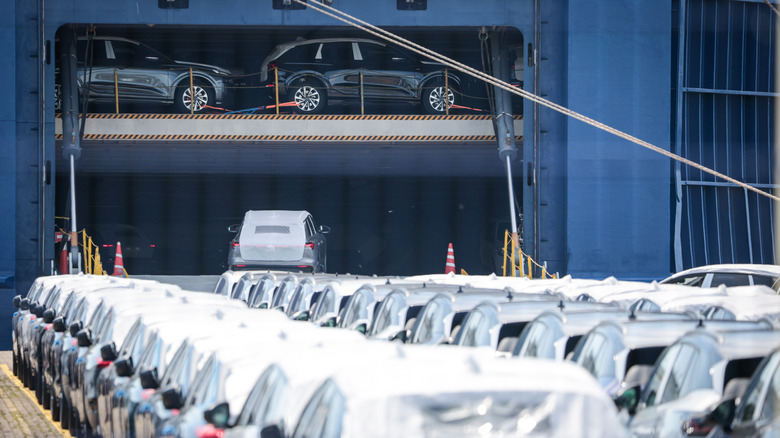
President Donald Trump is big on tariffs as a way to force manufacturing — seemingly the only industry he considers to be real work — back to the United States. Never mind that we aren't really price competitive on that, and we're more of a services provider as a nation than a goods provider, Trump is going to make us price competitive by making it even more expensive to build a car outside the States. How much more expensive? Billions of dollars last year. From Automotive News:
European automakers lost billions of euros to U.S. import duties last year, with some manufacturers warning they may no longer profit from certain models exported to the U.S. as they press President Trump for relief.
Few European automakers have been willing to show investors the full costs to their businesses from the U.S. import taxes, making it hard to gauge the total impact.
The visible cost to European automakers was probably more than $6 billion in 2025, according to financial documents, company statements, and analyst estimates. That figure likely understates the true burden because many companies have not fully quantified the hit.
Volkswagen Group provided the clearest indication of the scale of the impact, saying tariffs imposed over the final nine months of 2025 cut earnings by €2.9 billion ($3.3 billion). VW exports vehicles to the U.S. that it builds in Europe and at its plants in Mexico. The overall figure includes €1.2 billion at Audi, €700 million at Porsche, and €900 million at VW's namesake brand.
Of course, the costs of tariffs are borne by the importers — the U.S. wings of these companies — rather than the exporters over in Europe. The Germans may be reimbursing their U.S. subsidiaries for now, but that may not last forever.
2nd Gear: U.S. car buyers want Chinese EVs
U.S. car buyers don't have a ton of money to throw around, and they don't want to pay more than they have to for gas. This would be a perfect opportunity for sellers of cheap EVs, if not for their one fault: Those cheap EVs are almost universally Chinese. From Reuters:
DETROIT, March 23 (Reuters) – Sooren Moosavy wants to buy an affordable electric car in the U.S., motivated by environmental concerns and a preference for the EV's smoother ride. But the 28-year-old Baltimore resident's search has brought him to a trio of vehicles that are essentially unavailable – because they're from Chinese automakers.
Moosavy isn't alone. As the average price of a new car in the U.S. approaches $50,000, more of the car-buying public is open to buying cheaper Chinese cars, despite resistance from the industry and both major U.S. political parties. While Chinese autos hit the highways of Europe, Latin America and even Canada, the U.S. government has effectively banned the cars with tariffs exceeding 100%, out of concerns over data security and protecting American jobs.
In places like Europe, a number of Chinese EVs sell at prices under $30,000. Some of those cars include amenities like advanced driving assistance software, a built-in mini fridge, and the option to sing karaoke with your fellow passengers.
"The technology they offer for those lower price tags was astounding," said Clint Simone, senior features editor for car-shopping website Edmunds, who drove several Chinese vehicles while at the CES trade show earlier this year.
No one wants to pay more than they have to for transportation, be it in a car payment or in fuel. Chinese customers and U.S. car buyers have the same concerns — of course we'd all want the same cars.
3rd Gear: GM needs to electrify Buick and Cadillac in China, and fast
Over in China, GM works with a company called SAIC in a joint venture to make cars for the Chinese market. Contrary to GM's U.S. plans, though, SAIC-GM needs to electrify Buick and Cadillac fast — or risk sales collapsing even further. From Automotive News:
General Motors' troubled China joint venture unveiled a three-year electrification push to reverse collapsing sales, betting on rapid deployment of Buick and Cadillac EVs as SAIC-GM heads toward its June 2027 contract expiration.
The comeback playbook centers on Buick and Cadillac leveraging the introduction of locally developed software-defined cockpit, safety and suspension systems. It also includes a push into exports.
SAIC-GM President Lu Xiao shared the strategy to dealers at a March 5 meeting in Shenzhen, amid growing questions about the venture's future in the world's biggest market.
The partnership GM founded in 1997 with SAIC Motor Corp. to build Buick, Cadillac and Chevrolet passenger vehicles is a cornerstone of its business in China, a market where it was once a dominate player.
Remember when the future of automotive luxury was going to be all-electric? Seems things are still headed that direction in China, at least. More evidence for the U.S. Century of Humiliation.
4th Gear: Ohio residents are tired of drivers honking in support of Tesla protestors
Remember those Tesla protests that used to happen all the time? Turns out, they never stopped in the city of Lyndhurst, Ohio. They've still been happening every week, and residents are starting to get tired of all the cars honking in support. From Automotive News:
Weekly protests outside a Tesla store in Ohio for more than a year have raised questions about whether drivers have the right to honk whenever they want to.
The city of Lyndhurst installed signs declaring the area around the electric vehicle showroom a "quiet zone," and police have started pulling over drivers who honk in support of the protesters as they pass by, according to TV station WKYC in Cleveland.
"We don't mind the activity, but the neighbors are getting a little rattled and would appreciate a bit less noise," Lyndhurst Mayor Patrick Ward said in a statement to the station.
This, of course, means the protests are to some degree working, but every weekend for months on end seems a little excessive.
Reverse: OK
Okay? Okay!
The Fuel Up
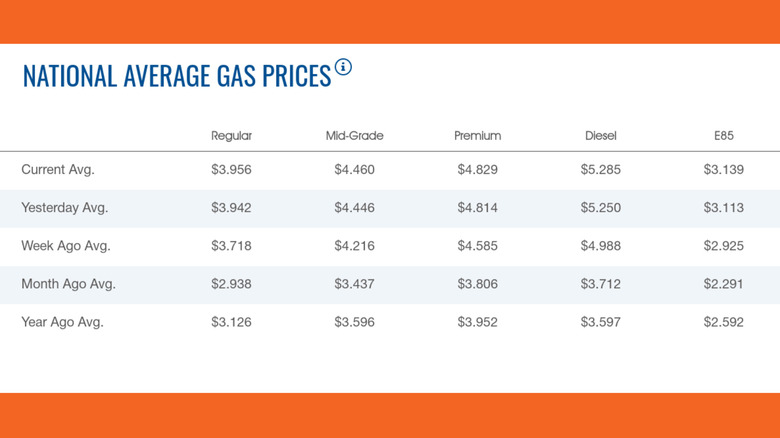
Prices are higher than they were on Friday, but the rate of their increase seems to be slowing. Are we seeing some resistance at the $4 mark, or is this all based on Trump's reports that the war on Iran is over? Unless it isn't, of course. But it is. Unless it's not. There's a ceasefire. Iran doesn't know about it but there is one.
On the Radio: The Mountain Goats - 'Counterfeit Florida Plates'
Dig through the trash, sleep on the grates.