

When Did Automakers Start Offering A Smokers Package Instead Of The Lighter And Ashtray?

We may receive a commission on purchases made from links.
People have been smoking cigarettes since the 19th century, and cars have had ashtrays and push-to-heat lighters seemingly since forever. In fact, there was a time when automakers installed ashtrays for every occupant, and President Franklin Roosevelt had a 1938 Ford that groovily dispensed lit cigarettes.
But things started changing in the 1950s, when doctors started looking into smoking's side effects and safety concerns, which led to the decline of cigarette use. Increasing awareness of the health dangers of smoking tobacco showed in figures from the Centers for Disease Control and Prevention, which reported that just 11.6% of U.S. adults smoked cigarettes in 2022, a noticeable decline from 24.7% in 1997, and 42.4% three decades before that, in 1965.
The decrease in tobacco use has led to the phasing out of ashtrays and lighters in cars. Chrysler started the trend in 1994 when it announced that its new Chrysler Cirrus and Dodge Stratus would become the first mass-produced cars not to come with standard ashtrays. The move also spawned the optional smokers package in cars. Chrysler had found out that 78% of people who ride or drive cars weren't smoking. And today, in-car lighters and ashtrays are some of the wildest features that new cars don't have.
A cupholder and a rubber plug
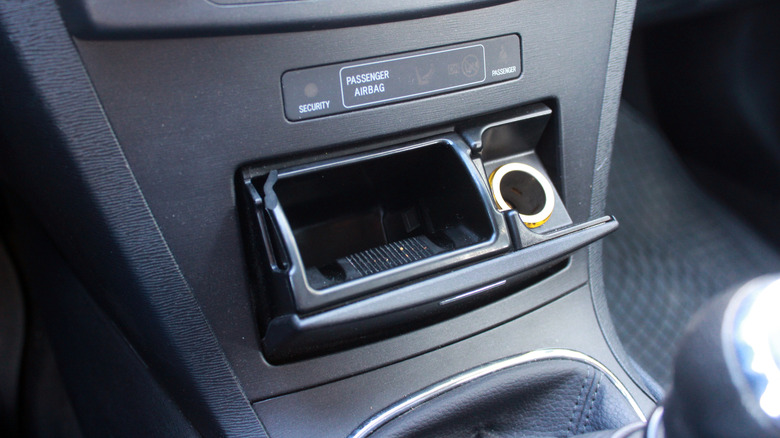
So what took the place of the lighter and ashtray in Chrysler's then-new sedans? The automaker replaced the ashtray with a pop-out cupholder, while the hole left behind by the cigarette lighter was covered with a removable rubber plug. We're glad they left the lighter's power source, since drivers can simply pull out the rubber cover to plug in a phone or other electrical device.
Automakers like Honda followed in the smokeless car trend by the early 2000s, and they started redesigning dashboards and consoles to accommodate cupholders and cubbyholes instead of ashtrays, saving on production costs while satisfying consumer demands. In 2013, Hyundai announced that it was getting rid of ashtrays and lighters in its new cars, and in their place would come standard USB ports for charging devices.
The change is a win-win for the customer and automaker, as car buyers get more storage room for their stuff while carmakers save millions. Moreover, profits can be made from optional "smokers packages," which range from about $75 to over $500 to add ashtrays and a lighter, features that were once standard. For instance, the Rolls-Royce Smoker's Package adds an ashtray and lighter in the front console and in each rear door armrest, all decked in the requisite fancy woods and metals. (Meanwhile, you can add these yourself at Amazon or Walmart for far less.)
As for who was the first to offer a smoker's package, our research led us to Chrysler. The automaker that ignited the trend of "smokeless cars" was also the first to make ashtrays optional: Buyers of the then-new Cirrus and Stratus could still specify an ashtray instead of a pop-out cupholder, making Chrysler the first to unofficially offer a "smokers package" in a new car.