

Why You Might Want An Oiled Air Filter Vs. A Dry One
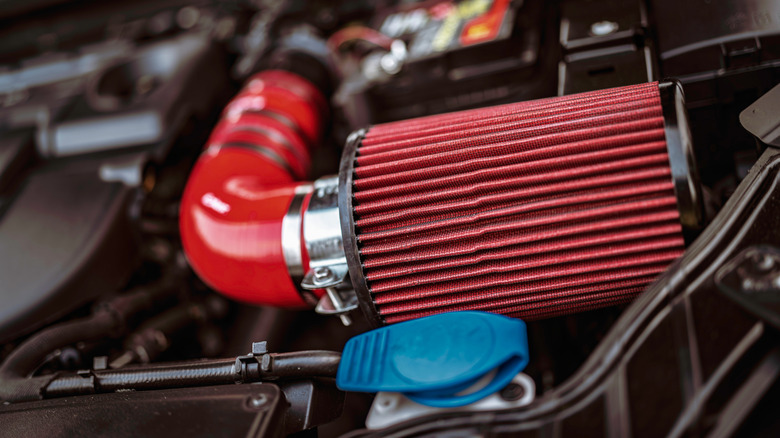
Choosing an air filter for your car or motorcycle is relatively straightforward. It largely boils down to the airflow requirements, cost, maintenance, and the degree of protection provided. Typically, oiled/wet filters are considered to be the best when it comes to airflow, but they tend to be maintenance-heavy, whereas dry filters are generally not. However, the latter can be very restrictive, depending on the material. Oiled filters are largely cotton-based, while dry filters can either be of the paper variety or foam, with some utilizing synthetic fibers instead.
Although most OEMs prefer paper-based dry filters, it's not uncommon to see foam filters being used, especially on small-capacity engines where performance isn't a top priority. Both paper and foam-based filters offer excellent filtration and arguably the best protection when compared to other air filter varieties. But since these filters restrict airflow the most, you need to make some compromises in terms of performance, which, in all fairness, shouldn't be a huge concern on daily drivers.
On the flip side, because they're the least restrictive, oiled air filters are the go-to choice for those chasing performance. Dry performance filters (ones that typically use synthetic fibers) offer a reasonably good balance between airflow and filtration while not requiring any form of re-oiling, which wet filters typically demand. Unlike regular OEM items, both dry and wet performance aftermarket air filters are often reusable. However, when it comes to cost, oiled filters are more expensive, with paper filters being the most affordable option.
Addressing the MAF sensor debate
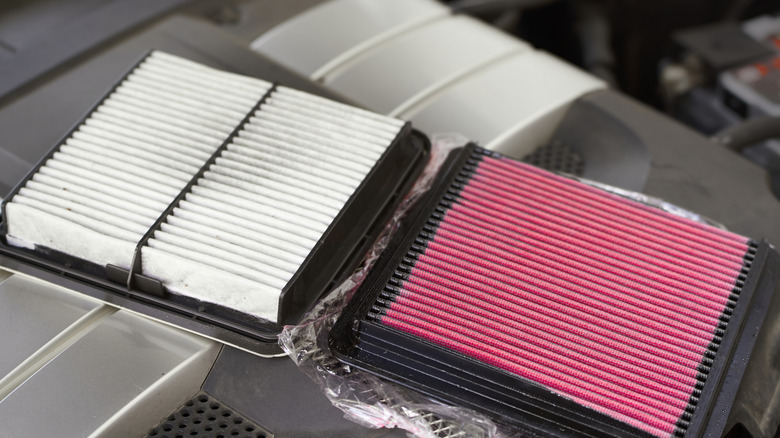
Something else to consider is that wet filters, when improperly re-oiled, can cause issues with your vehicle's mass airflow (MAF) sensor. This may lead to drivability problems, causing the engine to potentially run too rich or too lean. But to be fair, this argument is one of those things that is usually blown out of proportion. It doesn't necessarily happen by default; shoddy maintenance is usually the culprit. Perhaps the filter shouldn't go on the car if you submerged it in oil for an extended period of time. Just because oil adds an extra layer of protection doesn't mean you should go over the top when re-oiling. As long as it's not over-oiled after washing, things should be fine.
It's not like dry aftermarket filters can't screw up MAF sensors. Sure, they don't require oiling, but MAF readings can go all over the place when the sensor goes bad. So the key here is proper maintenance. And if you're wondering whether you can really clean an air filter or if you should always replace it, know that OEM filters typically require replacing around 12,000 miles or sooner, depending on the application. For example, someone living in a dusty environment or a busy metropolitan city may require more frequent servicing than in areas where there are fewer contaminants. Most aftermarket filters, on the other hand, don't require replacing, especially if they are of the reusable kind. Periodic cleaning — every 25-30,000 miles or so — is recommended for oiled filters, while dry filters can potentially go up to 50,000 miles or more before requiring servicing. Again, though, this depends on the location and use case.